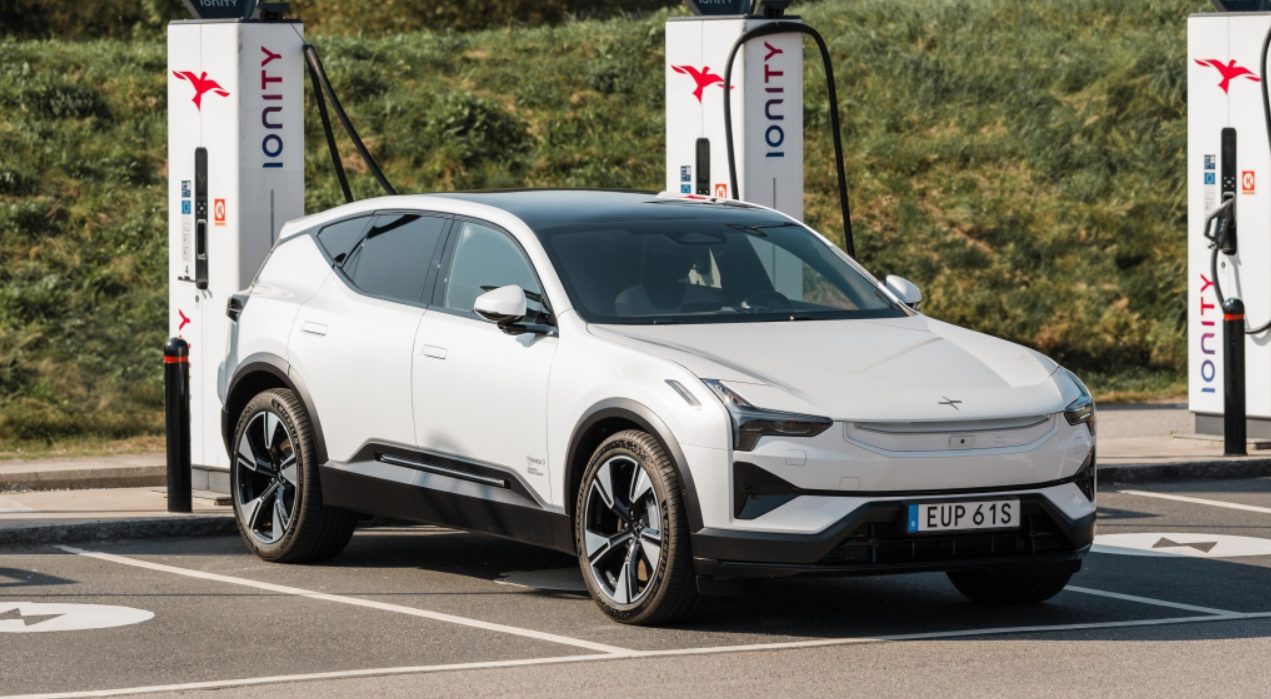
Polestar calls itself a Swedish performance EV brand, builds cars in South Carolina, and employs more Americans than Chinese nationals — yet none of that mattered to the U.S. Commerce Department. On June 25, 2026, the agency denied Polestar authorization to sell connected vehicles from model year 2027 onward, according to Reuters. Under the Trump administration’s Connected Vehicle Rule, any automaker with Chinese ownership or tech ties needs explicit government approval to keep selling cars that use Chinese-linked software or hardware. Polestar applied. The answer was no. If you were eyeing a future Polestar, your shopping list just got shorter.
What the Connected Vehicle Rule Actually Does #
The regulation treats your car like a smartphone — and cares deeply about who wrote the code.
Think of it as the Huawei ban’s automotive cousin. The rule restricts import and sale of connected vehicles tied to Chinese or Russian software starting MY2027, with hardware restrictions following in MY2030. Companies must apply for specific Commerce Department authorization to keep selling — a gate Polestar failed to pass. Geely, China’s automotive conglomerate, holds at least 63% of Polestar, making it Chinese-controlled under the rule regardless of its Gothenburg headquarters or American factory floor.
On the practical side:
- Polestar can still sell existing Polestar 3 and Polestar 4 inventory and will continue servicing current ownersthrough its U.S. network. - The software ban triggers with MY2027 vehicles; the hardware ban follows in MY2030, giving companies a staged timeline to restructure supply chains.
- U.S. sales represented just 6% of Polestar’s Q1 2026 revenue, withEuropeaccounting for94%— meaning the immediate volume hit is limited, even if the symbolic damage is not.
Polestar shares still fell roughly 5.7% in early trading after the announcement, per Reuters, reflecting investor unease about a brand already dependent on Geely capital injections.
Same Parent Company, Opposite Outcome #
Volvo got the green light from the same regulators who showed Polestar the door.
Here’s where it gets genuinely strange. Volvo Cars — also majority-owned by Geely, sharing the same South Carolina manufacturing plant — secured authorization after what it called “constructive discussions” about governance and data security, according to TechCrunch. That approval is a specific authorization, not a blanket exemption, but it keeps Volvo in the U.S. market while Polestar sits outside looking in. Regulators are clearly willing to make brand-by-brand calls under common ownership, which means the door isn’t welded shut. You just need the right conversation to open it.
“Would effectively prohibit Polestar from selling its cars in the United States, including the cars it manufactures in South Carolina.” — Polestar, in submission to the Bureau of Industry and Security, via Kelley Blue Book
Polestar’s Next Move #
The company is hunting for non-Chinese suppliers and pivoting hard toward Europe.
CEO Michael Lohscheller told Electrive the company is actively sourcing non-Chinese connected-vehicle software and components, and believes there is “enough time” before the 2027 cutoff to make the switch. The product roadmap reinforces that pivot:
- A refreshed Polestar 2 arrives in 2027. - The new Polestar 7 compact SUV will be manufactured in Europe.
Polestar has also said it is “increasing its strategic focus on Europe,” per Reuters — a region already generating 78% of its first-quarter sales.
The broader warning here extends well beyond one Swedish-branded EV maker. Any foreign brand carrying Chinese tech investment or components now faces the same regulatory lens. Polestar is just the canary in this particular coal mine.
A car branded Swedish, partially built in America, staffed by more U.S. workers than Chinese ones, just got classified as a national-security concern. If that’s the threshold, the U.S. EV aisle is about to look a lot more uniform — and a lot less interesting for you as a buyer.