Good morning. I can report that CFO Daily readers are very curious about what OpenAI is up to when it comes to its finance department. Last week, I wrote about how OpenAI is using ChatGPT Work—and heard back from many of you about the need to have people on a finance team who know when to push back on what AI says.
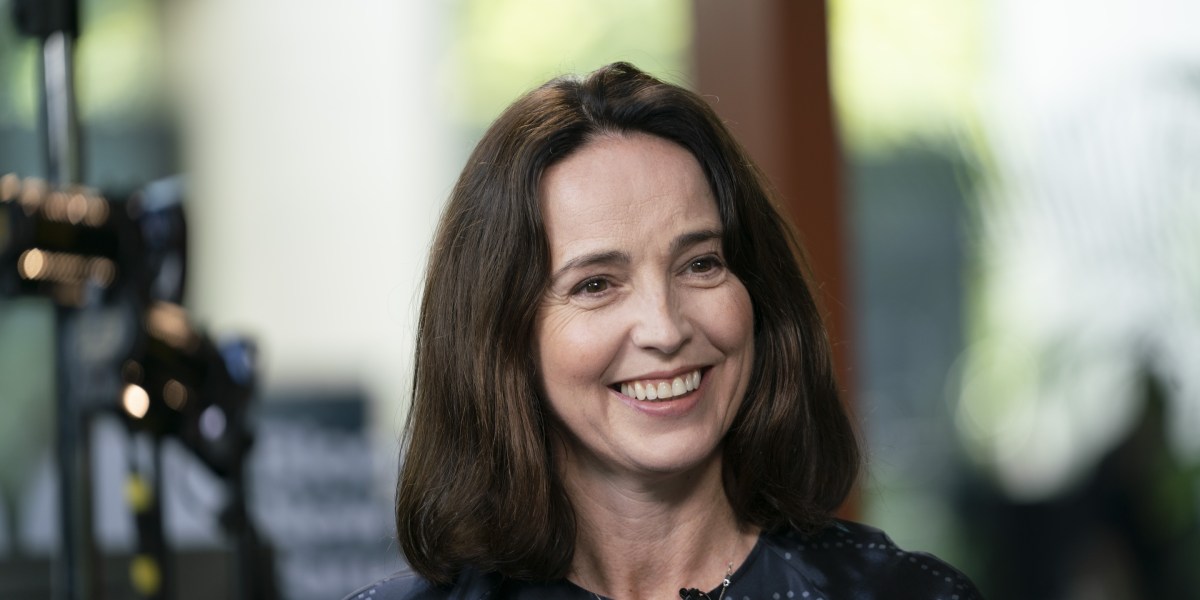
OpenAI CFO Sarah Friar shared the article in a LinkedIn post on Sunday, writing that ChatGPT Work lets teams “spend less time reconciling the past and more time planning the future.”
AI doesn’t replace financial rigor or human judgment, Friar wrote—it helps teams find issues sooner, ask better questions, and get insights to the business while there’s still time to act. “As we help other companies transform how they work with AI, it matters that we lead by example,” she wrote.
As of Monday, the post was racking up likes and comments aplenty, many echoing the same idea: AI speeds up the information reaching decision-makers, but judgment and accountability stay human. Variations of “human accountability remains” or “people still need to use their judgment” showed up in at least seven comments. One commenter put it directly: “The distinction between automating analysis and outsourcing judgment is an important one.” Others framed it as an industry shift—AI turning finance from a “reactive… painful scramble” during close into “a core strategic partner for the board.”
Friar kept the momentum going on Monday with an essay on OpenAI’s site on what she’s learned building an AI-native finance function. “When I joined OpenAI two years ago, there was only a small finance team supporting a company growing at extraordinary speed,” she wrote. “We needed to build the function from the ground up and make AI fundamental to how we work, make decisions, and support the business.” The team set two goals: a zero-day close and continuously updated forecasting.
“The real promise of an AI-native finance function: a team that understands what is happening as it happens, helps leaders see the choices ahead, and gives the business more time to act while the outcome can still change,” Friar wrote.
She offered five lessons for CFOs: give everyone access, then create a reason to use it; redesign workflows around the decision, not the task; let finance professionals become builders; pair speed with accountability and controls; and measure value per unit of intelligence. She noted that recent OpenAI research finds that 40% of finance professionals’ specialized AI use involves work outside traditional finance, and 22% involves engineering-related tasks.
“Finance sits at the center of strategy, capital, data, risk, and performance,” Friar wrote. “That gives CFOs a unique view of how the company works and a powerful mandate to lead its AI transformation.”
For CFOs, the takeaway may be less about adopting a particular AI tool than about rethinking what finance is supposed to do with the time AI gives back.***Quick note:** I will be taking a few vacation days. So the next CFO Daily will be in your inbox on Monday. See you next week. Take care.

**Sheryl** **Estrada**[Sheryl.Estrada@fortune.com](mailto:Sheryl.Estrada@fortune.com)
Leaderboard
Christine Chambers was appointed CFO of MicroVision, Inc. (Nasdaq: MVIS), a provider of advanced perception software solutions, effective Aug. 27. Chambers brings more than two decades of financial leadership experience at public companies. Chambers most recently served as CFO of Fusemachines Inc., an enterprise AI company. Before that, she served as CFO, treasurer and secretary of PetMed Express, Inc., and as SVP, CFO and treasurer of RealNetworks, Inc. She also held senior finance leadership positions at Rosetta Stone.
Tim Fox was promoted to CFO of ACV (NYSE: ACVA), a digital automotive marketplace, effective Aug. 11. Fox joined ACV in 2021 as VP of investor relations. In 2024, he was appointed to his current role as VP of investor relations and strategic finance. Fox will succeed Bill Zerella, who is departing for a CFO role at another company. He will serve in an advisory role through Oct. 2. Fox has more than 35 years of experience. Before joining ACV, he served as SVP of investor relations at PTC, a global software company.
Big Deal
Gen Z is prioritizing travel, despite higher costs, according to the 2026 Bank of America Summer Travel Outlook. Ninety-three percent of Gen Z respondents either had a summer trip planned or intended to take one, compared with 85% millennials, 73% of Gen X, and 62% of boomers.
Bank of America internal data finds that Gen Z travel spending increased approximately 8.5% year over year in June, outpacing all other generations, whose travel-related spending increased by just under 7% year over year. The Gen Z reality check provides insight into how Gen Z is navigating the economy.
Going deeper
This Week in Business" podcast explores why AI is reshaping work, but human ideas remain essential. Wharton's Henning Piezunka explains why he thinks that AI may actually increase the value of human creativity and collective intelligence. He explores how AI can help organizations generate ideas, improve decisions, accelerate innovation, and strengthen learning while still relying on human judgment.
Overheard
"It helps keep me healthy by monitoring my sleep and then watching as I train and giving feedback."
—Meta Platforms CEO Mark Zuckerberg made this point in an essay posted to Meta’s newsroom on Monday, where he described what he called “personal superintelligence”—an AI agent that works “24/7 on your behalf” across every facet of life, Fortune reported.
breaks the traditional barrier between audience and newsroom. The show transforms
Fortune Daily* Fortune*’s trusted reporting into actionable, conversational, and entertaining insights for an emerging class of business leaders.
Watch here.