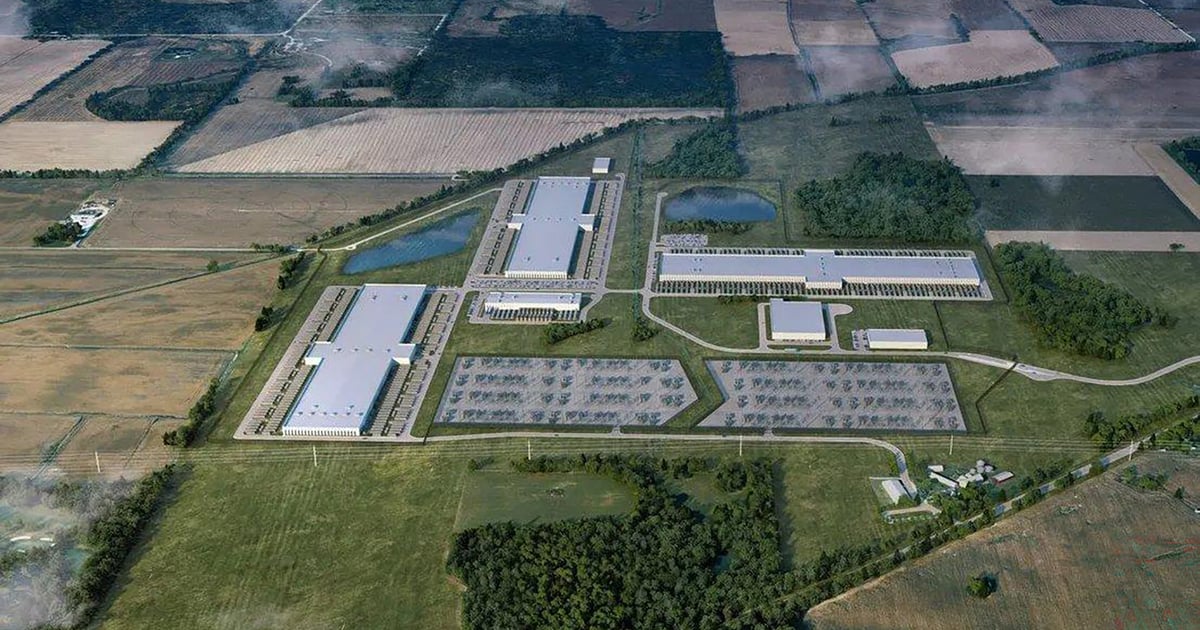
PSC filings show Georgia Power planning for a 3,200 MW commitment months before OpenAI unveiled its 3.2 GW AI campus.
Months before OpenAI publicly unveiled its $20 billion, 3.2 GW Project Camellia campus, Georgia Power had already recorded a new 3,200 MW customer commitment and was evaluating an anonymized 3,210 MW project with a closely aligned development timeline, according to Georgia Public Service Commission filings.
The records do not identify OpenAI. Together, however, they provide a rare public view of how one of the world's largest AI campuses entered utility planning long before its public debut.
A review of PSC records shows Georgia Power recording the 3,200 MW commitment months before Project Camellia became public, alongside an anonymized 3,210 MW project already moving through the utility's planning process. Customer identities typically remain confidential, leaving regulators with anonymized records showing load size, development stage and projected energization schedules.
For utilities, regulators and grid planners, the filings offer more than a project chronology. They show how AI megacampuses can begin influencing long-term load forecasts, transmission planning and resource decisions months, and sometimes years, before the public knows they exist. “A 3.2 GW single-site load is extraordinary from a utility-planning standpoint,” said Neil Osnato, founder of Persistence Analytics Group. “At that scale, customer behavior becomes system behavior.”
Following the Paper Trail #
The strongest clue appears in Georgia Power's Q1 2026 Large Load Economic Development Report.
Although the report covers activity through March 31, it notes that 3,200 MW of new customer commitments were added in April 2026 and would instead appear in the second-quarter report.
Three months later, OpenAI announced Project Camellia as a 3.2 GW campus.
An accompanying planning attachment provides another clue. Among dozens of anonymized projects is one listed in “Technical Review” with an announced load of 3,210 MW and an initial in-service date of Q2 2028. The projected load ramps to approximately 3.2 GW by 2031, broadly matching OpenAI's plan to energize the campus in phases beginning in 2028.
The filings do not identify the customer, and utility planning experts caution against treating technical milestones as proof that a project's full demand is certain. Utilities often begin evaluating projects long before public announcements, incorporating them into transmission studies, resource planning and infrastructure assessments as commercial certainty grows. Movement through Georgia Power's planning process reflects increasing commercial maturity, said Neil Osnato, founder of Persistence Analytics Group, but does not guarantee a project will reach its planned size, schedule or long-term demand.
A review of Effingham County Board of Commissioners agendas, meeting packets and minutes likewise turned up no references to Project Camellia before its public announcement. After Data Center Knowledge filed an open records request seeking development agreements, correspondence, incentive records and other project documents, the Board of Commissioners responded that it “does not maintain the records specified in your request” and closed the request without producing records.
Planning Years Ahead #
Georgia Power's January 2025 Integrated Resource Plan helps explain why those evaluations begin early. The utility told regulators it maintains “active engagement and discussions with large load customers” and incorporates a “growing pipeline of potential and committed large load customers” into its long-term forecasts.
The company raised its forecast to 8,200 MW of load growth through the winter of 2030–31, more than 2,200 MW higher than projected in the 2023 IRP Update, and projected nearly 6,000 MW of new demand by the winter of 2028–29 while proposing new generation resources and strategic transmission investments.
Whether Project Camellia contributed to that forecast cannot be determined from public records. A single 3.2 GW campus, however, illustrates the scale of a customer capable of materially influencing a utility's long-term load outlook and resource planning.
Georgia Power's announcement of the OpenAI agreement fills in details absent from the PSC filings. The utility said OpenAI will pay the full infrastructure and electric service costs, provide financial assurances designed to protect existing customers and participate in a 25-year agreement that includes up to 1,000 MW of flexible demand response. Under the agreement, Georgia Power can reduce power delivered to the campus during periods of high system demand, creating what it described as one of the nation's largest single-facility demand response arrangements.
Managing the Pipeline #
Discovery responses in the PSC docket further illustrate how Georgia Power manages its large-load pipeline. The utility told regulators that executed electric service contracts carry greater weight in its forecasts than requests for service. It also disclosed that it removed one proposed data center after the developer became unresponsive, failed to secure an operator and stopped marketing the site for data center use.
As of March 31, Georgia Power reported 12.4 GW of committed large-load customers, 76.2 GW in its economic development pipeline and 31 committed projects, most of them data centers.
The PSC filings stop short of identifying Project Camellia, and they do not establish when the project became commercially certain. They do, however, document something rarely visible outside utility planning: how a multi-gigawatt AI campus progresses from confidential engineering studies and load forecasts into the public record.
OpenAI has emphasized transparency as a guiding principle for Project Camellia, pledging to share water-use data, release annual independent audits and maintain open communication with the community. The PSC filings provide another layer of transparency, revealing how projects of this scale begin shaping utility planning well before they are publicly announced.
By the time hyperscale AI campuses are announced, portions of the generation, transmission and load planning they require may already be underway. The filings suggest AI infrastructure enters utility planning long before it enters the public conversation.