OpenAI is adding an energy-technology role as it expands flexible-load, generation and storage strategies across its growing AI data center portfolio.
OpenAI is moving energy planning inside its data center development organization, signaling that power technologies and flexible computing are becoming more integrated into how the company plans its infrastructure.
The company is hiring a Clean Energy and New Technology Lead within its Industrial Compute organization to evaluate clean firm power, advanced storage, grid flexibility, low-carbon backup power and efficiency technologies while identifying pilots and repeatable deployment pathways.
The role will own clean-energy and emerging-energy technology strategy and execution, evaluating options against reliability, cost, carbon, schedule and resilience.
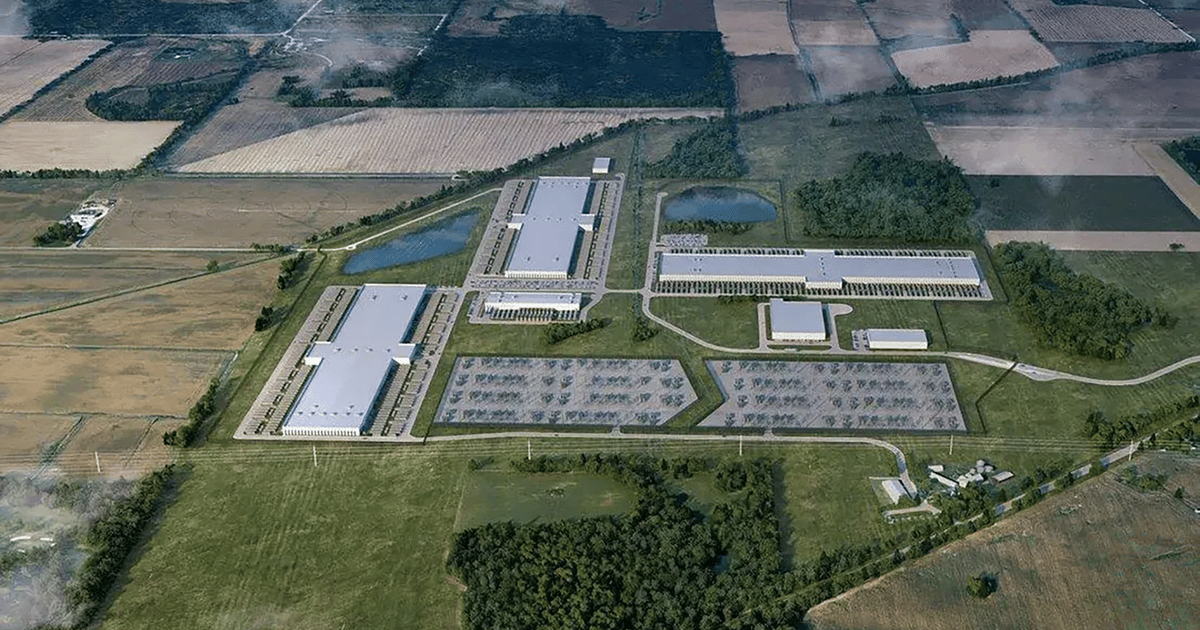
The role comes as OpenAI incorporates flexible-power arrangements into its data center projects. At Project Camellia, a planned 3.2 GW data center campus in Effingham County, Georgia, OpenAI has committed to provide Georgia Power with up to 1,000 MW of flexible demand response under a 25-year agreement.
OpenAI has said the facility will be designed to proactively reduce power consumption before residential customers are affected during periods of high demand.
The 1 GW commitment provides a concrete example of the type of flexibility the new role may have to evaluate, although OpenAI has not said whether the position is directly connected to Camellia or another specific project.
Neil Osnato, founder of Persistence Analytics Group, said the significance of the position lies in its placement inside Industrial Compute and its emphasis on execution.
“The key phrase in the posting is not ‘clean energy,’” Osnato said. “It is that the role sits inside Industrial Compute and will own emerging-energy strategy and execution.”
He said the responsibilities suggest OpenAI is developing an internal capability to determine which power architectures can actually be deployed across its data center portfolio rather than treating energy as a project-by-project procurement decision.
OpenAI Is Reshaping Its Infrastructure Organization #
The hiring comes as OpenAI is also reorganizing its data center operation.
Chris Malone, who joined OpenAI in March 2025 as its head of data centers, has left the company, the Wall Street Journal reported. OpenAI confirmed Malone’s departure and said it had reorganized its infrastructure organization to support the scale and pace of its work.
The reorganization has distributed data center responsibilities among several executives, including Uday Ruddarraju, who leads the data center team, Brent Mayo, who leads data center build and delivery, and Spas Lazarov, who leads data center engineering, according to TechCrunch.
There is no indication that the Clean Energy and New Technology Lead role is a replacement for Malone.
The changes come as OpenAI expands its Industrial Compute organization with positions covering powered land, electrical infrastructure, data center development and other aspects of physical infrastructure.
Flexibility Could Add Capacity #
The potential significance of flexible AI loads extends beyond simply reducing electricity consumption during a peak.
Chris Dunlap, a University of Chicago researcher whose preprint on AI data center flexibility is undergoing peer review, estimates that large AI data centers could provide flexibility equivalent to roughly 25% to 40% of nameplate capacity, depending on the facility.
Essentially none of that potential currently counts toward resource adequacy, Dunlap said.
His analysis considers several mechanisms, including moving workloads between regions, delaying workloads and slowing or modulating computing activity.
For a modeled 500 MW inference-dominant facility, his baseline produced a mean commitment depth of about 39.8%. Resource adequacy is primarily a peak-capacity problem, Dunlap said, rather than an energy-consumption problem.
A 10 GW fleet operating at the flexibility levels in his model could provide capacity in the low thousands of megawatts, he said. That would not eliminate a regional capacity shortfall, but the potential capacity would not require a new generation project, an interconnection queue position or a construction timeline.
Dunlap’s estimate is provisional because the manuscript remains under peer review.
Coordination is the Problem #
Dunlap said the largest challenge is not whether data centers can change their electricity consumption, but how multiple facilities coordinate that behavior.
“The hardest part is coordination not capability,” he said.
Data centers have already demonstrated the ability to drop large amounts of load quickly. But if multiple facilities independently respond to a price signal or emergency notice, the aggregate result could create a new problem: load disappears in one region while unscheduled load appears in another.
Dunlap compared moving compute between regions with an interregional transfer of demand without the scheduling and transmission mechanisms that govern physical electricity transfers.
“Power cannot flow from Illinois to Texas in meaningful quantity,” he said. “But data center load can move there, via fiber rather than transmission lines.”
That creates a need for an entity above individual data center operators to coordinate the transfers, he said, whether an RTO, aggregator or third party.
The problem becomes more acute as participation grows. Dunlap said 4 GW of nominal commitments would not necessarily amount to 4 GW of dependable grid capacity if facilities depend on overlapping destination capacity for shifted workloads.
That coordination question also affects where flexible AI facilities should be built.
Flexible Load Depends On Location #
Abhijit Das, whose research examines flexible computing and power-system constraints, said the value of flexible AI workloads depends partly on where facilities are located.
Renewable curtailment tends to occur where wind and solar resources are concentrated, while data centers have historically followed other siting priorities.
A flexible training facility could instead be located where surplus generation is regularly available and use compute demand to absorb some of that energy.
Das described the mechanism as functioning like transmission without new wires: shifting energy through time by moving compute to periods of abundant supply rather than moving electricity through space.
But that does not eliminate transmission constraints.
“Virtual transmission only works if the flexible load is physically in the curtailment zone,” Das said. “A cluster in Virginia isn’t absorbing curtailed Nebraska wind. You still need the wires for that.”
Das said another unresolved issue is access to the detailed grid information needed to identify viable sites.
Curtailment data is generally public, but determining whether a particular substation or transmission bus has room for a large new load can require detailed power-flow analysis and access to restricted planning information.
What Remains Undisclosed #
Camellia’s 1 GW commitment is public, but OpenAI and Georgia Power have not disclosed how long the reduction could be sustained, what would trigger it, or how the response would be dispatched and measured. Those terms will determine how much value the commitment provides as a grid resource.
Dunlap said utilities would need an enforceable load ceiling, performance testing and penalties for nonperformance, with duration included in accreditation. He said a Firm Service Level approach could fit data centers better than baseline methods because operators could commit to staying below a specified load during a reliability event. Commitments that rely on shifting workloads between facilities would also need to account for overlapping capacity at their destination sites.
OpenAI acknowledged receiving a request for comment, but has not provided comments as of publication. Data Center Knowledge will update with any response.