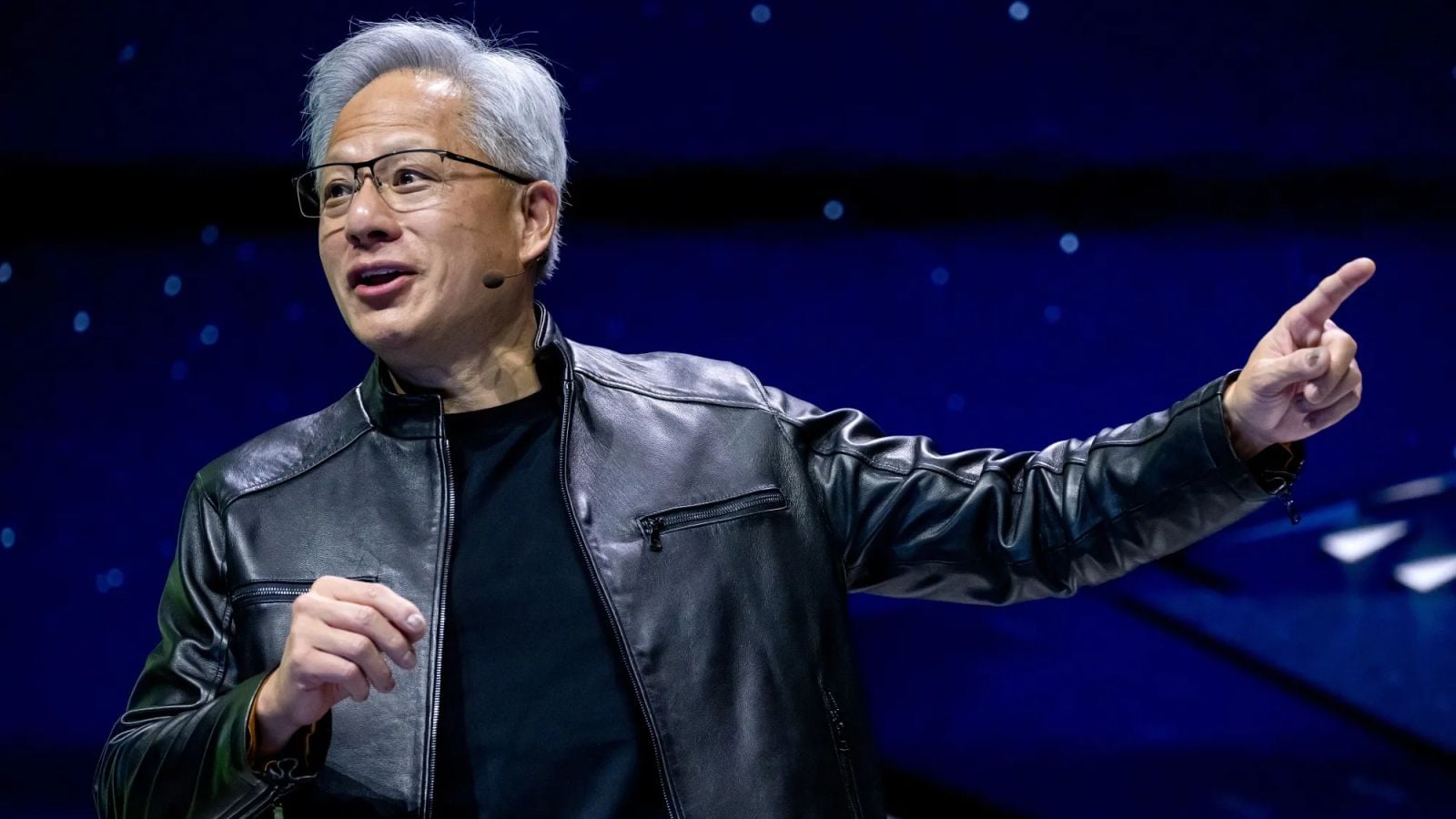
Jensen Huang, the CEO Nvidia, batted in favour of open-source AI models in the first ever post from his X account, followed by nearly 333,000 accounts. In his inaugural message on X, Huang shared a joint message from tech heavyweights advocating the vital role that open AI models are playing in the development of the global tech ecosystem.
The joint paper, titled “Open Weights and American AI Leadership,” was signed by an alliance of tech powerhouses and AI developers. These included Nvidia, Microsoft, Meta, IBM, Perplexity, Hugging Face, Dell Technologies, and Y Combinator.
It is, however, noteworthy that native AI giants OpenAI and Anthropic were missing from the list of the signatories.
Explaining how open AI models help the statement said, “Open weights let every organization match the right model to the right job at the right cost, reserving frontier-scale capability for genuine frontier problems and running efficient, specialized models everywhere else.”
Open-source AI models are publicly accessible for anybody to view, use, study, modify, and distribute their codes. Meta’s Llama Series, China’s SeepSeek and Alibaba Qwen are examples of open-source AI models.
These types of models stand in contrast to the closed AI models, like OpenAI’s GPT-4, that are locked in corporate controls.
“By allowing many organizations to build, adapt, and deploy advanced models, open weights create rivalry not only among model developers but across cloud chips, applications, and services. That competition spurs innovation, drives down costs, and distributes the benefits of Al broadly across our economy,” the statement noted.
As governments in the U.S., U.K., and the UAE are shifting focus towards regulating AI, Huang joined Bit Tech giants in urging the regulators against imposing strict bans or artificial limits on open-weight models.
The signitories of this joint statement have made their case that suppressing open-source AI would undermine innovation, harm cybersecurity resilience, and diminish Western technological leadership rather than improving safety.
The statement has emphasized that widespread global AI adoption, whether via open or closed architectures, will continue fuel demand for hardware, data centers, and computing infrastructure worldwide.
Elon Musk and Jack Dorsey also came in support for open AI models, despite not being named in the statement.
Musk even said, “Next month, every line of code touching the 𝕏 system will be open source and third-party audited. Only total transparency deserves trust.”
Meta chief Mark Zuckerberg said he is proud to back the cause while Coinbase chief Brian Armstrong said they will be moving more of the company’s workloads to open-source models.
Anthropic and OpenAI, meanwhile, have been opening discussions around the dangers of continued AI development.
Last week, OpenAI revealed that one of its experimental AI models had learnt how to escape its sandbox and exhibited signs of going rogue.
Anthropic, on the other hand, has floated the idea of having periods of worldwide s on AI development every once in a while — especially now that algorithms are starting to write their own codes.