Samsung begins mass production of 4-nanometer language processing units as Nvidia expands into fast-growing AI inference market
Nvidia has begun mass production of its Groq 3 LPX inference accelerator, with Samsung Electronics manufacturing the key chips, raising expectations that the Korean tech giant’s loss-making foundry business could return to profit as early as this year.
Nvidia said Tuesday at the Hot Chips 2026 conference in California that Groq 3 LPX has entered full-scale production as the AI chip leader expands beyond graphics processing units into a broader computing stack spanning training, inference, systems and software.
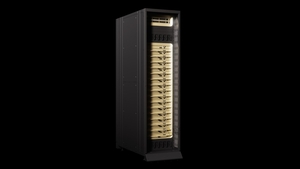
The Groq 3 LPX is a rack-scale accelerator built with 256 language processing units, or LPUs, designed specifically for AI inference. Nvidia said the system can work alongside its latest Vera Rubin platform, with GPUs handling general-purpose workloads such as model training and Groq chips taking on inference-intensive tasks required by AI agents.
“Inference is the growth engine of AI,” Nvidia CEO Jensen Huang said. “Vera Rubin extends that vision for the era of agentic AI, with LPX enabling ultrafast token generation and another leap in AI throughput, efficiency and responsiveness.”
The Samsung foundry is the sole manufacturer of the Groq 3 LPX’s LPUs, produced using its 4-nanometer process, giving the company a potentially meaningful source of advanced-node volume as it works to narrow losses in its contract chipmaking business.
Huang confirmed the partnership at Nvidia’s GTC conference in March, saying Samsung was manufacturing the Groq 3 LPU and that Nvidia was ramping production “as fast as we possibly can.”
The ramp-up is fueling expectations that Samsung’s foundry operation could reach a turning point as early as the third quarter.
“The Samsung foundry is expected to enter a meaningful inflection point in the third quarter,” said Kim Dong-won, head of research at KB Securities. “Excluding costs such as provisions for performance bonuses, a return to profitability is expected for the first time in four years since 2022, supported by the recent 15 percent price increase and the ramp-up of 4-nanometer LPU production.”
Samsung has been widening its foundry ties with major technology companies including Nvidia, Tesla, Apple, Google and Broadcom, while potential cooperation with Anthropic on custom AI chips has also drawn market attention. With industry leader TSMC facing tight advanced-node capacity, analysts see room for Samsung to capture additional orders from AI companies seeking alternative supply.
Nvidia’s Groq push also reflects a broader shift in the AI chip market as its biggest customers increasingly develop silicon of their own.
Amazon already uses its Trainium AI chips in its cloud infrastructure and is considering offering them more broadly, while Google plans to sell its inference-focused tensor processing units to outside customers for the first time this year.
Nvidia moved to strengthen its position in inference last December when it secured licenses to Groq’s intellectual property and recruited key personnel from the AI chip startup in a deal valued at about $20 billion. Groq was founded by engineers who previously worked on Google’s TPU technology.
The company is simultaneously expanding further up the AI stack. Nvidia said Saturday it would invest about $7 billion in AI startup Poolside, securing technology licenses and bringing more than 100 of its employees into Nvidia to work on Nemotron 4, its upcoming trillion-parameter AI model slated for release this fall.
Nvidia is scheduled to report its fiscal second-quarter earnings early Thursday Korea time, with investors watching the results for fresh signals on AI infrastructure spending and the outlook for the broader semiconductor sector.
herim@heraldcorp.com