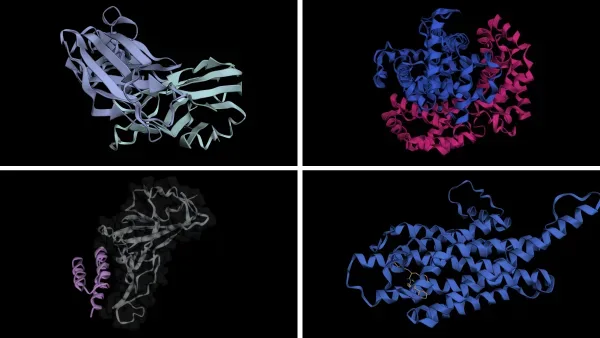
Biomolecular structure prediction at proteome scale is usually a bottleneck because of how PyTorch handles repeated operations. NVIDIA BioNeMo Inference Runtime (BioIR) attempts to solve this by bypassing the standard PyTorch overhead and using CUDA Graphs to record the execution path. In my experience, this is most effective when you have a massive worklist of sequences and need to maximize GPU utilization without rewriting your entire pipeline in C++.
How to implement BioIR in a PyTorch workflow #
The goal here is to maintain the PyTorch interface while gaining the speed of a dedicated inference engine. You aren't changing the model architecture; you are changing how the GPU executes the forward pass.
-
Install the BioNeMo environment. You'll need an NVIDIA GPU with sufficient VRAM (A100 or H100 are the standard for this) and the corresponding CUDA toolkit version.
-
Wrap your model with the BioIR runtime. Instead of calling
model(input), you route the request through the BioIR inference engine which optimizes the kernel execution. -
Define your sequence worklist. BioIR is designed for high-throughput, so the gains are most visible when batching thousands of proteins rather than running a single-off prediction.
Where the performance gains actually come from #
If you've run AlphaFold2 or ESMFold on raw PyTorch, you know the "kernel launch overhead" is a silent killer. BioIR addresses this in two specific ways:
- CUDA Graphs: It captures the sequence of GPU operations once and replays them. This removes the CPU-side overhead of launching thousands of tiny kernels for every single layer of the transformer.
- Optimized Kernels: It replaces generic PyTorch operators with versions specifically tuned for biomolecular data shapes, which reduces memory fragmentation.
When to avoid using BioIR #
It is not a magic bullet for every scenario. If you are doing interactive research—where you change the model parameters or the sequence length constantly—the "warm-up" time required to capture the CUDA Graph can actually make the process feel slower. BioIR is built for the "production" phase: where the model is frozen and the only goal is to process 10,000 sequences as fast as possible.
Comparison with standard PyTorch inference #
- Throughput: BioIR significantly outperforms standard PyTorch for large-scale batches because it minimizes the CPU-GPU synchronization gaps.
- Memory Usage: Expect a slight increase in VRAM usage during the graph capture phase, though the steady-state inference remains similar.
- Development Speed: Since it keeps the PyTorch workflow, you don't have to deal with the complexity of TensorRT engine compilation for every minor change, which is a huge time saver.
Next Subscription fatigue is driving a fake AI gold rush →
All Replies (4) #
Finally some relief on the overhead. I wonder if this actually helps with the 4090's memory limits or if TensorRT is still better.
I want to try this tonight. Curious if the memory savings are actually negligible compared to TensorRT 10.2?
Ugh, finally. My old pipeline spent half its time on PyTorch overhead. I'm curious if this fixes the 0x04 error in BioNeMo.
I'm dying to try this tonight. Does the latency drop actually hold up when scaling past 2000 residues?