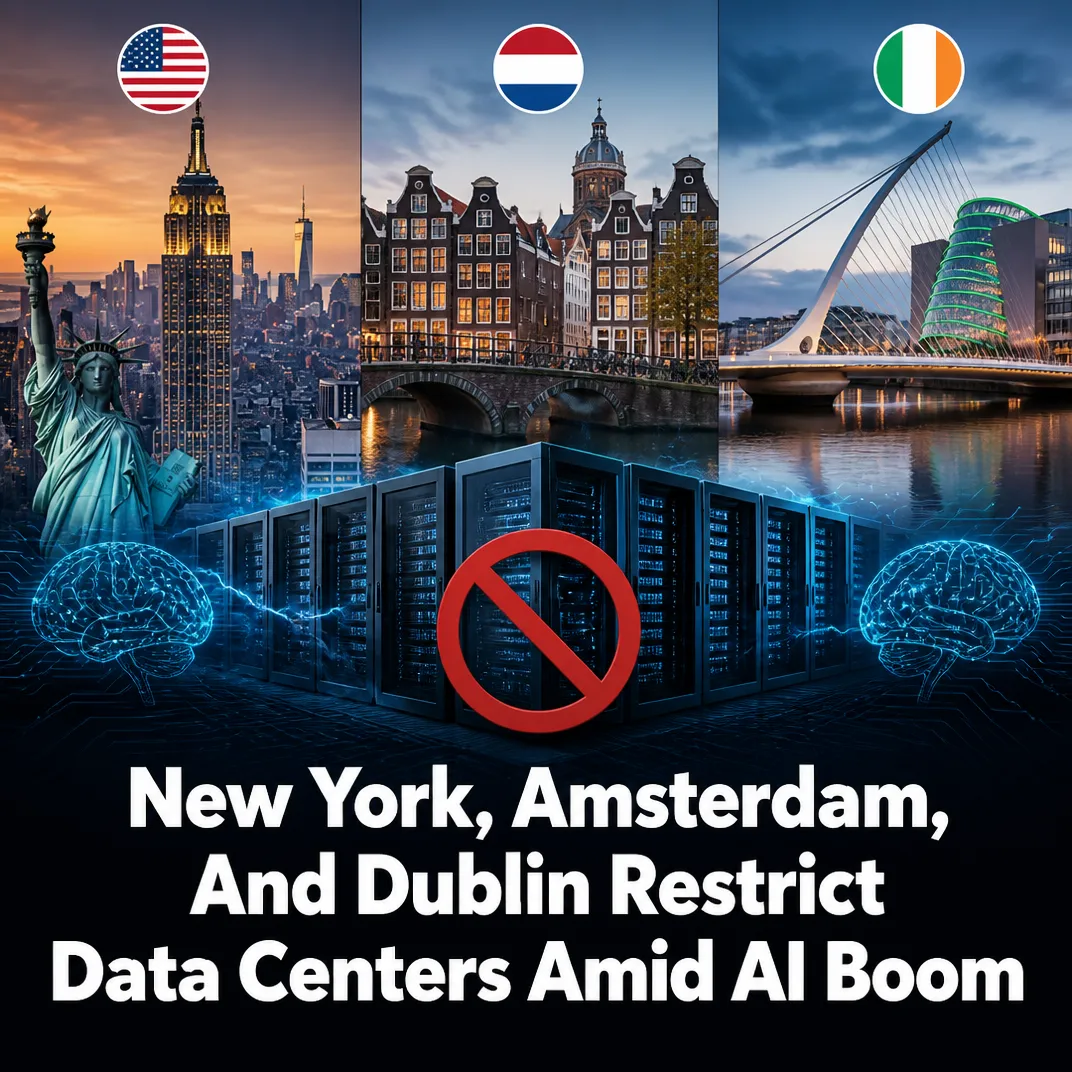
July 14, 2026, (Inside AI) — A global wave of regulatory pushback is reshaping where and how data centers can be built, as governments from New York to Amsterdam confront the hidden costs of the AI boom. Electricity grid strain, water scarcity, land use conflicts, and community opposition are driving a patchwork of moratoriums, bans, and conditional approvals that could redefine the infrastructure underpinning artificial intelligence.
On July 14, 2026, Reuters reported that a growing number of authorities are freezing, restricting, or outright banning new data center construction. The moves target the massive energy and resource demands of facilities powering everything from large language models to cloud services. While some measures are temporary, others signal a permanent shift in how societies balance technological progress with environmental and social limits.
New York Governor Kathy Hochul imposed a one-year moratorium on data centers using 50 megawatts or more of power, making New York the first U.S. state to enact a full freeze. During this period, the Department of Environmental Conservation will withhold new discretionary permits while developing standards to assess environmental impact. The move reflects growing alarm over the carbon footprint and grid impacts of hyperscale facilities. In Maine, a bipartisan bill for an 18-month moratorium on data centers exceeding 20 MW was vetoed by Governor Janet Mills. She supported the moratorium in principle but objected to the bill's lack of an exception for a project in the Town of Jay. The veto highlights the tension between state-level policy and local economic interests, a recurring theme in data center siting battles.
Monterey Park, California, became the first U.S. city to permanently ban data centers through a ballot measure in June 2026. The vote followed public backlash over a planned facility, underscoring how community resistance can override industry promises of jobs and tax revenue. This direct democracy approach may inspire similar campaigns in other municipalities facing data center proposals.
European Hubs Tighten Controls #
Amsterdam imposed a one-year moratorium in 2019 and, in April 2025, barred new data centers or expansions until at least 2030. The Dutch capital's stance reflects broader national policy: since 2022, the Netherlands has restricted hyperscale data centers to two designated locations. However, Microsoft won approval in January 2026 for a project split into three towers, each below the size threshold, demonstrating how companies adapt to regulatory constraints.
Dublin's grid operator effectively blocked new data center connections around the city from 2021 after warnings of grid strain. The freeze ended in December 2025, but new connections must now bring their own on-site power generation. This requirement shifts the burden of energy resilience onto operators, potentially increasing costs and favoring those with deep pockets for renewable microgrids.
The restrictions come as global data center electricity consumption is projected to double by 2030, according to the International Energy Agency. AI workloads, particularly training runs for models like GPT-5, are a major driver. A single hyperscale facility can consume as much power as a small city, raising questions about whether existing grids can handle the load without massive upgrades.
Water usage is another flashpoint. Data centers can evaporate millions of gallons daily for cooling, straining supplies in drought-prone regions. In 2024, a proposed Google facility in Chile was halted by a court due to water concerns. These environmental pressures are forcing a reckoning: the AI industry's physical footprint is no longer invisible to regulators and the public.
Industry groups argue that moratoriums risk stifling innovation and economic growth. The Data Center Coalition has warned that restrictions could push investment to less regulated regions, potentially increasing global emissions if those areas rely on fossil fuels. Yet critics counter that unchecked expansion externalizes costs onto communities and ecosystems.
A Shifting Landscape for AI Infrastructure #
Looking ahead, the patchwork of rules may accelerate trends like edge computing and liquid cooling, which reduce per-facility footprints. Companies may also invest more in on-site renewables and battery storage to meet new requirements. The Monterey Park ban, in particular, could embolden other cities to use zoning and ballot initiatives as tools against data center sprawl.
As AI adoption surges, the infrastructure debate is moving from technical circles to town halls and ballot boxes. The outcome will shape not only where data centers are built, but how the industry addresses its growing environmental and social responsibilities.
Reporting by Hugo Lhomedet and Cian Muenster in Gdansk; Editing by Matt Scuffham. Our Standards: The Thomson Reuters Trust Principles.