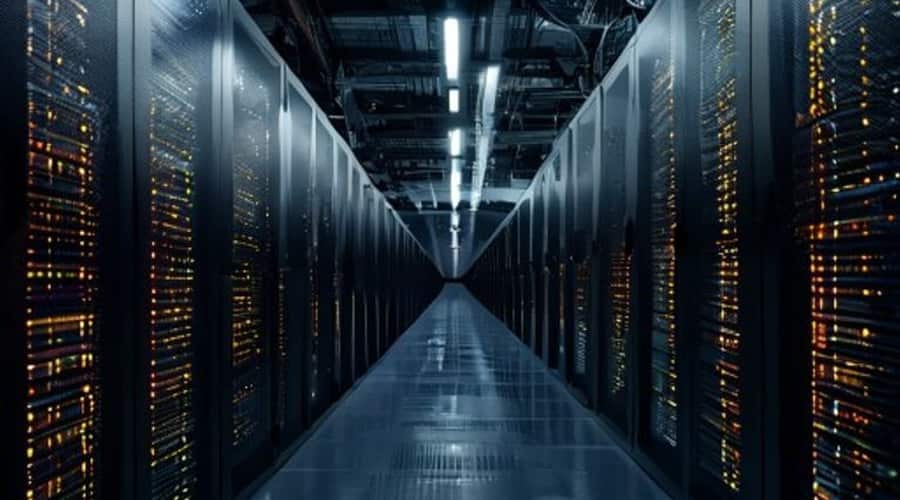
Moody's issued a sector-wide credit warning on July 24, flagging that the combined AI capital spending of six tech giants, including Amazon, Alphabet, and Meta, will hit $785 billion in 2026 and approach $1 trillion by 2027, threatening the credit quality of companies that built their fortunes on asset-light software models.
The bond market has been watching the AI infrastructure buildout with growing unease. Now it has a number to pin to the anxiety. According to Moody's July 24 report, the six largest US hyperscalers - Microsoft, Amazon, Alphabet, Meta, Oracle, and CoreWeave - are collectively spending at a pace that's rewriting what it means to be a technology company. The firm projects $785 billion in combined capex for 2026, rising to roughly $1 trillion in 2027. That isn't just a big number. It's a structural verdict: the decades-long Silicon Valley formula of replicating software at near-zero marginal cost is giving way to something far more capital-hungry and far less forgiving.
The clearest single data point in Moody's warning is what happened to Alphabet in Q2 2026. The company posted negative free cash flow for the first time since its 2004 IPO, with capex of $44.9 billion outrunning $39.1 billion in operating cash flow to leave a roughly $5.9 billion gap. Alphabet also raised its full-year 2026 capex guidance to as much as $205 billion, up from a prior range of $180 to $190 billion. Revenue surged 24% year-over-year to $119.8 billion and Google Cloud revenue jumped 82% to $24.8 billion, so the underlying business isn't broken. But when a company generating that much cash still can't cover its own capital bill in a quarter, the scale of the infrastructure bet becomes impossible to minimise.
The capex figures are only part of the story. The more troubling signal from Moody's is the off-balance-sheet lease overhang. Total lease commitments across the six companies have ballooned to $1.2 trillion, with more than $820 billion of that tied to data centres not yet built. These obligations don't show up as traditional debt on a balance sheet, but Moody's treats them as debt-equivalent liabilities - binding companies to rent payments on infrastructure that is still years from completion. Direct on-balance-sheet debt across the group already stands at roughly $460 billion. Add the lease commitments and the adjusted picture looks considerably different from what any single earnings call presents.
This is exactly the kind of hidden risk that credit analysts flag before equity markets fully absorb it. The gap between reported financials and adjusted debt loads can persist for years - right up until the moment it can't. Moody's isn't predicting a crisis. It's saying that if AI revenue fails to scale proportionally to the infrastructure being built, the financial flexibility these companies have always enjoyed starts to compress in ways that weren't visible before this spending cycle began.
Moody's is careful to note that Microsoft, Alphabet, Amazon, and Meta still carry among the strongest corporate balance sheets on the planet. The immediate stress is concentrated elsewhere. Oracle sits at Baa2 with a negative outlook, two notches above junk. CoreWeave, the AI cloud provider that went public this year, is a different category of risk altogether. But the broader warning isn't really about those two companies. It's about what happens to the whole sector's credit profile if the revenue from AI doesn't arrive fast enough to service the infrastructure bets being made right now.
What this means if you're raising capital #
For founders and operators raising money in the current environment, the Moody's report surfaces a dynamic that gets little attention in the startup press. The hyperscalers aren't just competitors or cloud vendors. They're also the most important customers for the chip makers and data centre operators - and the energy companies scrambling to keep pace with them. When their free cash flow comes under pressure, the ripple effects move through procurement decisions and the pricing power that flows down to every company built on top of their platforms. There's also a less obvious implication for startup fundraising. The bond market scrutiny that Moody's is signalling typically precedes a tightening in corporate credit broadly, not just for the companies named in a specific report. Investors who have been comfortable with the AI growth narrative as a backstop for aggressive multiples will look harder at capital efficiency when the firms with the strongest balance sheets in corporate history are being stress-tested on exactly that dimension. The asset-light SaaS pitch gets harder to make when the infrastructure underneath it turns out to be very heavy indeed. Frankly, $1 trillion in annual capex by 2027 changes the conversation about what AI companies are, and what credit quality for the whole sector should look like.
Also read: Texas is pulling the $1.3 billion annual tax break that built its AI data center empire • X removes 42,000 AI reply bot accounts and the warning to growth marketers is impossible to ignore • How Beijing became China's biggest tech venture capitalist and why the debate is just starting