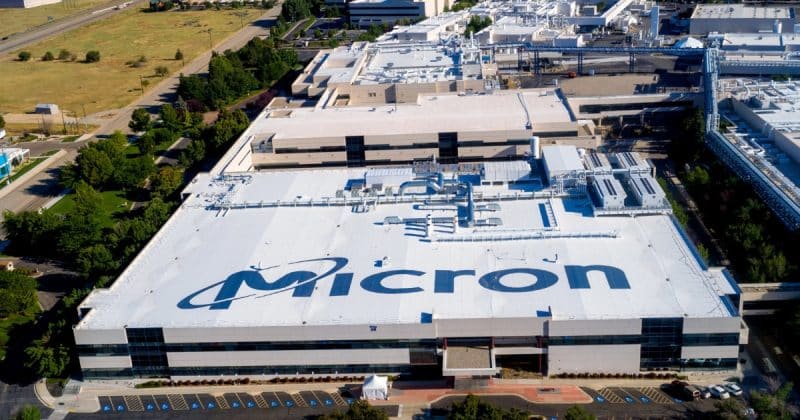
The memory chipmaker's steepest single-day drop in over a year dragged the entire semiconductor sector lower, with the Philadelphia Semiconductor Index falling nearly 8%
Micron Technology lost roughly 13% of its value on June 23, closing around $1,055 per share. The drop came exactly one day before the company’s fiscal Q3 2026 earnings report, which Wall Street has been treating like a referendum on the entire AI hardware boom.
The damage wasn’t limited to one ticker. The Nasdaq fell about 2% on the day, and the Philadelphia Semiconductor Index dropped approximately 7.87%, dragging names like Lam Research and Applied Materials down with it.
What triggered the selloff #
The most immediate catalyst was Broadcom. The chip giant’s recent guidance raised questions about whether AI spending targets were realistic, and investors apparently took that as permission to start locking in profits across the sector.
Micron’s stock had gained nearly 300% earlier in 2026, powered almost entirely by explosive demand for high-bandwidth memory chips, the specialized components that AI servers need to function. HBM capacity at Micron has been sold out, but investors started asking what happens after every available chip is spoken for — if demand plateaus, or even just grows more slowly, the valuation math stops working at these prices.
Why the earnings report matters beyond Micron #
Wall Street expected Micron’s fiscal Q3 report, scheduled for June 24, to show revenues in the $33 billion to $35 billion-plus range. Those numbers, driven primarily by AI memory demand, would represent a continuation of the growth trajectory that made Micron one of 2026’s best-performing stocks.
Analysts have pointed to these earnings as a crucial indicator for the broader trajectory of AI spending across the entire semiconductor industry. Micron sits at a unique intersection of the AI supply chain, manufacturing the memory that goes into virtually every AI training and inference server being deployed globally.
What this means for investors #
A 13% single-day drop accompanied by a nearly 8% decline in the Philadelphia Semiconductor Index reflects sector-wide reassessment of how much growth is already baked into current prices, not just a Micron-specific problem.
The forward guidance from Micron’s earnings call will matter more than the backward-looking revenue numbers. Investors should watch for commentary on HBM order visibility into 2027, pricing trends for high-bandwidth memory, and any signals about whether hyperscaler customers are adjusting their procurement timelines.
Disclosure: This article was edited by Editorial Team. For more information on how we create and review content, see our