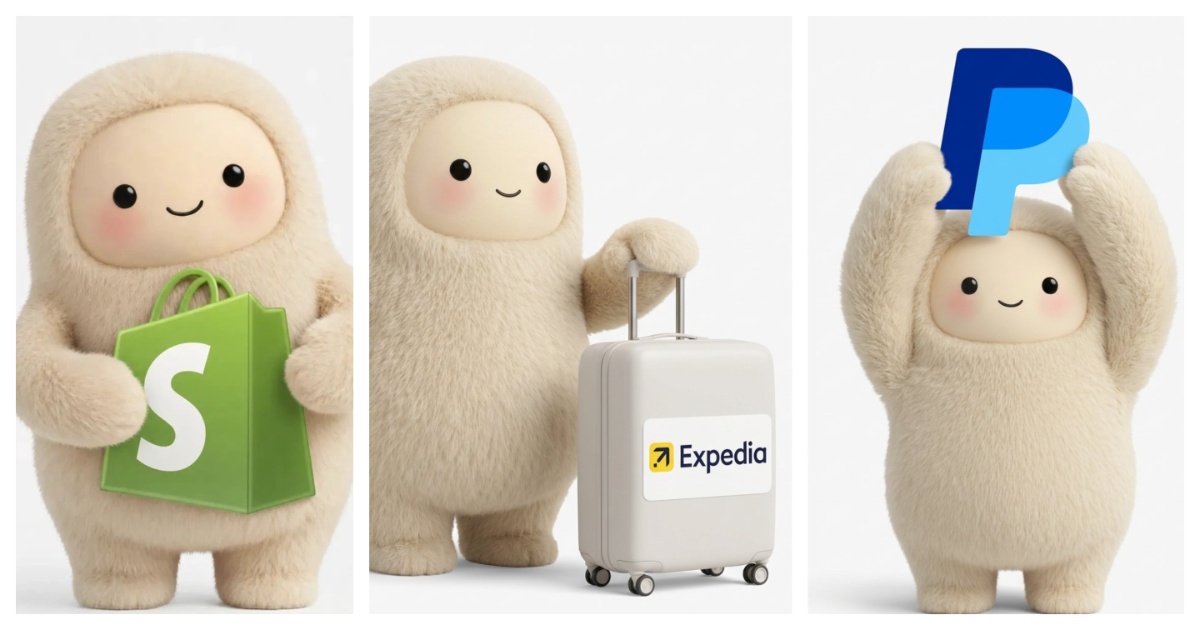
Meta is using its considerable heft to push its new AI agent, Muse.
Meta’s personal AI agent Muse is rolling out a wave of commerce partnerships, striking integration deals with Shopify, Instacart, Expedia and PayPal that push the assistant from a task-completion tool toward something closer to a full transaction layer for shopping, groceries and travel.
Shopify CEO Tobi Lütke announced that his company is “partnering deeply with Muse to enable agentic checkout with Shop Pay on all Shopify stores,” promising an easy way for users to shop and check out directly through the agent. Muse has also partnered with PayPal. “We’re excited to partner with Meta to enable PayPal customers to seamlessly shop and check out using their Muse personal AI agents across PayPal merchants worldwide,” PayPal said in a post on X.
Instacart’s integration is aimed at grocery shopping specifically, letting users turn a simple prompt like “Taco Tuesday” into a ready-to-checkout cart without manually searching for and adding items themselves. Expedia’s tie-up, meanwhile, focuses on travel, allowing Muse to plan trips and book hotels directly within the app rather than just surfacing links or recommendations.
Together, the four partnerships mark Meta’s first major step in opening up a “connector platform” that lets third parties plug their services into Muse so the agent can execute real purchases and bookings, rather than simply browsing on a user’s behalf. Meta AI chief Alexandr Wang called the platform “open for business” following the announcements.
The timing is notable. The new partnerships landed just days after Amazon blocked Muse from shopping on Amazon.com altogether, arguing that Meta never informed it the agent would access the site, that Muse doesn’t identify itself while browsing, and that it appears to store customer credentials in ways that raise privacy and security concerns. That standoff, detailed here, set up a clear split in how e-commerce players are responding to agentic shopping: Amazon locking Muse out, and Shopify, PayPal, Instacart and Expedia opening the door instead.
Muse itself launched on September 8 as Meta’s first consumer-facing agentic app, built on the company’s Muse Spark family of models developed under Wang’s Meta Superintelligence Labs. Those models have gone through several rapid iterations over the past few months, with releases like Muse Spark 1.2 and Muse Spark 1.3 posting steady gains on agentic and coding benchmarks, part of a broader turnaround effort following the Muse Spark launch that followed Meta’s messy Llama 4 benchmarking controversy and the resulting overhaul of its AI division.
Muse lets users connect personal accounts across categories like email, calendar, payments, health and shopping, then hand off tasks such as signing up for services, booking appointments, filling out forms and making calls. It runs on a dedicated virtual machine in Meta’s cloud with a visible built-in browser, and is offered free with paid tiers at $20 and $100 a month for heavier usage. The app has performed strongly since launch, briefly overtaking ChatGPT as the top free app on Apple’s US App Store, with roughly 730,000 downloads in its first five days.
The new commerce integrations suggest Meta wants to convert that early download momentum into an actual transaction business, positioning Muse as a checkout layer that sits on top of merchant platforms rather than competing with them directly, a strategy that stands in sharp contrast to Amazon’s more defensive posture toward AI agents shopping on its site.
Meta’s push comes as rivals including OpenAI, Google and Anthropic are all racing to define their own answers to agentic commerce, with Zuckerberg framing Muse as an early step toward what he’s called “personal superintelligence” — AI systems that don’t just answer questions but actively pursue goals on a person’s behalf.