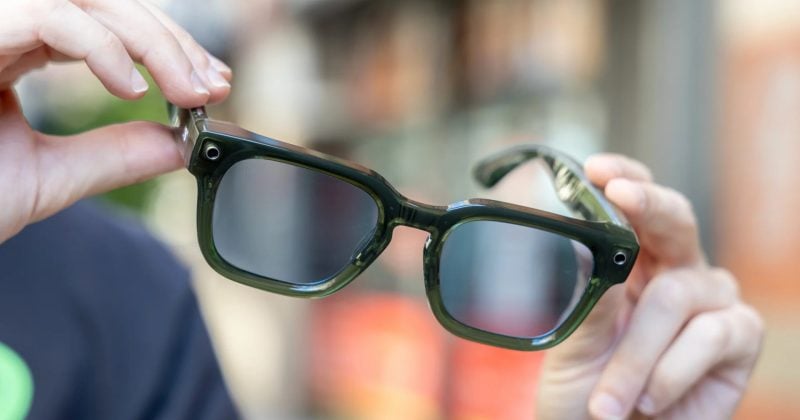
The always-on AI wearable raises fresh questions about surveillance, data ownership, and the inevitable collision between big tech's data appetite and crypto's privacy ethos.
Meta is building prototype smart glasses that can record audio continuously and snap photos every few seconds, creating a persistent digital memory that users can query through Meta AI. The device, reported by the Financial Times, represents the company’s most aggressive push yet into always-on wearable computing.
Here’s the thing: the raw recordings may not even be directly accessible to the person wearing the glasses. Instead, Meta AI would process the captured data and serve up answers when asked, something like “what did that person say to me earlier?”
What Meta is actually building #
The prototype, internally described as “super sensing” glasses, builds on Meta’s existing partnership with Ray-Ban that has produced commercial smart glasses since 2021. Those devices have sold millions of units, with current Gen 2 models offering features like live streaming, voice interaction, and real-time translation.
The current Ray-Ban Meta Gen 2 glasses allow 3 to 5 minutes of video recording per clip. The prototype flips that model entirely, aiming for constant capture rather than user-initiated recording.
One particularly notable detail: no visible recording indicator has been confirmed for the prototype. If that sounds familiar, it should. Google Glass faced withering public backlash over a decade ago for similar reasons.
The latest generation of Meta’s commercial smart glasses starts at $299 and offers AI capabilities including real-time translation and object recognition. The company continues to iterate on battery life and camera quality, two persistent constraints in the wearable form factor.
Meta CEO Mark Zuckerberg has framed wearable technology as the next computing frontier, positioning glasses as potential smartphone replacements.
The privacy problem that won’t go away #
Meta’s track record here doesn’t exactly inspire confidence. Past incidents involving contractors reviewing visuals captured by existing smart glasses models have already fueled skepticism about the company’s data handling practices.
The absence of a recording indicator is the specific design choice that privacy advocates will zero in on. Without a visible light or other signal, bystanders would have no way of knowing they’re being recorded. In jurisdictions with two-party consent laws for audio recording, this could create genuine legal exposure for users.
Then there’s the question of what happens to all that data. Meta says users won’t have direct access to the raw media, which means the company’s AI systems will process it instead.
Why the crypto and Web3 world should pay attention #
The core tension in Meta’s prototype is data ownership. A device captures everything you see and hear, processes it through a centralized AI system, and doesn’t even let you access the raw files.
Decentralized identity protocols, privacy-preserving computation networks, and on-chain data storage solutions were designed precisely to address scenarios where a single corporation becomes the custodian of intimate personal information. Projects building in the DePIN (Decentralized Physical Infrastructure Networks) space, which aim to create hardware-software ecosystems outside Big Tech’s control, could find a compelling narrative tailwind from Meta’s approach.
Meta has already sold millions of smart glasses, giving it a distribution advantage that no crypto-native hardware project can currently match.
Disclosure: This article was edited by Editorial Team. For more information on how we create and review content, see our