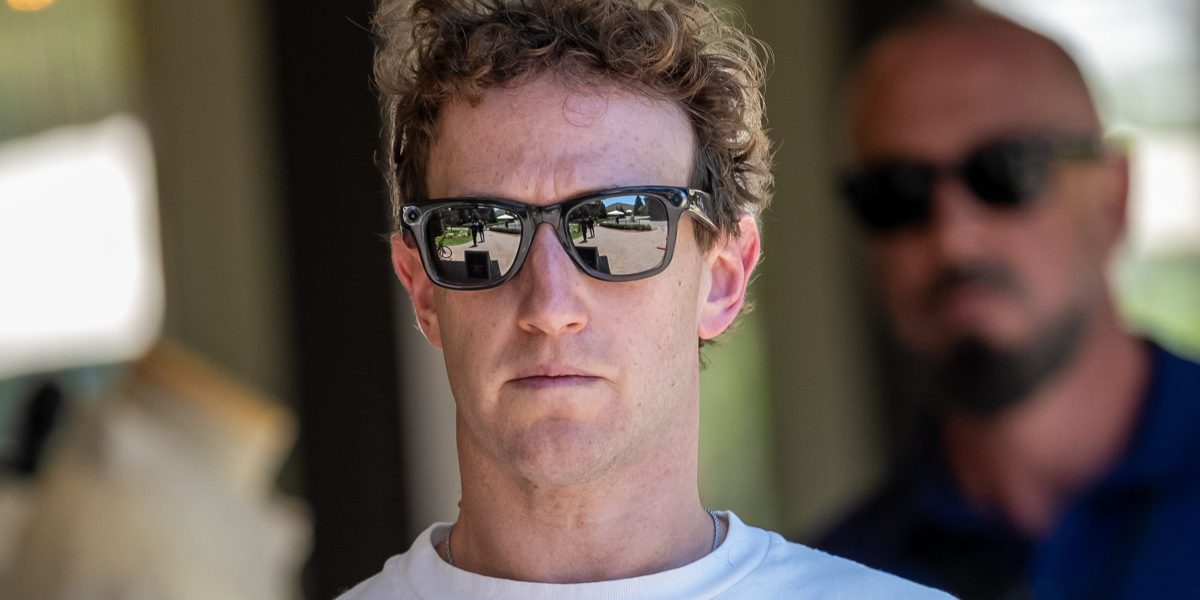
Meta launched its newest family of AI models—Muse Glimmer, a group of open-source models designed to run on a laptop—on Monday, alongside a 6,500-word essay from Mark Zuckerberg making the argument for American open-source AI.
In the essay, Zuckerberg argues that powerful AI should not be controlled by a handful of companies, a seeming jab at competitors like OpenAI and Anthropic. Zuckerberg positions Meta’s commitment to open-source as critical to challenging Chinese open-source models from DeepSeek and Moonshot which have been getting uncomfortably close to the American frontier. He also urged Washington to support American efforts.
As part of this new commitment, Meta says it plans to open the weights for Muse Spark 1.2—meaning it will publicly release the underlying trained parameters of the model, letting anyone download, inspect, and modify it rather than access it only through Meta’s own products or API—its most advanced AI model on the market.
“I do not believe restricting access to foreign open source models is an effective solution. Our goal should be for American open source models to be the best globally. This requires removing the hurdles that make it harder for American open source models to compete,” Zuckerberg wrote in the essay, part of a coordinated media blitz by Meta that included a Zuckerberg-penned opinion piece on the same themes in the Wall Street Journal last month and interviews with select media outlets.
The Muse Glimmer release lands in an American market increasingly dominated by closed-sourced AI companies, those that sell controlled access to their best models.
OpenAI, Anthropic, and Google generally keep their most advanced “frontier” models locked behind closed doors, retaining tight control of the weights and infrastructure. Meta initially sought to differentiate itself by embracing open source, launching the open-weight Llama family of models in February 2023. The Llama family, which expanded through several versions, helped make high-performing models available for outside developers to download and modify, and gave Meta influence over the wider AI ecosystem even as rivals captured more revenue by selling access to their proprietary models. Over the past year however, Meta’s commitment to open-weight has blurred, as the company mixed open releases with proprietary ones.
Meta has spent heavily on its new Superintelligence Labs, including bringing in former Scale AI CEO Alexander Wang. The company has been trying to position the Muse family as the foundation for a more capable Meta AI assistant across Facebook, Instagram, WhatsApp and its Ray-Ban Meta AI glasses, while also being competitive with models from Anthropic and OpenAI.
The shift and refocus on open-source may also reflect an attempt by Meta to try to regain momentum after recent models have fallen short of systems from OpenAI and Anthropic. Meta is also looking to reassure investors that it is still competitive with frontier labs.
Meta said it trained its new Glimmer series using distillation, a process in which a smaller model learns from Muse Spark, its larger proprietary system. In his essay, Zuckerberg wrote that American AI developers face disadvantages against Chinese rivals, including in training data, and argued that policy should reduce those barriers.
With the strategy shift, Meta will likely be hoping its commitment to open-source will set it apart from rivals that keep their most capable systems behind closed doors and give it a political argument for user and government support.
breaks the traditional barrier between audience and newsroom. The show transforms
Fortune Daily* Fortune*’s trusted reporting into actionable, conversational, and entertaining insights for an emerging class of business leaders.
Watch here.