The apartment in the StreetEasy photo is bright, airy, and a shade roomier than the walls actually permit. Under a plan from New York City mayor Zohran Mamdani, that listing would soon have to confess the touch-up.
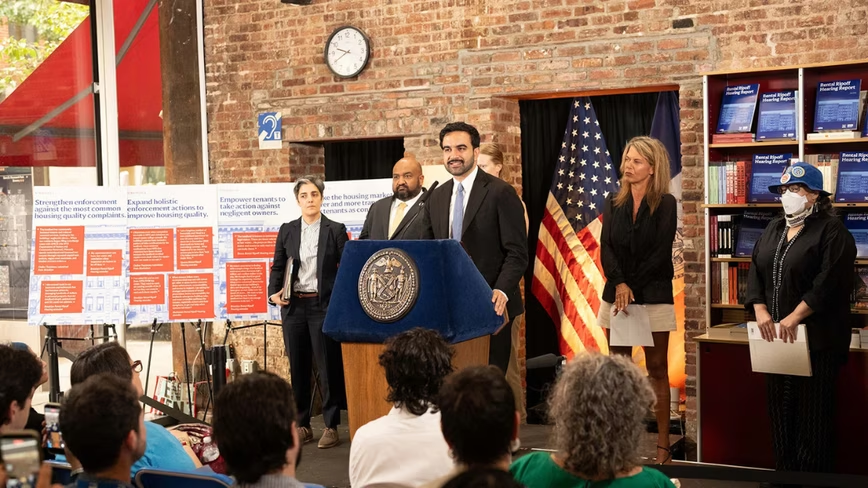
On 16 July his administration published the Rental Ripoff Report, a 23-point agenda drawn from the testimony of more than 2,400 tenants.
Its most modern idea would compel landlords and brokers to disclose when a listing image has been digitally altered, AI edits included, the sort of labelling that platforms already reach for when they auto-label AI-generated videos.
Enforcement would fall to the city’s Department of Consumer and Worker Protection, which would draft the rules.
The premise is blunt, that edited photographs can make a flat look larger, brighter, or better kept than it is, a gap even the watermarking tools built to catch deepfakes struggle to close once an image is loose online.
A companion measure goes after false and misleading rental advertisements directly, with the city saying it will coordinate with listing platforms including StreetEasy and Zillow.
Both proposals target the widening distance between the flat online and the flat you actually walk into.
Virtual staging is not new, but generative tools have made it near-instant and hard to catch: a bare room furnished in seconds, a cracked ceiling smoothed over, a dim studio bathed in impossible afternoon sun.
Renters often discover the difference only at the viewing, if they get one, or after the lease is signed.
Mamdani, a democratic socialist who took office this year, has put renting at the centre of his mayoralty, at a moment when AI is reshaping everything from listing photos to how properties are valued.
In June the city’s Rent Guidelines Board froze rents on roughly one million stabilised apartments, the promise that carried his campaign.
The report grew out of five months of hearings across the five boroughs, where pests drew the most complaints at 16% of testimony, followed closely by mould and leaks.
The city logged 2,419 participants in all, among them hundreds who spoke at private sessions and hundreds more who filed accounts online, describing fees that were never explained and repairs that were never made.
Most of the 23 items read less like tech policy and more like plumbing: faster housing-court cases, recurring fines for dangerous violations, and the city’s first formal recognition of tenant unions.
One would even trial smaller lifts in ageing walk-ups, and another would revisit the credit checks and the “40 times the rent” income test that shut many renters out.
“We are making it clear that every New Yorker deserves a safe home, and every landlord who refuses to provide one will be held accountable,” Mamdani said in releasing the report.
His consumer-protection commissioner framed the AI clause as an extension of powers the department already uses to police the rental market, including this year’s ban on tenant-paid broker fees.
Landlord groups are less sold. Real-estate bodies argued the rent freeze would push older buildings into disrepair by starving them of income, and some warn that a thicket of new disclosure rules adds cost and friction without fixing supply. The administration counters that honesty in a listing is the cheapest reform on the list.
The AI clause lands amid a wider unease about how opaque software shapes what renters see and pay, from algorithms accused of nudging rents upward to the location data used to manipulate airfare and car-rental prices. Disclosure, the theory runs, is cheaper than policing every pixel, and easier to sell to a public that has learned to distrust a suspiciously flattering photo.
None of the proposals is law yet. The consumer-protection rules still have to be written, and much of the wider agenda rests on the City Council or Albany, which means the warning label on your dream apartment remains, for now, a plan rather than a requirement.
Get the TNW newsletter #
Get the most important tech news in your inbox each week.