Senior officials seek stronger AI scrutiny as Trump rejects calls for additional guardrails #
A continuing White House AI dispute has reportedly widened, with Chief of Staff Susie Wiles, Treasury Secretary Scott Bessent and National Cyber Director Sean Cairncross pressing for closer scrutiny, while President Donald Trump and several technology executives argue against additional barriers to development.
The Wall Street Journal reported that the officials have been meeting almost daily in recent months to discuss potential safeguards, with people familiar with the discussions citing risks including cyberattacks on critical infrastructure and the banking system.
The report follows a series of policy reversals and public statements that have exposed competing approaches within Trump's administration. Officials supporting a voluntary review framework have been trying to persuade the president to take a more hands-on approach, according to the Journal.
White House AI Dispute Follows May Executive Order Reversal #
On 21 May, Trump scrapped or postponed a planned executive order that would have given the government a longer period to review advanced AI models before their public release.
It was reported that the decision followed last-minute lobbying from David Sacks and AI companies. Wiles and Bessent were caught off guard by the intervention, according to people familiar with the matter.
Sacks was the administration's AI and crypto adviser before leaving the formal role in late March. He later became co-chair of Trump's technology advisory council. The Journal reported that he helped persuade Trump to abandon the original plan during a final phone call.
The reversal did not end the administration's efforts to establish a review system. At the urging of Wiles, Bessent and Cairncross, Trump signed a scaled-back order in early June.
The revised framework created a voluntary process allowing the government to receive selected advanced AI models for review for up to 30 days before they are released to other trusted partners. The order explicitly bars the creation of mandatory government licensing, preclearance or permitting requirements for new AI models.
That difference is central to the dispute. The framework allows officials to examine certain systems before wider release, while leaving companies without a mandatory government approval requirement.
Cairncross was involved alongside Wiles and Bessent as officials worked to revive the proposal, rather than joining the effort only after the June order was signed.
Officials also discussed risks to the financial system. Those concerns were attributed to people familiar with the private meetings and have not been publicly detailed by the White House.
Trump Rejects Calls for More AI Guardrails #
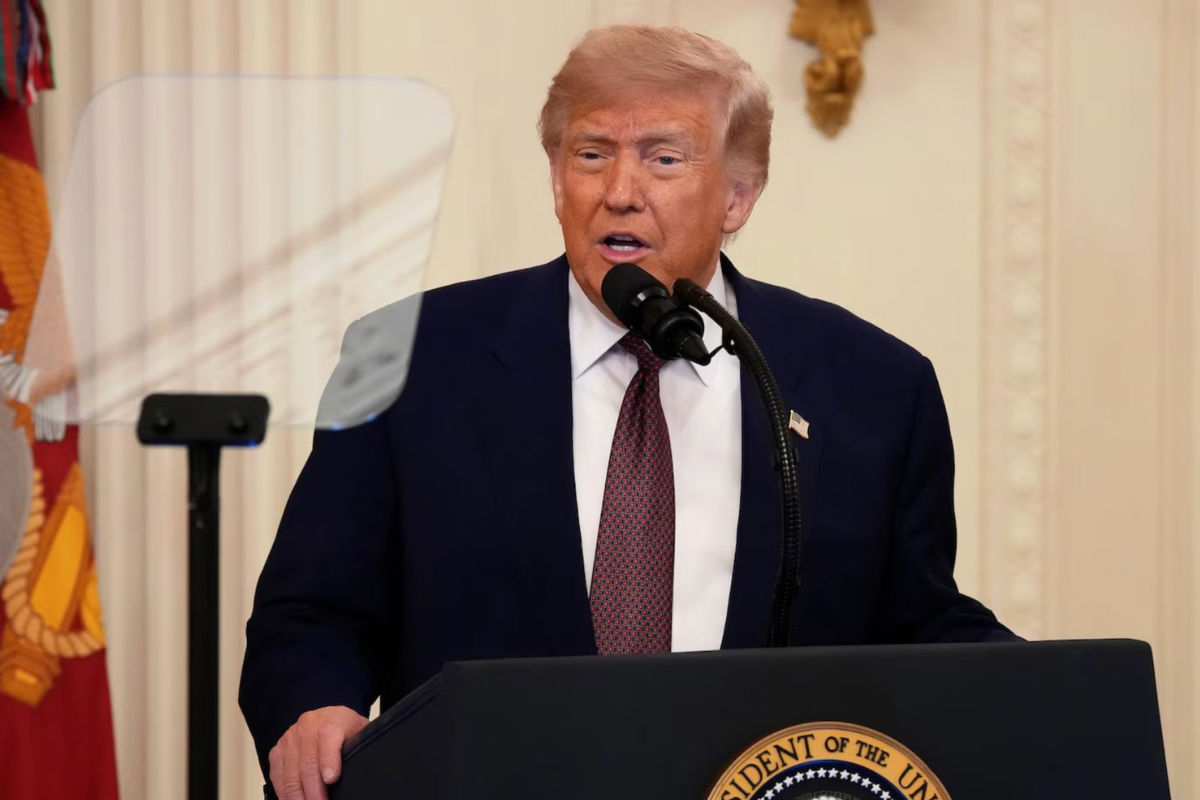
The internal disagreement became more visible on 14 September, when Trump rejected calls for additional safeguards in a series of Truth Social posts.
'The only control or 'guardrails' that AI needs is a STRONG AND SMART (High IQ!) PRESIDENT, and the U.S.A. has that, in spades!' he wrote.
Trump also said fears of 'AI taking over the World, destroying Humanity, and all other things bad' were a 'HOAX.' The president has linked the issue to competition with China, arguing that excessive regulation could weaken American companies and undermine the country's position in the global AI race.
A White House spokeswoman defended the administration's position, saying the Trump administration was committed to 'unleashing American innovation', supporting the deployment of advanced AI models and protecting national security.
Several technology leaders have also argued against heavier government intervention. Meta chief executive Mark Zuckerberg and Nvidia chief executive officer Jensen Huang have supported a less restrictive approach, while Elon Musk has also expressed concerns about proposed industry regulation.
It was reported that Michael Kratsios, director of the Office of Science and Technology Policy, proposed an independent body modelled on the Financial Industry Regulatory Authority. The proposal would involve industry and government representatives and assess advanced models before broader deployment.
The proposal stalled after Zuckerberg, Huang and Musk spoke with Trump about their concerns, according to people familiar with the matter. The reported sequence does not, by itself, establish that any single conversation caused the proposal to stall.
Sacks' financial links to the technology sector have also been reported. The former adviser remains connected to a venture capital firm with investments in AI and cryptocurrency. The Journal reported that some administration officials privately examined his business interests over concerns about potential conflicts, although those reports do not establish wrongdoing.
The disagreement has exposed competing approaches inside the administration. Some officials have argued for greater scrutiny because of potential cybersecurity and national-security risks, while Trump and some technology executives have warned that additional barriers could slow US development and weaken the country's position against China.
The administration's policy remains unsettled. The voluntary pre-deployment review framework signed by Trump in June remains in place, while officials continue to consider additional safeguards and oversight mechanisms.
The White House has not publicly confirmed every detail of the internal discussions. Claims about private meetings, individual interventions and officials' motivations should therefore be treated as attributed accounts rather than independently established facts.
© Copyright IBTimes 2026. All rights reserved.