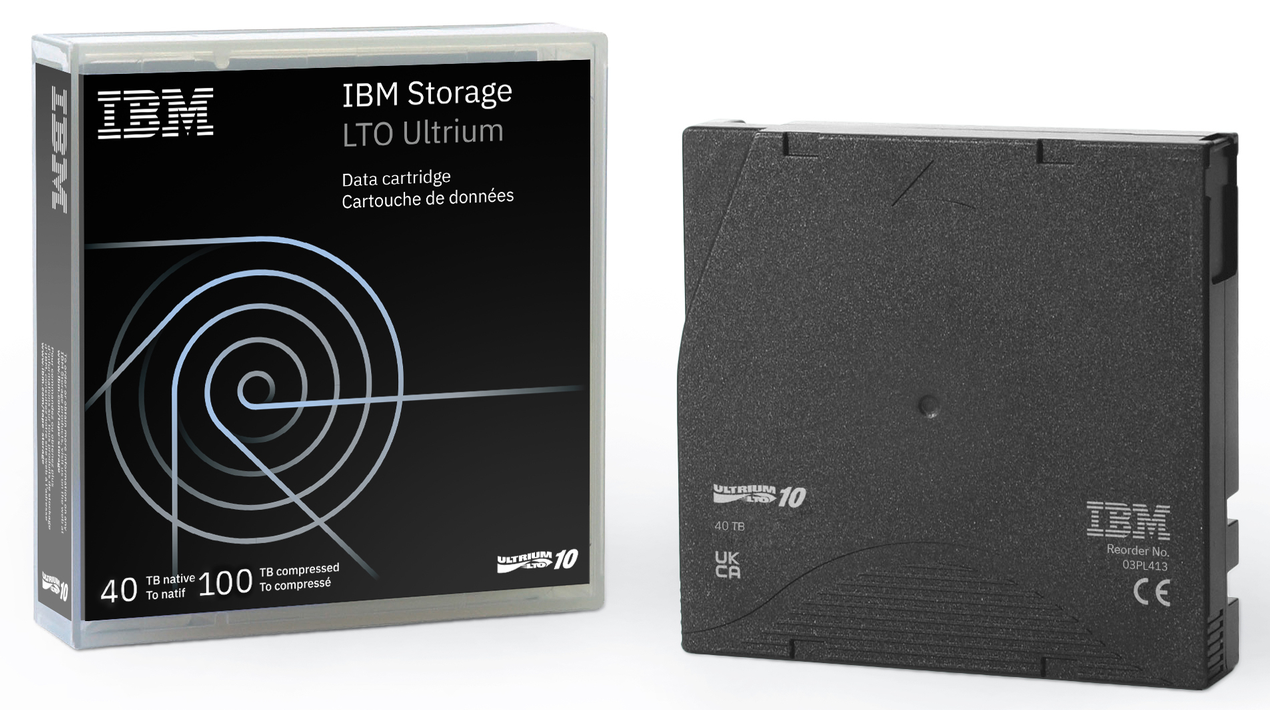
The Linear Tape-Open (LTO) Program Technology Provider Companies, comprising Hewlett Packard Enterprise, IBM Corporation, and Quantum Corporation, have released their annual tape media shipment report. Following sustained enterprise data expansion, the report highlights a strong start to 2026, driven by continued LTO-9 adoption and the rollout and initial capacity ramp-up of LTO-10 media.
According to the consortium, total shipped tape capacity in Q1 2026 increased 57 percent year over year compared to Q1 2025. This rebound follows an all-time record set in 2024, when total shipments reached 176.5 exabytes (a 15.4 percent annual increase). While total annual shipments settled back to 160.3 exabytes in 2025 (a 9 percent decline), the volume remained higher than any previous year on record prior to 2024. The arrival of the 40TB native capacity cartridge in early 2026 has provided an immediate density upgrade path for enterprise environments managing large-scale archival and secondary storage tiers.
Industry leadership notes that the ongoing increase in capacity requirements, power constraints in data centers, and the need for physically air-gapped cyber resilience are driving the integration of tape into modern hybrid architectures. The format is increasingly positioned as an economical cold tier to balance costly high-density flash and disk arrays, specifically for long-term retention and AI training datasets that require massive ingest capacity without constant active power draw.
Market analysis from industry observers indicates that, despite broader macroeconomic and international trade headwinds affecting enterprise procurement cycles, tape media maintains steady structural demand. The format’s low operational expenditure, zero idle power consumption per cartridge, and predictable media roadmap make it an effective hedge against data center power limitations. As organizations transition legacy libraries to current-generation hardware, the consortium expects total shipment volumes in 2026 to continue tracking toward new highs.