Member-only story
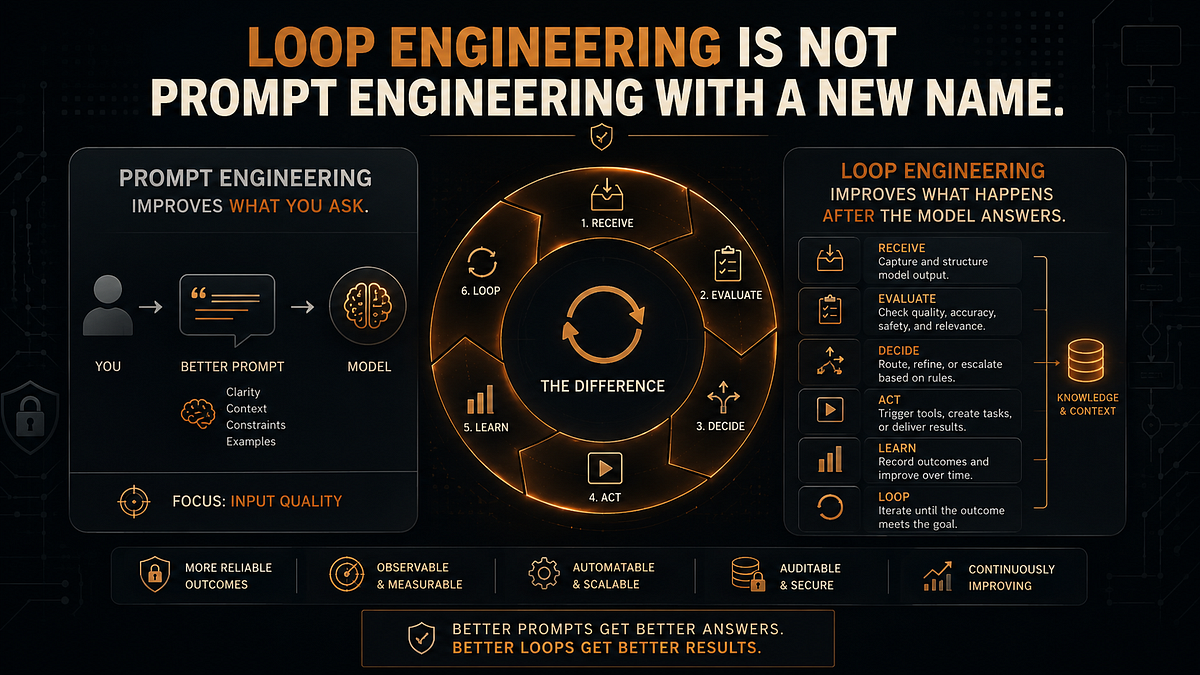
Prompt engineering improves what you ask. Loop engineering improves what happens after the model answers. #
More like this:[AI in practice — collection: Tools, agents, workflows, and engineering judgment]
The first wave of practical AI advice focused on prompts for a sensible reason: better prompts helped. When you gave the model a role, specified an output format, included examples, and stated constraints clearly, the result was usually better than a vague request followed by hope. That discipline was useful. It gave people a first practical layer for working with large language models.
The prompt-centered view starts to fail when the model is expected to do more than produce one reply.
Once an AI system reads files, calls tools, checks results, revises its own work, waits for approval, or retries after failure, the prompt is no longer the whole system. It is one component in a larger process. The important questions change from “What should I ask?” to “What evidence will the system see? What actions may it take? How will it know whether it is making progress? What happens when it is wrong? When should it stop? Who can intervene?”