Carly Bigi is shutting down the consumer apparel brand she used as a seven-year test bed and moving Laws of Motion entirely into B2B sizing software.
Laws of Motion said in a July 10, 2026 announcement that it will sunset its in-house womenswear brand in July 2026 and focus on licensing its sizing technology to apparel brands. The New York company launched the apparel line in 2019, according to the announcement, as a direct-to-consumer brand built around size inclusion, proprietary fit data and zero-waste manufacturing.
Bigi's path into the problem was practical before it was technical. Laws of Motion's legacy brand story says she was a management consultant shopping for work clothes when a male friend was measured for a suit in 30 minutes while she spent a weekend searching for womenswear, paid for tailoring and still ended up with worse fit. Columbia Business School lists Bigi as a Vanderbilt graduate, Columbia MBA, former Deloitte consultant and adjunct lecturer in Entrepreneurial Strategy who teaches a published case about Laws of Motion.
That founder history matters because the shutdown is a clean version of a startup decision many founders delay: Bigi is closing the brand that proved the point so Laws of Motion can sell the underlying system to the industry it was built to critique.
The test bed becomes the product
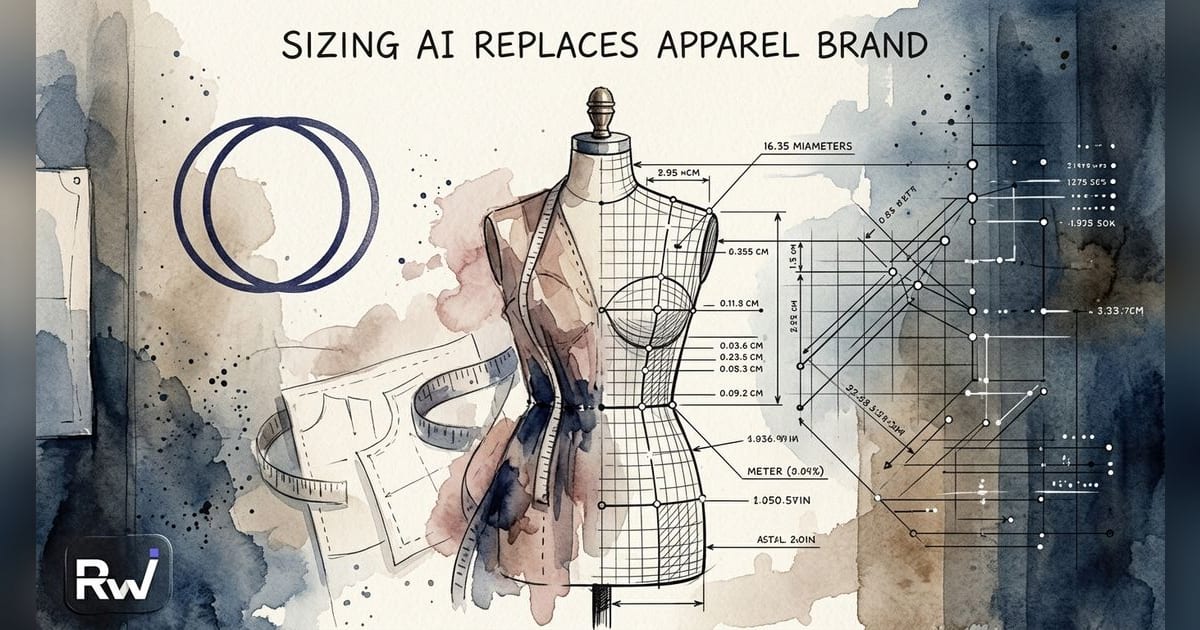
Laws of Motion says its software predicts body measurements with 99% accuracy, recommends the best-fitting size for each product and gives brands data on how their actual customers map to existing size runs. The release says the technology is already licensed by apparel brands including Alice + Olivia, ALC, Simkhai, Nour Hammour and Bondi Born.
The product pitch on Laws of Motion's AI sizing site is more specific than a generic size chart widget. Laws of Motion describes a "1:1 body-to-SKU methodology" that uses calculated body measurements and product-specific fit considerations. Shoppers can use a fit quiz, body scan or manual measurements, and Laws of Motion says in-cart prompts reduce size sampling by reminding shoppers which size should fit best.
The performance numbers remain company-supplied. Laws of Motion says the platform powers 20x conversion, 70% fewer returns, 90% less size sampling and 30% shopper usage. Laws of Motion has not published an independent audit of those figures in the announcement or on the current product site, and the July 10 release does not disclose customer count, revenue, ARR, pricing, contract size or gross margin.
Bigi framed the DTC years as data gathering. "Incubating our sizing technology in its own apparel brand provided unique insights," she said in the announcement. She added that "it's time to fully focus" on scaling Laws of Motion's technology.
That is the strategic hinge. Until now, Laws of Motion had kept the apparel brand as an R&D incubator alongside its SaaS sizing tools. On July 10, Bigi ended that dual-track approach.
The funding bought time to make the split
Laws of Motion raised $5 million in seed funding in May 2024, according to FinSMEs. The reported backers included Corazon Capital, The Scout Program at Sequoia Capital, Leadout Capital, Eva Jeanbart-Lorenzotti and John Howard. FinSMEs reported at the time that Laws of Motion planned to use the capital to expand beyond direct-to-consumer, launch AI sizing technology licensing, enter new markets and grow engineering, R&D and licensing operations.
The July 2026 move is the other side of that financing plan. Running a womenswear label means inventory choices, merchandising calendars, customer acquisition, returns handling and production. Selling fit infrastructure to retailers means enterprise sales, integrations, account management and proof that the software changes unit economics for a brand. Keeping both alive made sense while the brand generated proprietary training and fit data. The shutdown says the data lab has done its job, or that the opportunity cost of operating it has become too high.
The announcement does not say how many employees will move from the apparel side to the software side, how the consumer brand's remaining inventory will be handled, or whether Laws of Motion will preserve the apparel site as a data collection channel after sales end.
Fit tech is moving closer to the checkout layer
Laws of Motion is making the pivot as fit recommendation becomes part of a larger fight over AI shopping infrastructure. Returns remain a direct cost center for retailers: the National Retail Federation's 2025 Retail Returns Landscape estimated that 19.3% of online sales would be returned.
The category is also changing shape. True Fit said in February 2026 that it would launch an AI shopping agent built on nearly 20 years of purchase and returns data, with broader availability planned for April 2026. Gap Inc. said on March 24, 2026 that it would use Bold Metrics' Agent Sizing Protocol to bring predictive fit guidance into AI-driven shopping flows.
That competitive context cuts both ways for Laws of Motion. Retailers are clearly willing to test fit intelligence as online shopping moves toward chat, agents and embedded checkout. Larger rivals and retailer-backed systems have distribution advantages, longer data histories or direct access to major commerce channels.
The claims in this category also deserve care. A 2025 open-access study in the Journal of Innovation & Knowledge studied 496,365 items ordered through a major fashion e-commerce platform and found that shoppers using a size finder were 0.65% more likely to return an item, while customer lifetime value rose in later quarters. That does not disprove Laws of Motion's claims. It does show why brands will ask for proof at the SKU, cohort and margin level rather than accept return reduction as a category-wide given.
Laws of Motion's strongest argument is that Bigi did not start with a widget bolted onto someone else's store. She built the first data set inside a brand that had to make garments, ship them, fit real bodies and eat the cost when fit missed. The July 2026 shutdown turns that operating history into the sales story.
The next test is distribution. Laws of Motion has named a cluster of fashion customers, but it has not disclosed the size of those deployments or how much revenue licensing contributes. Bigi has now removed the ambiguity around what Laws of Motion is. The company is a sizing software business, and the apparel brand was the lab.