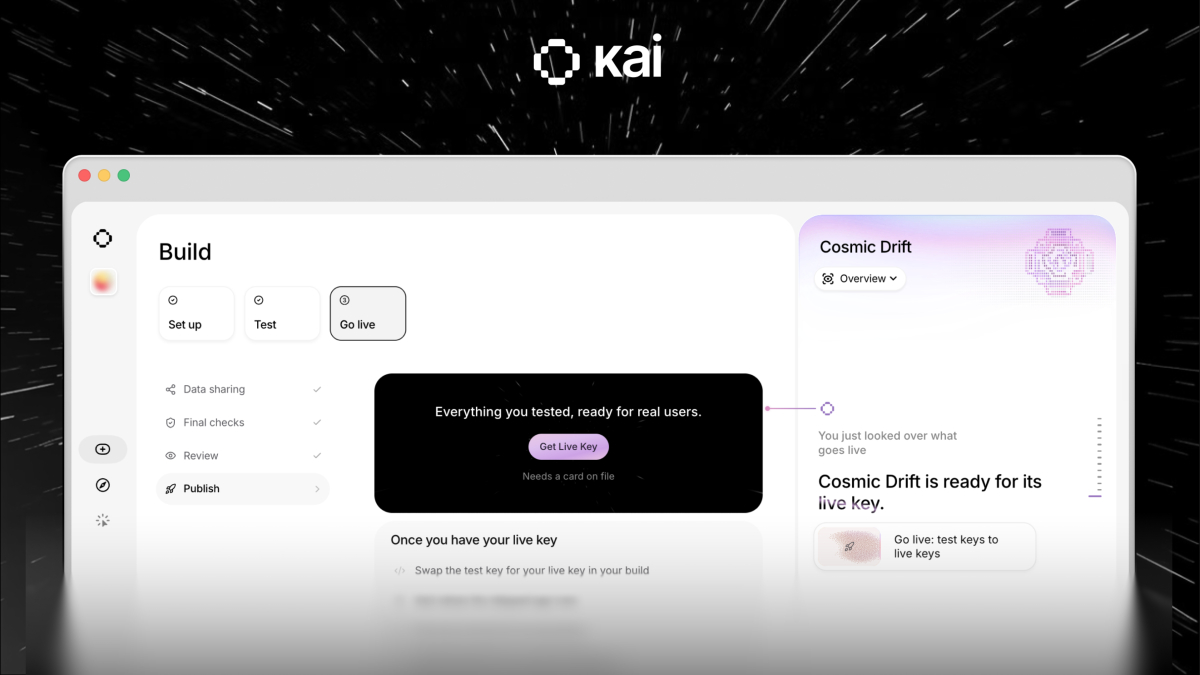
Join the Leaders Making Gaming’s Next Big Deals.GamesBeat NEXTbrings 500+ executives, CEOs, founders, and investors to San Francisco, November 2–3, to shape the future of gaming, entertainment, and AI. Connect with industry leaders, forge strategic partnerships, and close deals that move business forward.Be in the room. Get your ticket. k-ID have launched Kai, a self-serve SDK that makes any app age-adaptive. Every app has users of every age, but rules and regulations in a growing number of markets require that a child, a teenager and an adult receive different experiences.
Most builders have no way to tell them apart, nor do they have the time and resources to invest. Kai aims to offer streamlined integration that automatically deploys age assurance, and then applies k-ID’s age, consent and permission decisions for every user.
“Every app has users of every age, whether the people who built it planned for that or not. Making an app work properly for all of them has required recruiting specialists for months of work, so most apps simply treat everyone the same. Kai puts age-adaptive design within reach of anyone building, with one SDK, and keeps it true as the rules change,” said Kieran Donovan, CEO, k-ID, in a press release.
Userbases are growing with more younger users accessing apps, spread across more markets, and tapping into more of what an app can do. The only thing most builders know about them is a self-declared age, and in a growing number of markets that is no longer acceptable. Kai brings in age assurance at the point a feature needs it.
A small team can take an idea to a working app in hours, but cannot buy the specialist knowledge that makes it work for every age in every market, and should be building a product, not compliance infrastructure. A large company has that knowledge and still builds, reviews, takes the comments and rebuilds, because the answer arrives after the code. Kai puts the answer in the same cycle as the code, inside the coding agents builders already use.
The obligation does not stop at the sign-up screen. It covers how the app behaves for each user, feature by feature and market by market. That is age-adaptive design. Kai applies it. A builder signs up with no sales call and no credit card. They simply register, explain who the app is for, what it does, and add the SDK. Kai turns that into the permissions for each age.
The same build then behaves differently for different users. Chat might need a parent’s approval for a twelve-year-old, be open to an adult, and behave differently again for two users of the same age in different markets, without the builder writing separate rules for each one. Any combination can be checked in Test before going live.
Kai applies k-ID’s age, consent and permission decisions and shows what it applied. Certification, legal advice and the product itself stay with the builder, along with their privacy policy and terms.