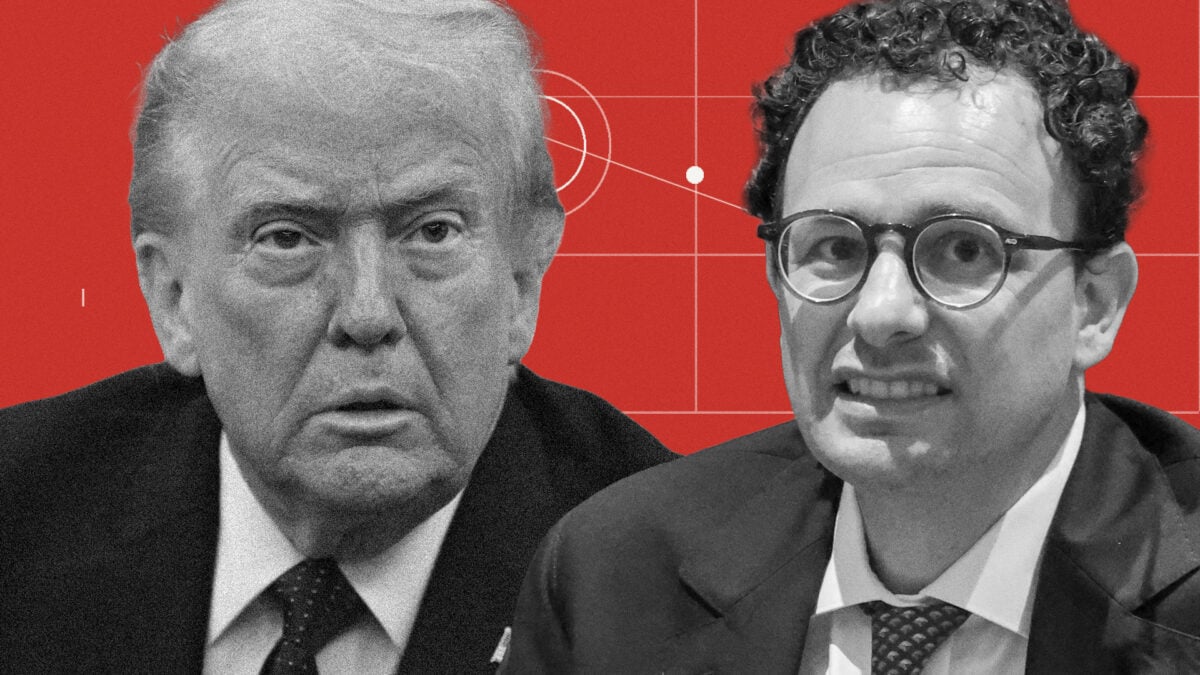
Anthropic just scored a major win in its fight against President Donald Trump’s administration over efforts to blacklist the AI company.
U.S. District Judge Rita Lin ruled Thursday in Anthropic’s lawsuit against the Pentagon, Defense Secretary Pete Hegseth, and several other federal agencies over the administration’s decision to designate the company a national security supply-chain risk. This followed a dispute between the company and the government over how Anthropic’s AI technology could be used in classified military settings.
Lin wrote in her 59-page ruling that the government’s actions “constituted unlawful retaliation” in violation of Anthropic’s First Amendment rights and denied the company due process required under the Fifth Amendment.
The judge acknowledged that the government has the right to weigh in on national security concerns. But she said its actions showed the move was “based on a desire to make a public example out of Anthropic for its ‘arrogance’ in criticizing the government, not based on any articulable basis to believe that Anthropic would actually sabotage its model.”
Earlier this year, Anthropic, then the only major AI company working with the Pentagon on classified systems, reportedly hit a wall in negotiations with the DoD after officials pushed for language allowing Anthropic’s technology to be used for “any lawful purpose.” The biggest sticking points involved potential uses tied to domestic surveillance and autonomous weapons systems.
After those talks fell apart, the Trump administration designated the company as a supply chain risk, a label typically used for foreign companies considered a potential threat to national security.
Anthropic responded by filing two lawsuits challenging the administration’s actions. The second case is still ongoing in federal appeals court in Washington, D.C.
In Thursday’s ruling, Lin found that the government had not provided sufficient evidence that Anthropic actually posed a national security threat.
She also pointed out that even after labeling Anthropic a security risk, government officials continued talking with the company about working together.
President Donald Trump himself even said in April that his administration has had “some very good talks” with Anthropic and suggested a future agreement restoring the company’s access to Pentagon work could still be “possible.”
Additionally, the government ordered Anthropic in June to restrict foreign nationals’ access to its Fable 5 and Mythos 5 models over cybersecurity concerns, prompting the company to temporarily shut off access for everyone. The restrictions were lifted later that month. Anthropic eventually restored access to the models with updated safeguards.
“None of that is consistent with a genuine fear that Anthropic is a saboteur who would poison its software to harm national security,” wrote Lin.
Anthropic did not immediately respond to a request for comment. However, a spokesperson told The New York Times, “We welcome the court’s ruling that this supply chain risk designation was unlawful. We remain focused on working productively with the government to harness A.I. for our national security so all Americans benefit from this technology.”
The Pentagon did not immediately respond to a request for comment.