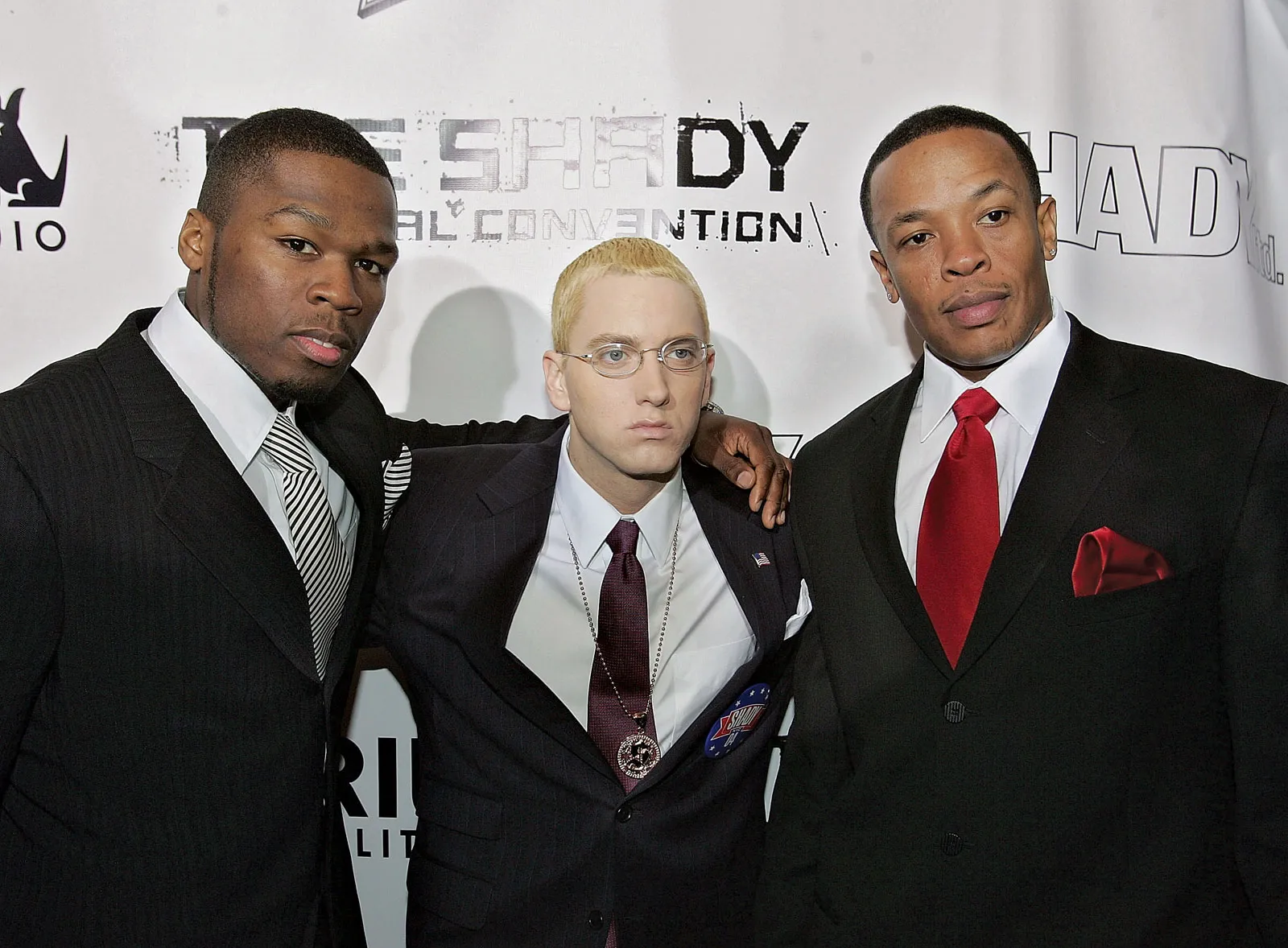
While there is considerable concern from internet commentators on how AI could impact creative fields, some of the best-known names in the space seem to be embracing it. Dr. Dre, the producer who shaped the sound of West Coast hip-hop and helped launch the careers of artists from Snoop Dogg to Eminem, has made his position on artificial intelligence clear: he sees it as a tool, not a threat. In a recent conversation with Jimmy Iovine published in The New York Times, Dre said the only people who view AI as a threat are “the people who have trouble creating.” He went further, comparing the current backlash against AI to the resistance that greeted drum machines and synthesizers when they first arrived. “It’s a new tool for creativity,” he said. “Some people are afraid of learning new things.”
That framing puts Dre in a growing camp of established artists who are treating AI as an instrument rather than an existential risk. Rick Rubin, another legendary producer with credits spanning Johnny Cash to Jay-Z, has gone as far as hiring an “AI Sensei” to live with him in Tuscany for a month and teach him the current stack of AI tools. Rubin has described vibe coding as the punk rock of software creation — a democratizing force that lowers technical barriers so anyone with an idea can execute it. Dre’s drum machine analogy and Rubin’s punk rock comparison both point to the same historical pattern: every major technological shift in music production has been met with skepticism before becoming standard.
Dre confirmed that he is actively using AI in his own production workflow. He described it as a way to see what the technology would do with material he had just created — essentially using it as a collaborative partner to explore variations and possibilities he might not have arrived at on his own. Timbaland, the producer behind some of the most distinctive pop and hip-hop records of the past two decades, is doing the same. Iovine noted during the conversation that there are “a lot of closet A.I. producers out there” who are using the tools but reluctant to admit it publicly. Dre’s response: “They’re using it, they just don’t want to admit it.”
That gap between private adoption and public acknowledgment is interesting. The music industry has spent years in a defensive posture on AI, with much of the discourse centered on voice cloning, copyright infringement, and the fear that generative models will replace human artists. Those concerns are real, and they have produced genuine policy debates and legal battles. But the conversation among working producers appears to be running on a separate track. For people whose livelihood depends on making music that connects with listeners, AI is increasingly becoming another item in the toolkit, sitting alongside drum machines, samplers, and digital audio workstations.
The comparison to earlier technologies is not just rhetorical convenience. When the Roland TR-808 drum machine was released in 1980, it was widely dismissed as a toy that could never replicate the feel of a real drummer. It went on to become the foundational sound of hip-hop, techno, and pop. Synthesizers faced similar resistance from musicians who saw them as inauthentic before they became indispensable across virtually every genre. Dre’s point is that the pattern repeats: the people who adapt tend to be the ones who keep creating, while the ones who resist often find themselves left behind.
The broader creative industries are seeing the same dynamic play out. Netflix has used AI in its Argentinian series The Eternauts, and Amazon Prime deployed the technology heavily in House of David. An AI-generated song by Xania Monet recently became the first AI act to land on a Billboard radio chart. Google’s Magenta RealTime 2 model, released earlier this year, allows musicians to run live, low-latency music synthesis directly on a laptop without cloud dependency — essentially turning AI into a playable instrument. These are not fringe experiments. They are signals that the technology is moving from novelty to utility.
What distinguishes Dre’s stance from the more promotional AI enthusiasm coming from tech companies is the specificity of his use case. He is not claiming that AI will replace human creativity or that it represents some fundamental transformation of art itself. He is saying something more grounded: he made something, he fed it into an AI tool, and he found the results interesting enough to keep doing it. That is a producer’s mindset — evaluating tools based on what they actually produce in the studio, not on what they might theoretically do to the industry at large.