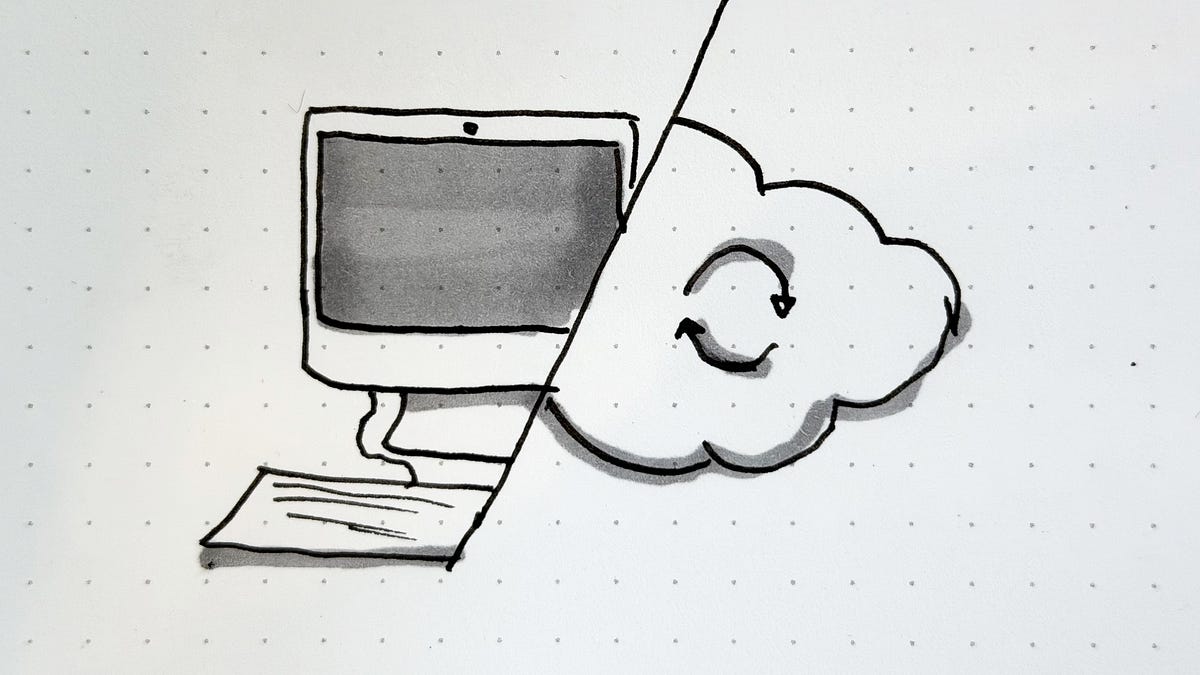
Issue 306: Have your cake and eat it: why agents belong local and cloud
I’m not a person to make a declarative statement or hot take on the spectrum of options. That’s why my life principle is, “Have your cake and eat it.” I do this with life, especially food: the Arnold Palmer, Cronut, and Ramen Burger are abundantly clear examples of this principle in action. This also applies to technology, software design, and company building.
Recently, Peter Yang posted online regarding an interesting tension about agents on the cloud or run locally. His instinct is correct; the concepts feel conflicting.
I have strong conviction on this dichotomy not only when it comes to AI and agents, but the general category of software computing once everything is re-written to be agentic (and it will). Many people rightfully believed in the 2000s that Cloud Computing is the future; still will. One desktop workflow at a time moved to the cloud: word processing became collaborative with Google Docs, file storage moved to Dropbox, design to Figma, and app building to Replit.
If this is the future, then why are people in 2026 (myself included) running local agents and models on their Mac minis and local hardware? If you look deeper at what the fusion of hyper-local, hyper-cloud brings, you’ll see how the concept complements instead of conflicts. The result is the best of both worlds for collaborative and individual productivity. Let’s look at the split between cloud and local: the problems it solves, the strengths of each, and a few workflows where I’m already working this way.
Cloud is contextual and collaborative #
Cloud remains critical infrastructure for obvious reasons, and it’s not going away. I run cloud agents as much as I do local agents, and the workflow will keep improving. But beyond cloud sessions, the cloud’s most critical role is as a facilitator—passing context between teams and individuals.
In the GitHub model, developers are used to pulling from a cloud-based repository. This model will flip: the cloud will push the latest to developers, designers, and knowledge workers working locally. The shift sounds small, but it’s significant. As generative work accelerates and people iterate faster, ambient awareness of what your teammate is working on becomes far more critical.
I often wonder, “What does the merge conflict look like for knowledge workers?” The answer is shared understanding, context, and alignment.
The natural thought is to put everything on the cloud. I think that’s a mistake. The early problem of the cloud was how much information could be stored; now terabytes of storage are economically approachable. The new problem is there is too much information for human beings to parse. This is what I call artifact slop: too many half-baked documents in the knowledge base, diluting understanding—the new bottleneck.
Local workflows are personal #
Despite all the tech innovation, there is something special about a person’s local, personal workflow. People put up stickers, build widgets, and customize their wallpapers to make the space feel like it’s theirs—the same way you set photos of family and pets on your desktop. I think the desktop metaphor is shifting to the coworking space, but people still want their personal notebooks.
Take OpenClaw. The frontier companies’ AI assistants used at work feel very professional; the agents people make for personal use feel almost like a Tamagotchi virtual pet.
## The hyper-local, hyper-cloud thesis

In January of 2026, I wrote about the [AI focus areas I’m most interested in](https://www.proofofconcept.pub/p/my-2026-focus-areas) that focused on five areas:
The natural language of drawing: returning to sketching as pre-work before spending time in front of terminals to prompt agentsDynamic interfaces: continued work on how AI experiences will create composable and malleable software/contentFrom desktop to command center:how agent orchestration will quite literally feel more like playing a Real-Time Strategy (RTS) gamePersonal LLMs and agents: how people need personal and customized tools in addition to the frontier models provided at workMemory interpreters and boundary agents: the holy grail of accessing personal and work context in a trustworthy way
Personal LLMs and agents has come to fruition—I called this before Clawbot → OpenClaw. Memory interpreters and boundary agents will keep taking shape. Jason Yuan’s new startup, Hivemind, is a social AI that has one-to-one conversations with many people at once. To me, that’s the boundary agent I described, and I believe it’s coming to the workplace.
The hurdles to navigate
I’ve been passionate about decentralized systems—particularly blockchain technologies—for more than 10 years, even before crypto. Distributed ledgers (blockchain is one type) are a viable pathway to pass personal context and workflows. All they need is the right graph context, permissions, and a trusted agent that can facilitate the information from local to cloud.
My experimental workflow #
Let’s look at three example scenarios of how I’m changing the way I work. They are small steps, but the shifts will lead to larger changes as I figure out the toolchain and workflow a bit better.
Scenario 1: OpenClaw squad
I have a squad of OpenClaw agents for my non-employer work and life—five agents running on separate local machines, primarily Mac minis. I keep them on local hardware because I want to see how they interact and collaborate based on the access each one has. It’s a way to prototype the boundary agent I think is key. My primary agent, Ren Talon, is the one I work with to pass themes from a personal Obsidian vault to a work one. A dedicated agent can write to my work vault, but it has no access to the personal notes—it only takes instructions from Ren to pass the insights along. These are general work notes from research and knowledge work.
Scenario 2: Creating fewer documents on the cloud
Because of Scenario 1, I gather more local notes. The result is I spend less time in Confluence with the editor open, and I publish fewer artifacts—because I’m enriching a handful of documents instead of creating document sprawl. AI slop isn’t only for vibe-coded software; it applies to documents too. It’s likely more people in the workplace will use AI to transact messaging instead of communicating ideas and reaching shared understanding. Creating fewer documents means I spend more time enriching my local notes and pulling from the Teamwork Graph to evaluate my content against what’s already been written.
Scenario 3: Software Gardens
Though I can’t get myself to say Software Factories, the concept is spot on and compelling. I’ll call it a Software Garden instead. Prototyping locally is cheap, private, and fast, so I can plant a lot of seeds without the pressure of anything being seen. I start with local models to prototype to reduce the continued cost of credits. To be clear, we have a long way to go with local models and getting outputs remotely close to the frontier models, but the potential is there. The few that take root graduate to GitHub, where they get a proper commit history and become durable. That’s the moment a personal experiment becomes shared infrastructure.
What makes this a garden and not a graveyard is the last step: once something lives on GitHub, I pass it to other projects as context. A prototype I built for one problem becomes reference material—patterns, snippets, and decisions—that seeds the next repo. My agents pull from those repositories the same way I pull from my Obsidian vault, so a good idea cross-pollinates instead of being rebuilt from scratch. The local machine is where I cultivate, GitHub is where it takes root, and the surrounding projects are what it goes on to feed. Hyper-local for the messy early growth, hyper-cloud for everything worth keeping.
What needs to improve
Even in the scenarios I shared, I proceed with caution when it comes to local and cloud I see three areas of breakthrough needed to really do this at scale:
A real boundary agent: Having a boundary agent that can securely pass information from your local sources to work is the future.Distributed ledgers: A trusted way to pass information from your local sessions and work to recording it on the cloud. When I ship software, I don’t want to bring all the embarrassing and messy work I iterated on, I want to share a more realized version that gets memorialized in the collaborative cloud.Unified identity: I believe in the future we’re going to see a work/life digital identity. The concept of a crypto wallet was interesting for this as something to store your account but connect to work. When I switch companies, there should be a track of context, skills, and integrations I should be able to bring with me. This sounds scary in the present, but eventually there is going to be a way to keep the right context in the employer system and contextualize what goes to you. Imagine a world where you onboard to a new company where all your preferences and experiences can immediately be connected.
The future of hyper-local, hyper-cloud #
Right now the local and cloud work streams are fragmented, but this will improve. Once hyper-local, hyper-cloud has shared memory, identity, and boundaries woven in—and more trusted—the future of work looks like many local devices and models connecting to cloud applications and models. I hope the result is a seamless, more ambient and contextual experience across our everyday lives and work.