Member-only story
✨Free access:Not a Medium member? No worries, you can read this story for free usingthis friend link!
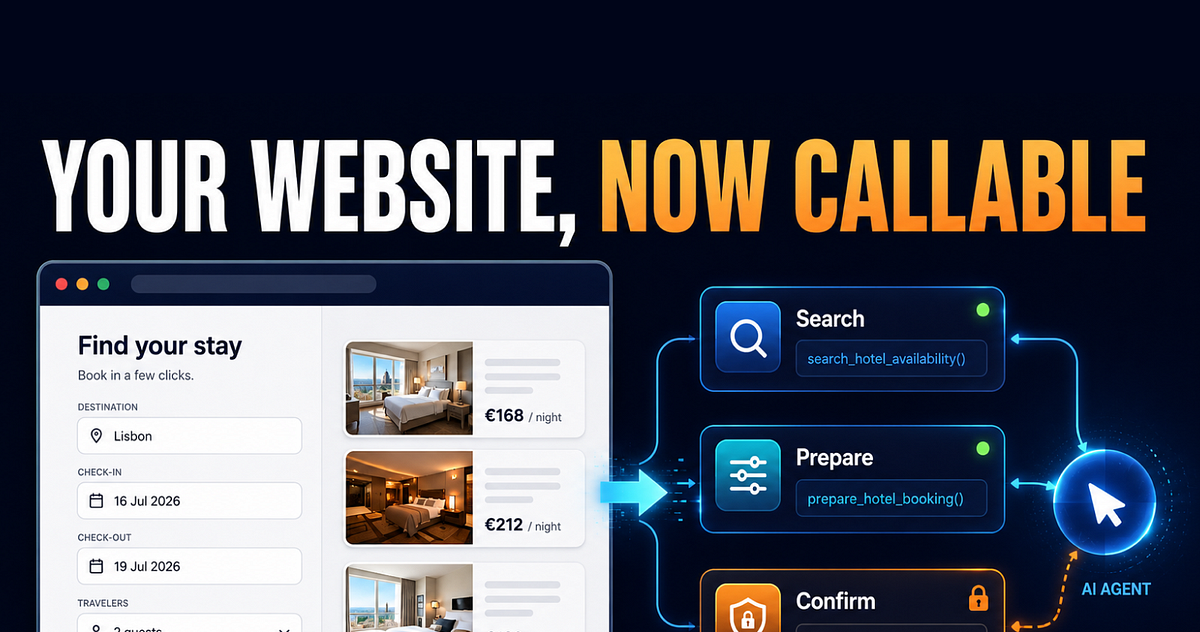
A user asks an AI agent to find a hotel room in Lisbon, compare the available options, and prepare a reservation without confirming it. The task sounds simple, but the agent has to understand date fields, guest selectors, room cards, prices, cancellation terms, and the difference between “Review” and “Confirm”.
With ordinary browser automation, the agent infers those actions from screenshots, the DOM, or the accessibility tree. A redesigned date picker or an ambiguous button can change the whole interaction.
WebMCP proposes another approach: let the website explicitly describe the actions an agent can perform. I built a small hotel booking application to understand what that changes in practice. The complete demo is available on GitHub as an optional reference implementation, but the important WebMCP pieces are small enough to understand directly in this article.
What WebMCP actually is #
WebMCP is a browser API that allows a web page to expose its capabilities as structured tools. Each tool has a name, a natural-language description, an input schema, and an implementation that runs in the context of the page.