*Subscribe here: Apple Podcasts | Spotify | YouTube *
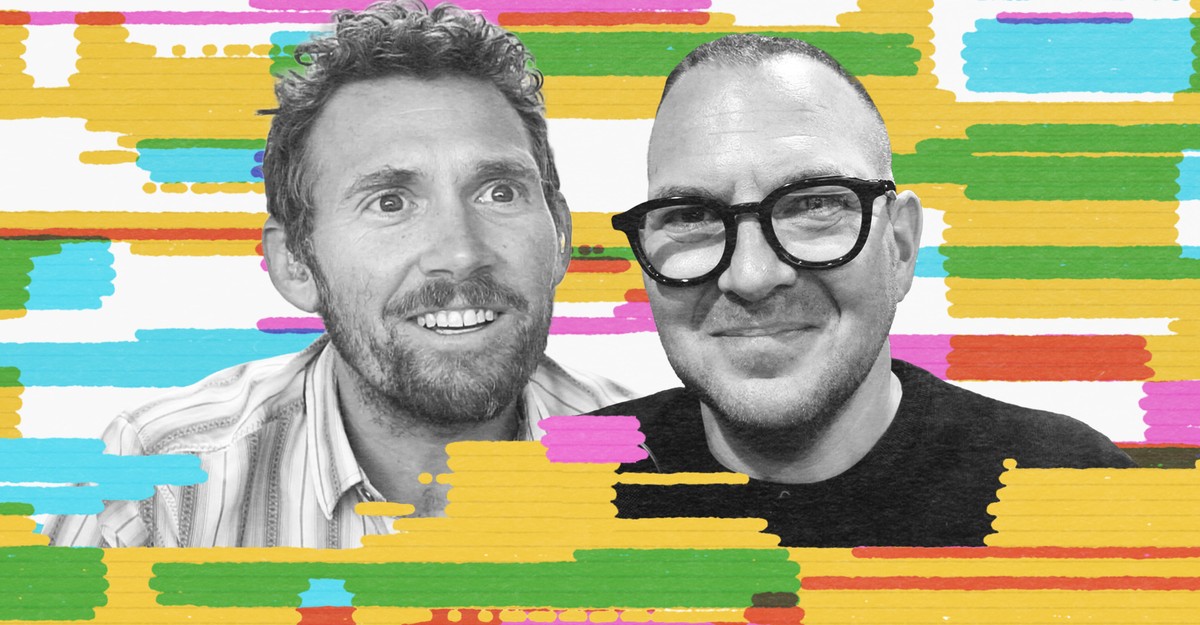
Cory Doctorow has a refrain: “The most important thing about a gadget isn’t what it does; it’s who it does it for and what it does it to.” In this episode of Galaxy Brain, he sits down with Charlie Warzel to talk about the AI boom, making the case that the hype, vision, and dreams of endless growth are unsustainable. Doctorow expands on his viral “enshittification” thesis: a critique of AI based around power and whether we are using AI tools or being used by them.
The following is a transcript of the episode:
Cory Doctorow:Bosses are infinitely horny for firing workers and replacing them with machines. And they have been since forever, right? That’s the story of the Industrial Revolution. They just—there’s something about this, and it’s not just cutting costs. I think that if you’re the boss, you are haunted by the knowledge that if you don’t show up for work, the business just ticks over as per normal. But if all the workers don’t show up, that’s “You’re out of business.” And so maybe you tell yourself you’re driving the car, but secretly you worry that you’re in the back seat with a Fisher Price steering wheel. And one of the things about AI is: It dangles the possibility of wiring the toy steering wheel into the car’s drivetrain.
[ Music] Charlie Warzel: I’m Charlie Warzel, and this is Galaxy Brain, a show where today we’re going to examine the case against AI.
Well, sort of.
What follows isn’t a case against the technology: machine learning, generative AI, coding agents. It is instead a case against this particular ideology behind AI: how it’s built, how it’s implemented. Cory Doctorow is a little bit of everything. He’s a science-fiction writer; he’s a technologist himself; he’s a prolific blogger and a journalist. He’s also an activist who has been working with the Electronic Frontier Foundation on digital-rights management, among other issues.
And it’s this combination of all of these jobs that make Doctorow this particularly shrewd critic of technology. He’s somebody who has both the skill set to see how technologies are being implemented in ways that work against human flourishing, while also being able to imagine all the ways that the future might be different.
And most recently, Doctorow gained notoriety for coining the term enshittification. This has become the shorthand for the way that companies and their platforms start out with this promise of empowerment. But then once they’ve captured the market share, they begin to degrade their services and extract more from their users. Now, enshittification put a name to this pervasive feeling about technology, and especially the tools of the Web 2 era. But a lot of the dynamics of Doctorow’s work are extremely relevant to the AI boom, which is dominated by many of the same personalities of the platform era.
Doctorow has a new book. It’s called * The Reverse Centaur’s Guide to Life After AI*, and it builds on a lot of this past work. We’ll get into what a reverse centaur is in just a moment, I promise. But it’s the book’s subtitle that got my attention:
How to Think About Artificial Intelligence Before It’s Too Late.
The AI conversation is, as we’ve explored before, intensely polarized, and you have some critics who just seem unable to engage with the usefulness of this technology. But what makes Doctorow’s perspective different is that his critique is not purely about the technology itself. It’s about the power dynamics that surround it. Again and again in his book, he comes back to the same refrain. “The most important thing about a gadget isn’t what it does; it’s who it does it for and what it does it to.” Doctorow’s animating questions needle at something bigger. This question that I think is shared by so many people right now. Why, in this era of intense technological progress, do so many things feel like they’re getting worse and more exhausting?
Who really benefits from these tools? Which groups of workers are actually using them, and which groups are being used by them? Is there an AI bubble? What does it look like if it pops? What does meaningful resistance to AI look like, in an era of growth at all costs? Cory Doctorow joins me now to talk about it all.
[ Music] Warzel: Cory, welcome to Galaxy Brain.
Doctorow: Thank you, Charlie. It’s a pleasure to be on.
Warzel: So in the intro to your book, you’re talking about different ways that people use artificial intelligence, and you mention that you use it in certain instances. What is your relationship to artificial intelligence in terms of tools you use?
Doctorow: The most common use I make of AI—and it’s daily, and I just did it again—is I publish a blog, at pluralistic.net. And because I am keenly aware of how the platforms trap us, I control that blog. I publish it on my own self-hosted WordPress site, on a server on a shelf that I own. So my prompt for OLAMA, one of the Olama models that I have running on my laptop, is: find typos. And that is remarkably good. So not only does it catch a bunch of stuff that my text editor or word processor wouldn’t normally catch—things like you type a word that is a correct word but not the word you meant. So you type shocker instead of shocked. Double punctuation, typing the word and twice in a row; kind of stuff we do all the time.
But also—this is where it’s like, faintly magic—is the other day I referred to something, as I was writing, and I pasted in a link to the Wikipedia article on it. And then I referred to it again later by slightly different name. So it was something like saturation theory. And I called it “the saturation hypothesis.” And the chatbot said: In the URL, it’s called saturation theory. Did you mean saturation theory here? Which was amazing.
Warzel: Yeah. Genuinely helpful.
Doctorow: Yeah, super helpful. Look, you know, I don’t know where your computer-origin stories are, but my first word processor was a program I bought in a magazine that I typed into an Apple II Plus. And my word processors have gotten new features since then, on the reg. And an enormous number of them are things I have no use for at all. Many of them are things that I think other people use very badly, and some of them are things that I find indispensable. And AI is a plug-in to my word processor as far as I’m concerned—and I have never used a plug-in and said, Right, well, that’s it. Now we need to gather up all the writers and put them in a wood chipper. We should probably spend, I don’t know, 1.4 trillion dollars on this. See how good we can get this word processor plug-in to run.
Warzel: Well this brings me to your book. It brings me to the central operating principle of centaurs, reverse centaurs. I want to do some defining for people in the audience who aren’t gonna understand it. What is a centaur? Not the mythological animal, but the automation theory that you’ve based the book around. And what is a reverse centaur?
Doctorow: So in automation theory, a centaur is someone assisted by a machine. So, you know, you’re wearing glasses, you’re riding a bicycle, you’re using a spell-checker, you’re playing a harmonica instead of making mouth noises: You’re a centaur. And a reverse centaur is someone who is conscripted to help the machine. So there’s a process a machine can almost do, but there’s a part of it that it can’t do. And someone has inveigled you to do that other part. And because the capital that went into that machine is depreciating, right? The machine only lasts so long. You want to sweat that asset as hard as you can.
And because machines don’t get tired, and they typically work faster than we do, you—the reverse centaur—are the bottleneck in the machine. You are Lucy and Ethel trying to get chocolates off the assembly line and get them into the chocolate box. And the boss is running the assembly line at the maximum speed that the humans can conceivably do it at, and they are expecting you to work at—to or slightly beyond the point at which you collapse from exhaustion. So someone who is a reverse centaur isn’t just used by a machine; they are used up by the machine.
Warzel: Let’s anchor that in the real world. Would an Amazon delivery driver [be] the ur-example right now of somebody trapped in reverse centaurism, or what have you?
Doctorow: Yeah; it’s hard to overstate how much automation in that van is about seeing if you can get the person to work so hard that there is just no slack left for them. So we all know about the drivers not peeing, right? Or rather, peeing in bottles. That’s not just because they have a hard schedule. The van is determining what route you’re going to take and how long it’s going to take. And then you have to make the prediction real, irrespective of traffic conditions and so on. You are covered by many cameras and many sensors when you drive an Amazon van. And they are doing things like penalizing you for looking in the wrong direction. So you might be looking at something that you anticipate is a danger, but the van disagrees. And so they are dinging you on that.
And then there are the more sort of mundane complaints, like the machine thinks that you can deliver these three parcels after parking your van because they’re all in the same housing complex. And what the machine doesn’t know is that one of those drop-offs is a mile away. And so either you drive to the other half of the housing complex and get fined by the system for driving when you were supposed to be walking—or you walk or run to the other place, and you get fined by the system for missing your time quota on that delivery.
Warzel: Well, and then there’s this story that 404 Media reported recently. The one about the Rivian vans that Amazon uses that have been wired to turn off the air conditioner after between like 10 minutes or 30 seconds, depending if the driver is out of the seat. And so you have these drivers who are trying to hack them in order to just have safe conditions when they’re driving in the middle of the summer. And I think it speaks to this technology using us, right? And so part of the thesis of this book is that these tools are created for the express purpose of creating these reverse centaurs, right? Something that none of us out here in the world want to be. So why are they engineered this way? Why are they engineered to make us reverse centaurs?
Doctorow: You know, you and I and the people listening to this, we’ve been through a lot of tech bubbles lately. You know, whether that’s Web 3 or crypto or what have you. We get bubble after bubble after bubble. And this bubble is a bubble like those—but it’s much bigger. And one of the things this book wants to interrogate is first of all, why do we have bubbles? And second of all, why is this bubble so much bigger? And it is so much bigger. I mean, when I wrote the book, it was 700-billion-dollar capex expenditure worldwide. Now it’s a 1.4-trillion-dollar capex worldwide, and it’s going up and up.
Warzel: Yeah, and that 1.4 trillion is Goldman Sachs’s prediction for spending on AI infrastructure in 2027.
Doctorow: So it’s—this is a shocking amount of money. We’ve never set this much money on fire before for anything. It makes tulip bulbs look like rational conduct. You know, the South Seas look like an achievable objective, right? So where’s this all coming from?
Well, first of all, I think we have bubbles because firms that have saturated their market go very quickly from being treated by investors as growing firms to being mature firms. And when that happens, their shares are grossly overvalued, because if a share in a company is a claim on its future earnings. If those future earnings are going to be larger than they are this year, then it makes sense that the share will be worth a lot, because those earnings are going to grow and grow and grow. But if we know how much the company brings in—and if it brings in about the same every year, plus or minus a few points—then it has a much lower what’s called a price-to-earnings ratio, right? It just trades at a lower multiple of its annual earnings.
And from the perspective of management at the firm, this is bad. Because once you start being a mature company, and your share price drops precipitously, a thing that just keeps happening whenever anything threatens these companies, the market’s really telling us that they think these companies’ growth is going to tap out soon. That’s very bad. It’s bad because, you know, if you’re an executive who’s been compensated in shares, well … that’s your net worth, right? When the share price goes off, falls off the cliff. But also it’s really bad because shares in growth firms are very liquid. They’re like money. And so, yeah—you can hire executives with shares. You can also buy companies with shares. Both of those are really good ways to grow. And once you’ve hit the limit on growth, once you are Google with a 90 percent search market share, and the market starts to treat you as mature again, then you have to use money to buy things that you used to use shares to buy. So, you know, you have to go find a creditor or like a customer or an investor to grow by money. Whereas you can just grow by shares by deciding you’re gonna issue more stock.
And so, this is very dangerous. And so we see this string of bubbles. At first, the bubbles were quite grounded. You know, you had Google saying, We’re about to become Facebook, because we have this thing called Google Plus. And the problem with that is that while we can all agree on how much Facebook is worth because it’s there on their balance sheet, Facebook vociferously disagrees with Google that they’re about to become Google Plus. And they make that point very forcefully in public, and it makes it hard to sell that narrative.
So we switch to, like, imaginary things that we’re going to conquer. Web 3, crypto, blah, blah, blah, right? Metaverse. And then we get to this one. And this one is much bigger. And so why is this one so much bigger? Why was the market willing to spend so much more money? Well, some of it is, again—it’s just material. This is more real than crypto or metaverse or whatever. You know, it’s like it’s a super-interesting computer-science breakthrough. And not only that—because we have crypto, we have computer-science breakthroughs all the time. Usually when you find a way to get a computer to do something cool, if you do it harder, it doesn’t get cooler. Right? The returns to scale are pretty limited, and AI had these incredible returns to scale which are now plateauing. But there was a period where we could just spend more and do the same thing and get more out the other end.
Warzel: I think it’s a really great point about growth companies, that there is almost a danger when you’re in that phase where, “No, we’re going to grow very soon,” right? Just you wait. That’s a really good place for them to be. The period of actual growth, like “We are booming right now,” essentially can only mean, to the market, “Soon, we will stop.” And that is the scary point. I take that totally.
Tell how you connect that to the idea of “We are not only working on this computer-science experiment, but we are working on it in such a way that it is going to turn us into tools of the development.” Like, why do these things push these companies to make the products that turn us into these reverse centaurs?
Doctorow: So yeah, that’s the ideology question, right? What is it that makes capital allocators so excited about AI, versus all the other things they’ve been excited about? And I think a big part of this is that bosses are infinitely horny for firing workers and replacing them with machines. And they have been since forever, right? That’s the story of the Industrial Revolution. They just—there’s something about this, and it’s not just cutting costs. I think that if you’re the boss, you are haunted by the knowledge that if you don’t show up for work, the business just ticks over as per normal. But if all the workers don’t show up, that’s “You’re out of business.” And so maybe you tell yourself you’re driving the car, but secretly you worry that you’re in the back seat with a Fisher Price steering wheel. And one of the things about AI is: It dangles the possibility of wiring the toy steering wheel into the car’s drivetrain.
So the boss has an amazing, cool idea and then gets pooped out by the bot. And there are no ego-destroying confrontations with people who know how to do things, who tell you that your idea is dumb. You know, when I was on the picket line with the screenwriters, because I live in Burbank and I’m in an affiliated union; I’m in the Animation Guild writers’ unit. So when I was on the picket line with the writers near my house, one of them said to me, you know, “You give notes to a writers’ room the same way you prompt a bot,” right? Like, “Give me E.T., but it’s about a dog, with a love interest and a car chase.” And the difference is that you say that to writers, and they’re like, Go make a spreadsheet. The grown-ups are making a movie. Whereas you say it to a bot, and it just gives you a script.
Warzel: Well, it’s also interesting, too, how a lot of really, really rich, influential people—even higher than the level of normal CEO; we’re talking like in the billionaire class—have a lot of people, I’ve spent time around these people, a lot of people who say, like, Yeah, sir, that’s an awesome idea. Yes, let’s draw that up. We’ll get our people on it. We’ll do that.
Right? It’s interesting that the chatbots also behave that same way. The chatbot is: Sir, we’ll get right on it. Absolutely.
Doctorow: And if you are familiar with the psyche of bosses, you might say, “Yeah, offering them a way to like get stuff done without having to argue with workers is gonna be very popular.” But also those upper-tier capital allocators, those billionaires and oligarchs, they themselves already live in a world that’s pretty solipsistic. Right?
You know, if you become a billionaire, I think it’s axiomatic that you have to hurt a lot of people. And to hurt a lot of people, you have to, in some sense, believe that what they feel isn’t as real as what you feel; that they’re not real people the way you’re a real person. You know, Elon Musk calls everyone he disagrees with an NPC [non-player character]. And you know, I don’t think it’s a coincidence that these are the same people who got really excited about effective altruism, and particularly the strain of it that said you can hurt as many living people as you want, provided that you spend a lot of time thinking about bringing a small amount of joy to the lives of 10,000, or rather 10 to the 53 artificial people who will come into being in 10,000 years, right? It’s a very solipsistic way of viewing the world.
And you know, Mark Zuckerberg wants to build social media without people, right? Like, in social media without socializing is like: Your friends are the reason you can’t leave Facebook, because you love them. But they’re a pain in the ass, and you can’t agree on when it’s time to leave. And so that’s great for me, but I’ve been trying to get your friends to see reason and understand that the best way to have a friendship is to maximize your engagement with a platform. And for some reason they just keep having a friendship the way normal people do. So I think we’re gonna get rid of your friends and replace them with chatbots.
Right. You know, social media without socializing, it’s very similar to the idea of a workplace without workers and a screenplay without screenwriters and a movie without actors.
Warzel: But it can only go so far, it seems, in terms of this. One of the defenses right now of the idea potentially that these guys are going to fire everyone, right? That this tool is going to allow bosses to, you know, AI-wash their companies. But I think what we’ve seen already is the fact that it’s difficult. You have companies who have laid people off hiring people back in; that there’s problems. It seems like you have a very low opinion of a lot of bosses in this sense. Do you think they’re that dumb? That they’re just going to continue to do this even in the face of, if there aren’t these same productivity gains?
Doctorow: I mean, I think unless you spent 2008 in a cave, you have to at least entertain that possibility. Right. These are like, the analysts who are telling us that AI is, whatever, a 17-trillion-dollar industry are the ones who told us that 95 percent of us would be using the metaverse by 2025. There is a degree of credulity there, where if you think that you can find exit liquidity for an investment, it doesn’t really matter whether the investment pays off. It just matters whether it fails after you’ve given the bag to someone else.
Warzel: Understanding all of that—understanding that we are living in a bit of a wild west here—we are also living in a time of a lot of people operating with impunity, sort of saying the quiet part out loud. I want to talk about the AI bubble. You predicate a lot of this on there being, that AI is a bubble. I think that that case was the absolute majority case in the fall. And I think now, we have some of these new coding agents. You see Anthropic turning what looks like it’s gonna be a pretty record profit here. Give me your case for the AI bubble as you see it, here in the summer of 2026.
Doctorow: Well, if these companies are going to be profitable, it will have to generate revenues in excess of its depreciating assets, including capital expenditure on new product development. And in excess of its operating costs. It will have to make more money when it adds more customers. And when those customers use its product, it will have to increase its profit, not decrease its profit. So it will have to find a pricing and market strategy that has good unit economics and where depreciation and amortization are commensurate with the rate at which they are able to replenish their capital. And that’s just not the case.
Warzel: What do you say to people who are looking at the demand right now? It is a narrative that is coming from inside that industry. There is also adoption that is real. How do you parse that? How do you see that playing into that?
Doctorow: So giving away hundred-dollar bills, or selling hundred-dollar bills at a dollar apiece, will have a high demand. One of the things that we’ve seen with market leaders in the last couple of months is that when they try to charge $5 for those hundred-dollar bills, people are like, Oh my God, we can’t afford $5 for these hundred-dollar bills. So I’m not surprised to hear that there is demand for it. So the question isn’t: If you prompt an LLM often enough and harness enough compute, can you make software that is useful? That’s very clearly true. And I should say the best programmers, I know many of them, love working with LLMs. I don’t question it for a minute.
We do know that in the sort of reverse-centaur or centaur configuration that you hear lots of people who are in charge of how they write software. Who say, I write software the way I like, and I use these tools when it makes sense, and I am feeling really good about it. And then you hear from a lot of people who are like, They fired nine-tenths of my colleagues, and my job is to mark the bot’s homework. And we’re shipping the worst code I’ve ever seen. And, you know, God help you if you ever use one of our products.
And again—his resolves that conundrum, right? About how it is that two groups of people who are reliable narrators of their own experience can use the same tools and conclude completely opposite things about it. It’s because the important thing about a technology is only secondarily what it does—and it’s primarily who it does it for and who it does it to. And people who get to use the tools the way they want, they make better decisions than when you dictate to them how you do it. This is why tailorism was a failure.
Warzel: I want to get a little bit into the harms that you show of this type of dynamic, especially with this type of AI as it is foisted on people. You have a story about Air Canada call centers in there. But tell me what an “accountability sink” is, and how something like ChatGPT might play into that.
Doctorow: Yeah; this this comes from Dan Davies, who’s a British writer, investment analyst, and basically a cybernetics-and-systems-theory guy. And this term, accountability sink, is basically when you have a a system or a person or something that you can blame for otherwise foreseeable mistakes. So that when people get hurt, it’s not your fault, it’s the accountability sink’s fault.
And an example of this is, as you say, Air Canada. I have a dog in this fight. Like all the best Americans, I am Canadian. Air Canada’s customer service has always been pretty bad, so you could see why—if the only reason to have customer service is to have someone explain over and over again that the company isn’t going to solve your problem—why you wouldn’t just ask an AI to do that? And that’s what Air Canada did.
So there was a man who was going to his grandmother’s funeral, and he got on the Air Canada customer-service portal, and he said, How does a bereavement fair work? And the chatbot said, You buy a full-fare ticket today, go to your grandmother’s funeral, come back, get a copy of the death certificate, send it in, and we will refund you the difference. Which he did. And when he did, the human being who was in charge of issuing, you know, refunds was like, I don’t know what you’re talking about. That’s not how we do it. You had to do this before you flew. You don’t get any money back. And he appealed it all the way through every level of customer service at Air Canada, and eventually got a judgment against Air Canada for on the order of seven or eight hundred dollars Canadian.
So this was like a multi-month process. And you could see that, from Air Canada’s perspective, it doesn’t matter if it’s wrong. It just matters if it doesn’t produce more of a loss than a gain. And there is a certain perverse incentive to give people bad advice that costs them money if there’s no way for them to get the money back. Air Canada is the nation’s flagship carrier; the majority of routes, they have one or fewer competitors. You’re gonna keep using Air Canada anyway, so why would they care?
You know, if you remember on Saturday Night Live, Lily Tomlin used to do this bit she started on Laugh-In. Ernestine, the AT&T phone operator, she’d do these ads for AT&T. And she would turn to the camera at the end of each one, and she would say: “We don’t care. We don’t have to. We’re the phone company.” So if you enjoy that kind of market power, and you know that people have few if any avenues of recourse, you can use AI and blame the AI for the mistake. When really, this was the foreseeable and foreseen outcome of putting an AI in place of the human being who is already not there to do a good job.
Warzel: Tell me about automation blindness. How humans become this dull node in the loop reviewing AI output. It’s sort of similar to auto; it’s a little like the corollary to, you know, the chatbot takes over the call center.
Doctorow: Yeah. Well, there’s a funny thing that happens at TSA checkpoints. TSA people train all day, every day, to find water bottles. And they are the world’s water-bottle-finding-est people that we have ever created. They are the Louis Pasteur of finding water bottles, because they get more practice than anyone else. But the number of people who deliberately bring a gun or a bomb onto an airplane, it is indistinguishable from zero. Now, obviously, at the very furthest margin, there are people who do it, which is why we have airport security. But there is every reason to think that without a regular supply of people walking through, deliberately carrying guns and bombs through that have been disguised, that airport-security people just cannot remain vigilant for it. Because they detrain to find one thing when they are training to find the other one, which is water bottles, which is the thing that we all bring through.
Warzel: And so you’re suggesting that in this paradigm, where all these jobs are—if they’re not being fully automated away, if you have a human in the loop, you’re suggesting that this type of automation blindness is going to increase.
Doctorow: Yeah. Especially when you think about this in combination with this reverse-centaur paradigm of work speed-up, of sweating the asset. So if your job is to have a new AI judgment or result put in front of you at the maximum speed that you could theoretically evaluate it—and if in the majority of times it’s good enough—your job, the majority of times, is to click “Okay.” And you have to do that relentlessly at this incredible pace. It’s going to require some very atypical kind of neurological makeup to spot that. I won’t say there’s no one ever born who couldn’t do that job, but most of us are not going to be that person. And there aren’t enough of those people to be the human in the loop.
So let me give you an example of how you might configure automation in two different contexts. So I have an extremely treatable form of cancer, so I spent a lot of time following the news about cancer treatment and AI. And it looks like AI can sometimes spot solid-mass tumors that humans miss on X-rays. And so, if there was a sales call between an AI salesperson and the hospital administrator at the Kaiser hospital where I get my care. And they were saying, *Right, here’s the pitch. Right now you spend a million dollars a year on radiologists. They’re each assessing a hundred X-rays a day. I want you to give me half a million dollars a year for my robo-radiologist, over and above the salary of those million dollars that you’re spending now. And now, your radiologists are going to do fewer X-rays, because one or two times a day, the AI is going to say, “Have another look at that one.” And they’re going to stop, and they’re going to look at it again. *
No risk of automation blindness, right? That is an arrangement, as someone with cancer, that I would be very happy to see.
That’s not the pitch, because there aren’t enough hospitals that want to spend an extra half-million dollars a year over and above their payroll. The pitch goes like this: Fire nine-tenths of your radiologists. Put the remaining 10 percent in charge of rubber-stamping the output from the X-ray, but they’re supposed to look at it closely enough to actually make an assessment about it. But you’re gonna work them as fast as you possibly can to to wet-sweat this asset as much as you can, realize as much of a savings as you can, fire as many workers as you can. In that circumstance, when the AI is usually right about the chest X-ray, but sometimes wrong—and the radiologist is just clicking “Okay, okay, okay, okay, okay,” five times a minute—that radiologist is gonna kill people. And we’re not gonna blame the AI; we’re gonna blame them.
Warzel: And that’s the accountability sink.
Doctorow: That is the accountability sink.
Warzel: So it seems to me, what I appreciate about your work is that it tries to consider these tools in the context of the types of people who are in control of deploying them. Control of purchasing them, control of all that, right? And you write that the workers—the non-oligarchs bosses of the world—need to puncture the AI bubble as soon as possible, right? Before it gets even further out of control. Wouldn’t that be quite bad for it to pop now? I know that’s a naive-sounding question. But just as part of it, it’s like wouldn’t it wouldn’t it be really bad?
Doctorow: Yeah, it would be really bad for a 1.4-trillion-dollar bubble to pop. It would be even worse for a 2-trillion-dollar bubble to pop. And so you know, I do believe that history is ours to make; that that the future has not been written. But when I say that, I don’t mean that there’s a way that AI becomes profitable. I mean that there’s a way that we deal with the fact that it is a bubble, and what we do when the bubble pops. If we know that it’s coming, if we understand who created it, if we regulate in response to it.
You know, one of the reasons we have the string of bubbles we’ve had in this century is because the repeal of Glass-Steagall. Glass-Steagall was a law put in place after the Great Crash and the Great Depression. And it was intended—and worked very well—to structurally separate investment banks from commercial banks, from consumer banks. And we got rid of that law. And you know, this is not all that different from other things that we deregulated in that era. You know, we stopped enforcing antitrust law around the same time, and then we got a lot of monopolies. Those two facts are actually really closely related.
And, you know, if I get grumpy or cranky, it’s really because it sometimes feels like we have so little object permanence that we couldn’t win a game of peekaboo. And we just forget that in living memory, we had a thing we did that stopped a bad outcome, and then we stopped doing that thing, and then the bad outcome happened. And we’re like, *This is a mystery. What an unfortunate situation for us. *But you know, as Margaret Thatcher told us, there is no alternative. So I guess we just have to live with it.
And I sometimes feel like, you know, the people who advocated for the removal of structural separation and finance and the end of antitrust law, those are the same people who are inflating this bubble, and who are also saying, How dare you blame me for all the bad outcomes of all the other bubbles and all the economic problems we have with monopolies.
So, you know, we can choose how we react to this bubble. When we had a bubble in the ’30s that destroyed society, we responded by changing the structure of markets to dampen the likelihood of bubbles, and we installed policing mechanisms that looked for exceptions that escaped from the market-structuring efforts, and that either address them legislatively or through enforcement. These are not the lost arts of a fallen civilization. This is not building a pyramid without power tools. It’s just prudent regulation.
We could choose that, when this bubble bursts. Or we could choose to do austerity again. And when we do austerity, we drive people into the arms of fascists. And so we could have a collapse followed by an authoritarian surge—or, we could have a collapse followed by a prudent regulation and a reckoning with the mistakes that we made that brought us to this juncture. And maybe with the people who claimed that these mistakes wouldn’t happen.
Warzel: What does opposition look like, then? There’s clearly a moment to seize on something. If you are an activist, or someone who doesn’t want this, or a politician, what is your version of real opposition to this in the moment? This type of artificial intelligence and these companies? What does it look like?
Doctorow: I think that a lot of the times when people criticize AI, they stipulate to a bunch of its claims without interrogating them. So when we say: This AI data center is going to be polluting. It’s going to be noisy. It was undertaken under undemocratic conditions. We have better uses for that land. It’s going to be hard on our water supply and our grid. We should also add: And, by the way, this company might be bankrupt before they turn it on. And not stipulate to the idea that this thing that can’t go on forever will never stop.
I think when we criticize AI more broadly, we should remember that, as offensive as it is, for the AI companies to say to creative workers, Our goal is to make you bankrupt, and our tactic for doing that is training our models on your work—that we shouldn’t stipulate to the idea that the work is as good as ours, right? That they’ve done anything good.
And we should remind investors who have seen these splashy demos—because I think that’s what, you know, AI art and AI text gen and AI video and so on—we should remind them that the workers that this stands to displace have a wage bill globally that sums up to less than the kombucha expenses for one training run of Midjourney.
And that even if they fire every illustrator in the world and replace them with slop, that it won’t turn a buck, right? That this is a money-losing proposition. That if you charge, if you stop giving away, selling hundred-dollar bills for a buck apiece, it’s always going to be cheaper to hire illustrators. Illustrators are among the most immiserated low-wage workers in the creative industries.
Warzel: Do you see a possible future in which it does just keep going like this? Like the irrational nature of this, you know, in the way that we have closed the Strait of Hormuz for a very long time, and a lot of people are like: You’re going to feel the pain very soon, and the market will soon reflect all of you know this shortage. And then Donald Trump posts something on Truth Social, and then the market goes, Yeah, you know, we’ll believe that. And like, you know, every Friday we’ll just do this dance.
That things—the bubbles, so to speak, and the cultural part of the bubble too, right? The political, the cultural, the economic part of the bubble, that we’ve become so used to that. That we just do the irrational, This is just how it’s going to be. We’re going to operate in this irrational dystopia of: Yes, the bottom is going to fall out. No it’s not.
Doctorow: So the question is: Can this thing that can’t go on forever never stop? And the answer lies in material things. So, to keep the AI bubble going, you need to keep sending money to guys in bunny suits in Taiwan, who sit in clean rooms for eight-hour shifts while, like, you know, tin is evacuated into or vaporized into an evacuated chamber and hit with a laser and then hit with a different laser to create a vapor that creates the visible wavelength of light that etches a four-nanometer scale feature on a chip.
So someone needs to send real things to Taiwan so that those people can eat. They won’t keep doing it if they can’t eat, right? So there needs to be real things—not just things on balance sheets, but actual things. There needs to be energy, right? That’s a like, it’s a non-negotiable. And there is only so much mismanagement that you can do and prop up through money creation and stimulus without actually doing industrial policy that produces real things people need: you know, health care and and so on. That you can do before things … then it starts to tell, right? You start to see a failure.
This is not investment advice. I’m not short or long on AI. I’m, you know, putting all of my investment in laser tag, because I think we’ve got lots of laser-tag arenas coming online soon. But I don’t believe in—I don’t know when the AI bubble is going to pop. But the other thing that goes around my head all day long is Stein’s Law, which is that anything that can’t go on forever eventually stops. And there are hard-material limits on the ability to cook the planet and devote an ever-larger share of our national project, our global project, to building GPUs and putting them online. And those hard-material limits are not remediable through belief. They require a material response.
Warzel: A lot of this book, and a lot of your work sense, is obviously in conversation with your last book. The topic of enshittification, which, you know, it’s taken off in in ways that are kind of unbelievable to see. The idea that these platforms and companies are slowly getting worse—exerting more power over people, getting locked into these ecosystems.
I don’t know if we’re fully in the enshittification era of AI yet, but you can see the contours of that with token use, and things like that starting to go. But enshittification’s also become, as you know so well, the shorthand for a general feeling of anger and frustration around the degradation of just services and experience of everyday life. And recently you wrote this article that cited the National Customer Rage survey, which has been surveying a panel of a thousand representative consumers every three years for a decade. It’s been going on since the ’70s. And essentially, part of the takeaway here is that people are furious now. Like historically pissed off, in this customer-rage sense. AI is a big part of this.
How does this cycle break? Because it just feels like it’s everywhere. Like, we can talk about it in the sense of AI. But you can also feel it at the grocery store, at the wherever. And I think it has this real curdling effect—especially when you’re having so much trouble, and you see the Elon Musk trillionaire news, and there’s people all over the place being like, *Congratulate this innovator on having, you know, more money than anyone could ever have imagined. *How does this cycle break?
Doctorow: Well, about 15 years ago, I guess, there was a book by Thomas Piketty, the French economist, called Capital in the Twenty-First Century. And Piketty did this monumental research project, going through every ledger of capital flows going back 300 years to trace capital flows and capital concentration over centuries. And their conclusion was that all of the things being equal, capital tends to accumulate. That if you have money, you tend to make money.
They summarize this as R is greater than G. The rate of return on capital is always greater than the rate of growth. And so Piketty’s point was: If you don’t do something about that, rich people get richer and richer and richer and richer and richer and richer. Doesn’t matter how big the pie is getting; the share of the pie owned by the rich gets bigger faster than the pie gets bigger. Always, as an iron law. And then eventually, this becomes untenable. Eventually, the rich—because they are unchecked—there is no democratic accountability. They are as subject to folly as the rest of us. They look to one another with great jealousy, and use us as pawns in bids to take one another’s fortunes once our fortunes have been stripped bare. That this creates massive instability, and that those instabilities tip.
And he sees these points over and over again. Where the share of income in the top decile, the top 10 percent, reaches—or wealth, rather, not income—reaches a certain point, and then you get the French Revolution. And then World War I and World War II, and so on and so on. And his message was: That unless we do something about oligarchy, the end state of oligarchy is not stability. The end state of oligarchy is chaos. It’s collapse.
And that is my worry. And you mentioned before that there are these billionaires who love the fantasy of AI, and love the fantasy of a world without people, and that they live in a world without people now where everyone around them is a non-player character who just glazes them with AI-like nonsense. But there’s another group of people who love AI—which is politicians who want to exert their will without having to go through a permanent civil service. Just like there’s a dream of a workplace without workers, there’s a dream of a government without bureaucrats, right?
This is what Trump wants to do with DOGE. This was the whole nature of the DOGE project, was you take away the deep state. Which is to say: everyone who knows how the government works. And you replace them with chatbots. And then Trump has an idea, and it happens. You don’t have these collisions with people who are like, That’s not just not how the government works. We can’t do it that way. There are people who won’t be able to fill in that form you want them to fill in. If you take away this support, this other thing will collapse.
It doesn’t work that way. You just tell the chatbot to do it, and the chatbot just does it. You can see how this would be really unstable. We’re living through it. We’re living through it with just screwflies. Right? No amount of belief is gonna help you when beef is 30 dollars a pound. Like, that’s politically destabilizing.
And so I think that—unless we can confront oligarchy by democratic means, that we will find ourselves in the midst of a circumstance where it is being confronted by nondemocratic means. Whether or not that’s what we want, or what we aim for.
And I really worry about it. I think oligarchy is the force that stops us from addressing the polycrisis of genocide and climate degradation and rising authoritarianism. And until we meet that oligarchy challenge, I think we are going to struggle to do more than fight a holding action on everything else. And when we get rid of the oligarchs, it’s still not gonna be easy.
Warzel: I think that’s a tough place to leave it. But that chaos, I think it is very much where we are today. Cory Doctorow: Thank you so much for coming on Galaxy Brain, for talking about all this.
Doctorow: Thank you, Charlie. It’s been a real pleasure.
[ Music] Warzel: That’s it for us here. Thank you again to my guest, Cory Doctorow. If you liked what you saw here, new episodes of Galaxy Brain drop every Friday. You can subscribe on YouTube or Spotify or wherever you get your podcasts. And if you want to support this work and the work of my fellow colleagues, you can subscribe to the publication at TheAtlantic.com/Listener. That’s TheAtlantic.com/Listener. Thanks so much, and I’ll see you on the internet.
This episode of Galaxy Brain was produced by Renee Klahr and engineered by Miguel Carrascal. Our theme is by Rob Smierciak. Hadley Robinson is our senior supervising producer. Claudine Ebeid is the executive producer of Atlantic audio, and Andrea Valdez is our managing editor.