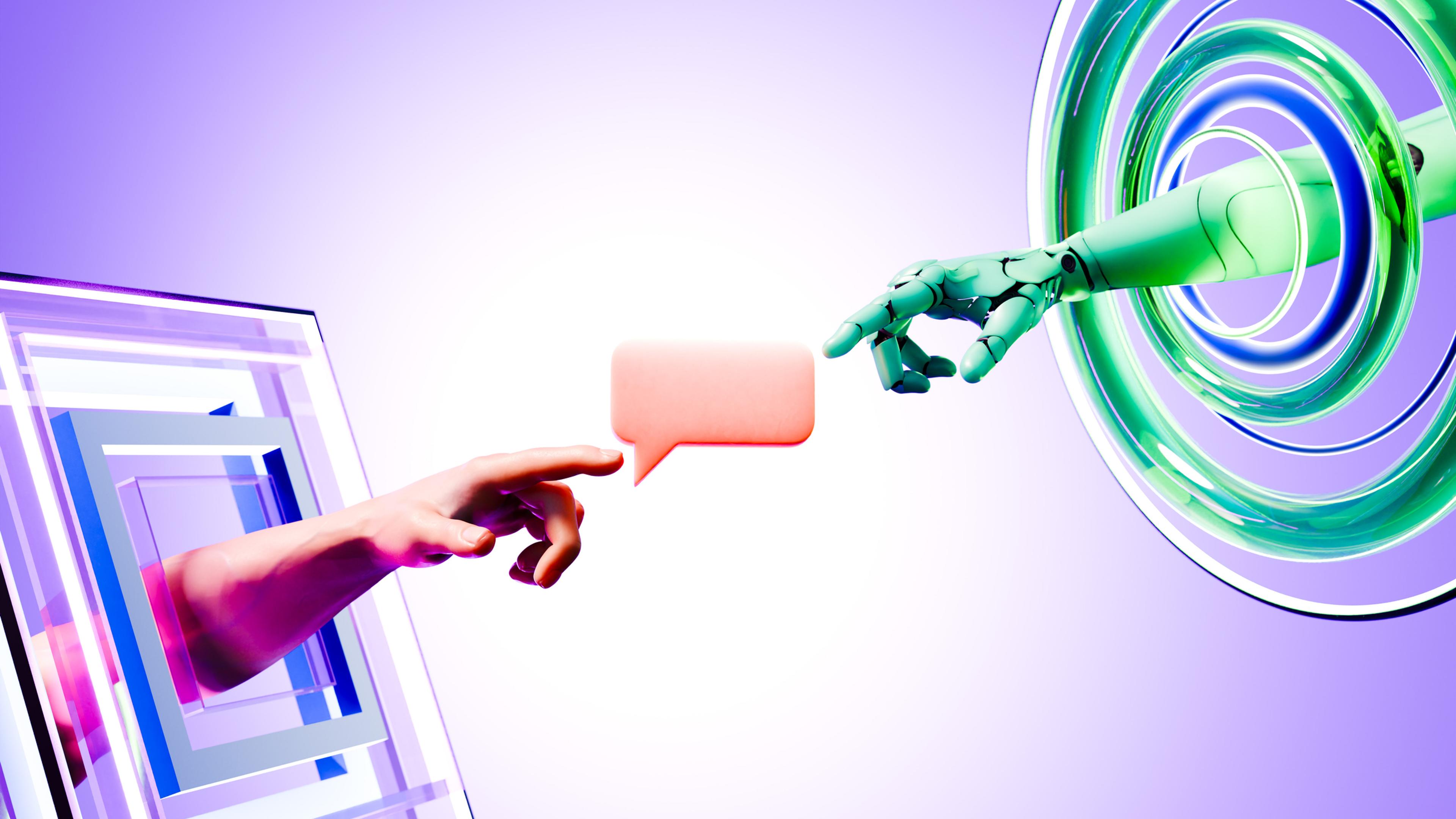
As AI becomes more prevalent in our personal and professional lives, the more we’ll need a way to stand out. In fact, skills like empathy, influence, and the ability to read the room—things AI cannot yet do with accuracy and facility—are already becoming more valuable.
We are facing an insidious threat to our interpersonal skills, driven not just by AI's growing capabilities, but by our own diminishing opportunities to actually practice communicating. The expansion of our digital lives has already caused a roughly 28% drop in the words we speak daily between 2005 and 2019, and leaning on AI shrinks those vital practice moments even further. Ultimately, when we offload too much to AI, we aren't just taking a convenient shortcut; we are actively causing our fundamental capabilities to atrophy and increasing our communication anxiety because we know that if we are challenged, we might not have the depth of knowledge to respond.
With algorithms drafting our emails and smoothing out our speech, the baseline for communication has never been more flawless—or flat and disconnected. Because so many people are hiding behind this generated perfection, we gain a massive competitive edge when we do the exact opposite.
Communicating authentically, revealing our humanness, increases our value by serving as a real-time signal of trust and genuine effort. Because anyone can now generate flawlessly polished text, unscripted moments containing natural flaws and foibles demonstrate that we’re actually investing our own labor and personal touch into the exchange.
Striving for a hyper-polished veneer is no longer the winning strategy. Instead, the speakers who resonate most today are those who loosen up and embrace a more idiosyncratic, less perfect expressiveness. This means giving yourself grace when using “filler words” such as “uhm” and “like.” And it means emphasizing your unique perspective. To be sure, putting our unvarnished, authentic selves on display can feel intimidating, but audiences respond well to it, and this approach can allow for meaningful connection and influence.
I experienced this firsthand not long ago when I logged on to speak to 800 people at a live virtual event on best practices for classroom teaching of MBA students. I expected a standard Q&A, but upon arriving, I learned the organizers actually needed me to present solo for 30 minutes. Drawing on my knowledge of the material, I spoke completely impromptu. Did I occasionally veer into a non-sequitur or mangle a sentence? Yes. But the aftermath was a flood of emails from attendees praising the session. They were refreshed to have a speaker who wasn’t reciting a script or hiding behind slides. They appreciated my being me while communicating.
I wasn’t simply winging it, however. I was deliberately letting the audience see more of who I really was.
As humans evolve for the AI era, I created the TRUST framework to help my students at Stanford communicate effectively while embracing their authentic imperfections. Here is how you can use it to project your humanity and establish genuine connection.
Truthful foundation #
AI struggles to convey authentic emotion and context, but you do it naturally. Ground your messages in your actual lived experiences, offering specific feelings and the emotions that accompany them. Speak your truth. If you are giving a toast at a wedding, don't reach for generic platitudes; recount a hyper-specific memory chock-full of genuine emotion that only you would have noticed.
For instance, during a recent virtual presentation, I didn't just share teaching theory; I admitted how I had struggled mightily to manage learners of different ability levels, sharing my own insecurity about boring expert students and how it led me to over-monitor their reactions.
Real-time processing #
An AI engine delivers its final, polished output as a completed message. In order to communicate more authentically, you can verbalize what you are thinking in the moment, revealing your internal thought process, and proving to your audience that you are originating content on the spot. Using phrases like “My first inclination is…,” or “When I had a similar question prior,” brings listeners into the all-too-human workings of your mind.
When responding to a complex chat question regarding non-native speakers during my event, I simply d and said, “Give me a moment to reflect on this important point.”
Utilize tailored, local evidence #
While AI offers generic backing for its conclusions, you can offer the delightfully quirky. Use stories, data, or testimonials that speak exclusively to your unique background to support your logic. If you are pitching a new product, explain how the street signs in your rural Nebraska hometown inspired its visual design. To illustrate the challenges of speaking a non-native language, I shared an embarrassing personal story about my own struggles teaching in Beijing.
Show your unique speaking style
For decades, communication coaches counseled clients to ruthlessly eliminate verbal tics and awkward s. In the age of AI, those exact imperfections add something vital: a sense of your humanness. You shouldn't go overboard with "uhs" and "ums," but you also shouldn't strive to expunge them completely. My own tendency is to repeat phrases I have recently heard. During my impromptu keynote, I found myself repeating "the reality is..." multiple times. Instead of freezing or over-correcting, I gave myself grace and let my unfiltered self come through.
Tip off the audience to your perspective
Information without a point of view is just data. When sharing an update, provide commentary through your unique thoughts and historical perspective. If you describe a new process you developed at work, cap it off with a genuine reflection like, “This was one of the most challenging, but fun solutions I’ve seen our team come up with.”
During my presentation, I shared that I love puzzles, and that I find the task of crafting unique activities for my students to be among the most fun puzzles to solve.
Throughout our education and experience, we have been conditioned to hide behind a veneer of perfection, but now that perfection is only a prompt away, people are incredibly ready to reward us when we let our authentic selves shine. In a landscape crowded with pixel-perfect output, projecting your humanity is the ultimate way to build trust, to connect, and ultimately to enhance your influence and impact.