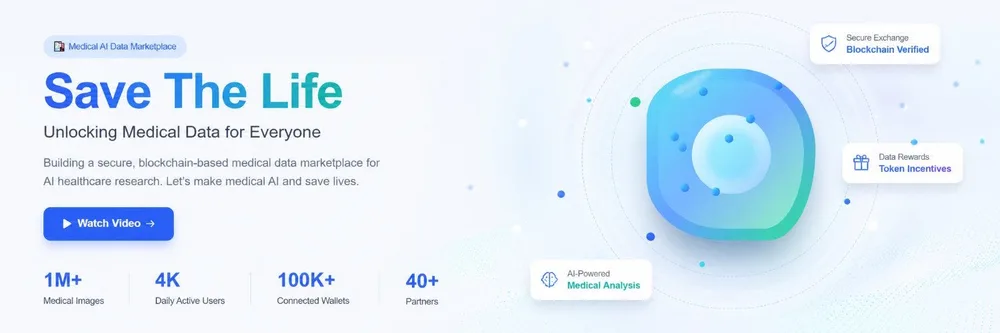
The core architecture relies on a decentralized network of nodes that can handle sensitive information without centralized exposure. Instead of moving massive amounts of raw medical data to a central server (which is a nightmare for HIPAA and GDPR compliance), the protocol moves the computation to the data.
The intersection of DePIN and Medical AI #
In a typical AI workflow, you need a massive centralized repository. In the SL Protocol model, the "infrastructure" is distributed. This is where the DePIN aspect becomes critical. By incentivizing individual nodes or small clinics to provide computational power and encrypted data storage, the protocol builds a resilient network that doesn't rely on a single point of failure.
This creates a three-way synergy:
DePIN provides the hardware and distributed storage layer.AI provides the ability to extract actionable insights from unstructured medical records.Data Privacy is maintained through cryptographic proofs, ensuring that while the "intelligence" is shared, the "identity" remains private.
A technical look at the data pipeline #
If you were to look at a high-level deployment of this kind of system, the workflow would look something like this:
-
Data Ingestion: Encrypted health data is collected from edge devices or local clinic databases.
-
Local Processing: Instead of up the raw file, a local LLM agent or specialized model performs feature extraction.
-
Zero-Knowledge Verification: The node generates a proof that the computation was performed correctly on valid data without revealing the data itself.
-
Global Model Update: The extracted insights (not the raw data) are used to fine-tune a global medical model.
def process_local_medical_data(encrypted_data, model_weights):

    decrypted_data = secure_enclave_decrypt(encrypted_data)

    gradients = compute_gradients(decrypted_data, model_weights)

    noisy_gradients = add_laplacian_noise(gradients, epsilon=0.1)

    return noisy_gradients
Why this matters for the next wave of LLMs #
We are moving past the era of "general purpose" AI. The next frontier is vertical AI—models that actually understand clinical nuances, radiology, and genomic sequencing. These models require a level of data granularity that current scraping methods simply can't provide.
By using a decentralized approach, we can tap into "dark data"—the millions of medical records currently sitting idle in local databases. If the incentive structures for DePIN nodes are set up correctly, we might finally see a way to train medical-grade LLMs that are both highly accurate and strictly compliant with privacy laws. It's a complex deployment, but it's a necessary evolution of the AI workflow in the healthcare sector.
Next Netflix is ditching manual feature engineering for a language →