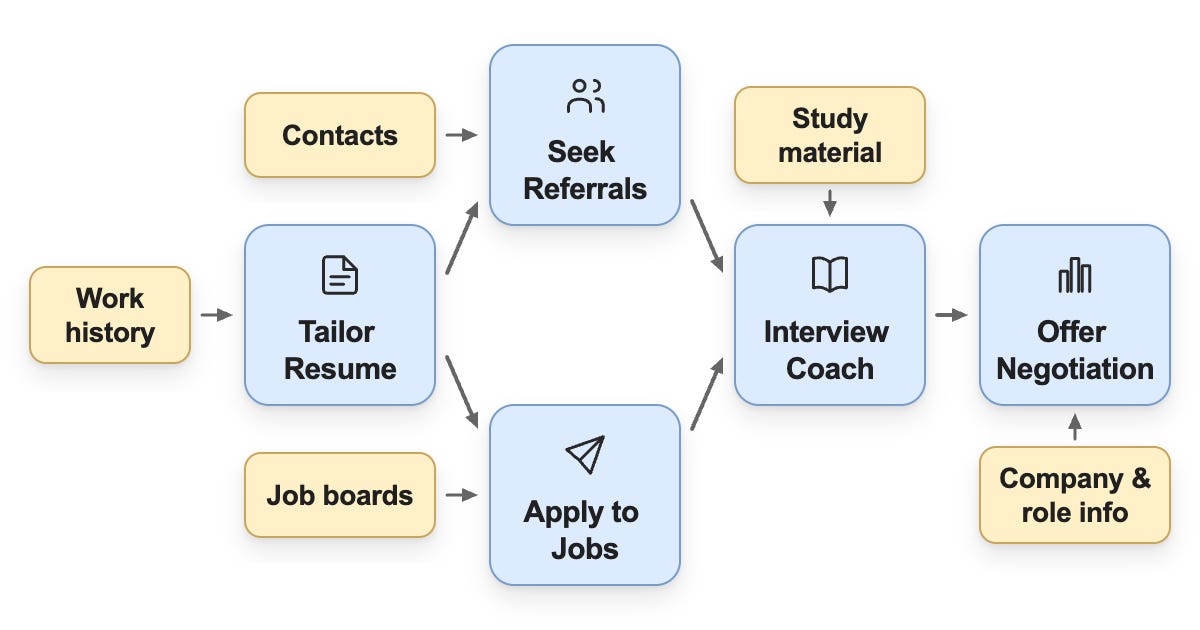
I’m interviewing for Applied AI Engineering roles. I’ve set up agents to find suitable jobs, submit applications within limits I’ve approved, and check for recruiter replies. I still supply the work history, stay in touch with people, practice for interviews and make the final decisions.
I’ve shared the skills behind this workflow, so you can adapt them to your own search. This workflow is only as good as its inputs. A well-documented work history, thoughtful feedback, close personal contacts, high-quality study material, and clear communication with your recruiter help these AI skills do a much better job.
Resume prep #
Keep a master record of your experience, preferences and approved resumes. Get feedback from people you trust, then use AI to combine their suggestions. Choose which suggestions to use, tailor where needed, and check the claims and final PDF.
My results: 101 tailored resume variants.
Applications #
I’ve configured daily jobs to find suitable roles and submit up to five applications a day in each location. I’ve authorized these recurring applications within my filters and exclusions. Outreach messages need separate approval. Each run must:
- Check fit and duplicates. Match my location, language and sponsorship requirements. Avoid duplicate applications, skip roles I’ve d, and seek a referral before applying where I’ve requested one.
- Reuse confirmed answers. Flag missing information instead of guessing.
- Update my tracker. Record the exact requisition, submitted resume, receipt or blocker, and next action.
My results: 122 applications submitted in the past month.
Email tracking #
A separate daily inbox check matches employer and recruiter replies to applications, updates their status, and flags interviews, deadlines and missing information.
These jobs run locally and use my browser: my computer and Codex must stay running.
Referrals and outreach #
For a role I’m applying to, I start with personal contacts for referrals. I use AI with browser access to find relevant recruiters and engineering leaders for cold outreach or follow-ups on unanswered applications. I also search existing connections, older recruiter emails and LinkedIn hiring posts. Give it the exact role and your relevant experience. Before sending, check that the person covers the team or opening and review the message.
LinkedIn prohibits unauthorized automated access, including bots, and warns that accounts using such tools may be restricted or closed.
My results: 11+ personal referrals → 2 interviews. 13 cold contacts → 2 interviews.
Interview prep #
I give AI the recruiter’s instructions, job description, resume and available preparation time. It identifies the format, duration, evaluation criteria and permitted tools, then builds a prioritized plan. Keep confirmed requirements separate from guesses and practice under the assessment’s actual AI rules.
I use it for coding review and project discussions: what I owned, which decisions mattered and what failed.
My preparation still includes:
- **Coding:**[LeetCode](https://leetcode.com/explore/) , tracking which problem types I’ve covered.
- **System design:**[ByteByteGo](https://www.youtube.com/@ByteByteGo) and[Hello Interview](https://www.youtube.com/@hello_interview) , my favorite channels for learning from human instructors.
- **Applied AI:** Chip Huyen’s*[AI Engineering](https://www.oreilly.com/library/view/ai-engineering/9781098166298/)* , which I’m working through.
My results so far: 6 interviews, including coding, take-home, and system design.
Evaluating offers #
I use AI to compare potential packages over 12 and 24 months:
- Cash: salary, guaranteed versus target bonuses, and sign-on payments.
- Public equity: vesting dates and share-price assumptions.
- Private-company equity: separate scenarios for dilution and whether I could actually sell it. Paper value stays separate from usable cash.
I also compare estimated take-home pay, housing and relocation costs, alongside career fit: responsibilities, team, learning opportunities and direction. This helps me decide what to ask the recruiter and what to negotiate: salary, level, equity or start date. I check the assumptions and terms, then make the final choice.
Reusable skills #
I’ve turned recurring procedures into skills: saved instructions the assistant can follow. I personally review these skills. I keep the instructions and supporting material in four places:
AGENTS.md: priorities and permissions: target roles, locations and salary preferences, plus when to load each skill or reference.- Skills: procedures for finding jobs, applying, seeking referrals andsummarizing progress , with checks and results to record.
- References: source material: work history, project evidence, approved resumes, recruiter instructions and study material.
- Trackers: live status: applications, referrals, replies and interview stages, with approvals, deadlines and next actions.
The assistant loads the relevant workflow and records for each task.
How it compares #
I compared the documented features of a few alternatives:
- Open-source skills:ResumeSkills covers resumes, interviews and compensation.JobAppAgent focuses on job discovery, form filling and submission tracking.
- Paid services:Simplify+ adds resume tailoring, referral tools and automatic applications on supported jobs.Teal+ expands resume tools and AI interview practice. Both have ready-made interfaces.
My workflow keeps your work history, preferences and feedback together across applications, referrals, interviews and offers. You control the instructions and records; setup and tool access depend on your AI agent.
Try one skill and tell me what breaks, preferably in a GitHub issue.