I talked to 20 mathematicians about rapid AI progress in their field.
This is our first sponsored post! If you are a free subscriber, you’ll see an ad for our sponsor, 80,000 Hours, later in the article. If you a paid subscriber you will continue to enjoy an ad-free experience. Ads like this will allow us to produce more and better stories for all of our readers.
To protect our editorial integrity, our advertisements follow five principles — click here to read them. If you’d like to sponsor one of our articles in the future, you can click here to learn about our audience.
— Timothy B. Lee
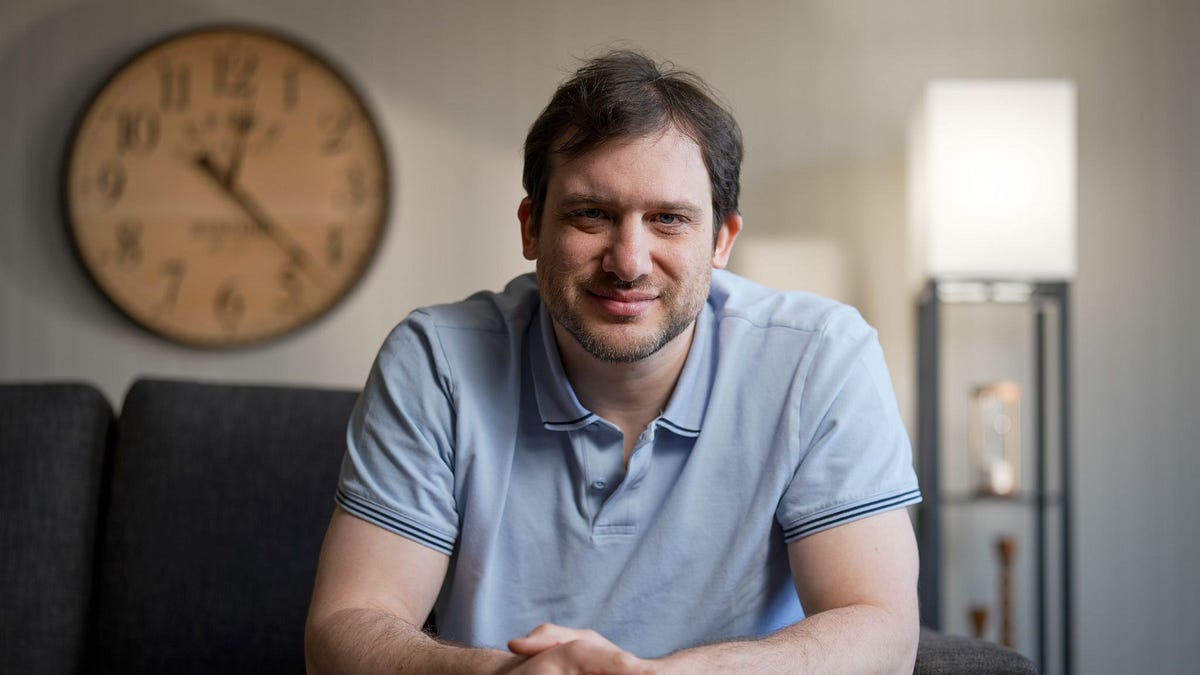
At a July 23 press conference in Philadelphia, the Canadian mathematician Jacob Tsimerman announced that he was joining the safety team at OpenAI. The timing was jarring: Tsimerman had just received a Fields Medal, perhaps math’s most prestigious prize.
“Because I have some publicity on me now,” he told me the next day, “I’m trying to direct people into AI safety as much as I can.”
Rapid AI progress hasn’t just made Tsimerman worried about AI safety; it’s also made him pessimistic about the future of mathematics as a profession.
“I feel quite confident that very shortly AI will become robustly superhuman at what professional mathematicians currently do,” he told me. “I mostly want people to grapple with that reality.”
I had traveled to Philadelphia to attend the International Congress of Mathematicians (ICM), the world’s most prestigious math conference, because I wanted to find out how mathematicians felt about the rapid pace of AI progress in their field.
Three years ago, leading AI models struggled with arithmetic. Last year they reached near-parity with the world’s top high schoolers in math competitions.
Now AI systems are autonomously solving open problems that stumped human mathematicians for decades:
In May, an internal OpenAI model
disprovedthe Erdős unit distance conjecture, which Princeton mathematician Noga Alondescribedas “arguably the best known problem” in the mathematical subfield of discrete geometry.In July, a mathematician working at Anthropic
tweetedthat Claude Fable had found a counterexample to theJacobian conjecturein higher dimensions.On Saturday, OpenAI
announcedthat an internal version of Astra, its next major model family, had “solved ten major open problems” — including several “of broad interest across mathematics as a whole.”
Developments like these have led some to claim that mathematics is close to being “solved” by AI systems.
How do mathematicians feel about this? I spoke with over 20 mathematicians in Philadelphia, ranging from prominent professors such as Tsimerman to incoming graduate students.
To my surprise, many were optimistic about the impact of AI on their own work, at least in the near future. A fair number said that AI systems had been helpful in their own research — albeit in limited ways — and seemed to expect that AI systems would continue to complement human talent rather than replace it.
And even those who thought AI systems might eventually get better than humans at all mathematical tasks bristled at the notion that math would then be “solved.” They argued that mathematics has a diverse array of goals and values, only some of which are about solving open problems. While AI can change which values humans should pursue, they argued, it does not change why humans might want to do math in the first place.
That July 23 press conference featured mathematicians who had just won a Fields Medal or another prestigious math award at the ICM. A high school reporter asked each panelist what they would tell students anxious that AI systems might narrow their future place in mathematics.
Tsimerman said he wanted young people to keep “learning and improving themselves because you don’t know how the world will turn out.” He encouraged students to “engage with AI because it’s going to be a big part of our world going forward.”
At the same time, he thought students were right to pay attention to how AI is disrupting the math profession. “I don’t think it’ll exist the way it exists right now,” he said.
Not everyone agreed. Yu Deng, a University of Chicago professor who also just won a Fields Medal, described himself as “on the more optimistic side.” He predicted that “AI is going to be helping mathematicians instead of replacing them.”
“What we may expect in the future is that mathematicians will come up with new theories, new ideas, new frameworks and the AI is going to do some of the technical details,” Deng said. “The AI will get stronger, but then we’ll redefine what are technical details. I believe that the way we study math will change, but the joy we get from studying math will not change.”
I spoke to many mathematicians whose views were close to Deng’s; he was effectively describing how mathematicians have historically dealt with automation. As computers have made certain types of calculations easy — like multiplication or algebraic manipulations — humans have been able to find new problems computers can’t solve.
The mathematician Jordan Ellenberg encapsulated this viewpoint in his 2014 book How Not to Be Wrong. He wrote that unless machines completely surpass humans’ mental powers and end civilization, math will probably be fine.
After all, math has already been computer aided for decades. Many calculations that once would have counted as “research” are now considered no more creative or praiseworthy than adding a series of ten-digit numbers; once your laptop can do it, it’s not mathematics anymore.
But this hasn’t put mathematicians out of work. We’ve managed to stay just ahead of the ever increasing sphere of computer dominance, like action heroes outracing a fireball. And if machine intelligences of the future can take over from us much of the work we know as research now? We’ll reclassify that research as “computation.”
Today’s AI is far more capable than computers in 2014. Still, this viewpoint seems to be functionally how a lot of mathematicians think about current AI systems in their own research.
The most common use case I heard about was mathematicians using AI to learn about techniques from unfamiliar areas of the mathematical literature.
The Brandeis grad student Vasiliy Neckrasov said that previously, if he wanted to use tools from an unfamiliar area of math, he’d have to read through “a giant textbook for 500 pages.” Going in, he wouldn’t know if the textbook applied to his specific research, so it might be a waste. Today, AI can quickly point him to the right resources — and he feels “more focused, more motivated” reading them “because I really needed to learn exactly these” results.
Jeremy Avigad, a professor at Carnegie Mellon, told me that a lot of colleagues use systems this way. He said that “people feel less threatened” by AI systems that serve as powerful search engines than AI systems directly proving mathematical results.
Some mathematicians told me they’d used AI tools to directly solve problems — but only as part of a larger project. Alonso Castillo-Ramirez said that ChatGPT had been able to construct an example of a cellular automaton that had special properties relevant to his research. He was impressed. “Otherwise, even with a computer program, it would have been very difficult to find” the example. But ChatGPT’s example was only one part of a larger research project.
Neckrasov uses AI more aggressively than anyone else I talked to. He pays $200 per month to use Codex for a variety of mathematical tasks like searching the literature, filling gaps in proofs, and reviewing drafts of his papers. But he still uses it as a tool.
“Even if I’m asking the AI to prove something,” Neckrasov told me, “I first have a picture in my head of what this project will be, what it is about, and what methods” to use. He then instructs the AI to read certain papers, follow a certain approach, and fill out the details.
“I want it just to work on my ideas at the end, and help me to process my own ideas faster, rather than replace my own ideas.”
Of course, not everyone is optimistic. Mathematicians earlier in their careers are generally more anxious about the future of the field because they are less established, Avigad said.
Educating students may grow more difficult as AI systems become capable of solving the kinds of tractable problems traditionally given to graduate students to help them develop research skills. And AI could have implications for how mathematics is funded. If the broader public believes that AI can replace human mathematicians, that might lead to funding cuts.
Two people — Michael Harris and Rodrigo Ochigame — pointed me toward a recent White House report that argued for redirecting resources away from “legacy” research institutions as an example of this type of rhetoric. The report explicitly mentioned AI in mathematics as a case study.
But overall, my sense is that if AI progress in mathematics stopped now, the fundamental structure of the field would stay the same. Human mathematicians would lean into the kinds of mathematical work that AI is not good at — like coming up with novel ideas — while using AI to accelerate the more routine parts of their jobs.
However, it seems unlikely that AI progress in mathematics will stall soon.
Several mathematicians told me they thought that AI would not be good at “theory-building” — that is, coming up with novel mathematical definitions and frameworks.
When I raised this possibility to Tsimerman, he was skeptical.
“People said the same thing first about why even though it can speak, it will never do math. And then the same thing about, even though it can do contest math, it’ll never do research math.” The goalposts keep moving in a predictable direction, he said.
Greg Burnham, a researcher at Epoch AI who works on benchmarking AI capabilities, had a similar view. “Sometimes when I hear mathematicians talk about AI, they’ll fall into the same perspective that I think a lot of us find very tempting, which is to comment on current capabilities without trying to understand the trajectory of where capabilities might go,” he said.
AI systems could hit a ceiling where they can’t come up with fundamentally novel ideas or theories. But it’s also easy to imagine that as AI training continues to scale up, models will become capable of genuinely novel mathematics. In Burnham’s view, either scenario is consistent with the evidence we have so far.
So some mathematicians, such as Tsimerman, think it’s possible that AI systems become better than humans at all mathematical tasks. AI might get better not just at solving well-posed math problems, but also at asking interesting questions in the first place — and at clearly explaining the ideas necessary to reach those solutions.
Suppose Tsimerman is right and AI will soon become better than human beings at all cognitive tasks related to mathematics. Will that render human mathematicians obsolete?
One of the highlights of last month’s conference was a public lecture by Terence Tao — perhaps the most famous mathematician in the world — on how mathematicians should respond to AI progress. Tao listed some of the reasons why mathematicians do research:
Tao noted that these weren’t the only reasons: “I don’t think that anyone has compiled a complete list.”
For a long time, this was “kind of fine,” he said. Mathematicians would mostly talk about one or two goals at a time, but all of the goals were “aligned.” Solving a difficult problem helped a mathematician understand the world better — and helped to build a community with other mathematicians working on the same problem. But as AI gets better at some of these subgoals — notably at solving open problems — pursuing one subgoal can be “at the expense of others.”
Later in the talk, Tao gave an example.
“We are very, very close to a scenario in which a major result gets proved and verified and no human can understand and explain it,” he said. Even though this would bring mathematics closer to the goal of solving research problems, it would hurt human understanding of the subject.
So mathematicians need to articulate more clearly what goals mathematics should pursue, Tao argued, to deal with the disruption from AI.
Arguably, theorem proving and problem solving aren’t even the most important goals for mathematicians. In a famous 1994 essay, the mathematician William Thurston argued that what mathematicians are doing “is finding ways for people to understand and think about mathematics,” especially as members of a social community.
Thurston gave an example from his own life. Early in his career, he quickly proved a string of “dramatic theorems” in an area of mathematics called foliations. However, because he was so successful at proving the theorems — and significantly less successful at communicating the ideas behind his proofs — other mathematicians evacuated the field. The end result was that the social structure that had supported research into foliations collapsed and the subfield died.
“I had the conception that what people wanted was to know the answers,” Thurston wrote. “That’s only one part of the story. More than the knowledge, people want personal understanding.”
There’s a risk that AI systems could play a similar spoiler role. If they prove important open problems in mathematics — especially in ways that are impenetrable to human mathematicians — that could remove the motivation for people to think deeply about math. With fewer opportunities to fruitfully explore the frontiers of mathematics, there would be less for younger mathematicians to do. The profession would struggle to train the next generation, and humanity would gradually lose its understanding of existing mathematical theories.
As mathematician Timothy Gowers wrote in a recent blog post, “we might arrive at a situation where the mathematical literature has, in some form, been vastly expanded, but there is no corresponding community of human experts who have a shared understanding of parts of it. Almost all of mathematics would be like the areas that we have more or less forgotten about today, areas that exist in papers written many decades ago that nobody reads any more.”
But it may also be possible that AI augments humans’ ability to understand mathematics.
The University of Toronto professor Daniel Litt gave a more optimistic vision in his blog post Mathematics in the Library of Babel. He considered an “extreme” hypothetical example.
Suppose we had a library filled with proofs of every theorem [in mathematics], as well as excellent guides that could, given a question, take us to the answer and explain it. What would a mathematician do in such a library?
If you ask the question this way, the answer becomes clear: they would be unbelievably excited, and immediately get to work. They would immediately start asking questions: how does one prove the Riemann hypothesis? The Hodge conjecture? Their own pet obsession (in my case, the Grothendieck-Katz p-curvature conjecture)? Then they would work until they understood the answer. The job would not be done, not even close. But there is still work to be done on how to restructure the field of mathematics — and clearly articulate mathematical values — so that an AI capable of solving all problems does not prevent humans from understanding mathematics as well.
The most prominent attempt to articulate a human response to AI’s impact on mathematics has been the Leiden Declaration, which arose from a September 2025 conference. After a preamble, the declaration lists several “characteristic values of mathematical research that we have a joint interest in preserving.”
The declaration then lists threats to each of these values, followed by recommendations to individuals, mathematical organizations, policymakers, and AI companies.
But the Leiden Declaration is more of a starting point than a complete vision for what the future of math would look like in a deeply different world.
There is work to be done. But mathematicians have some agency to shape the direction of the field.
“I don’t think there is a possibility of the old way of doing mathematics surviving,” mathematician and author David Bessis said. But “something will emerge” to take its place. He doesn’t know exactly what it will look like, but he thinks there are fundamental reasons that people will continue to do something that looks like math.
“We still want to understand the world and we still want to understand mathematics.”