A new congressional push to formalize AI governance could eventually reshape the regulatory landscape for digital assets and blockchain technology.
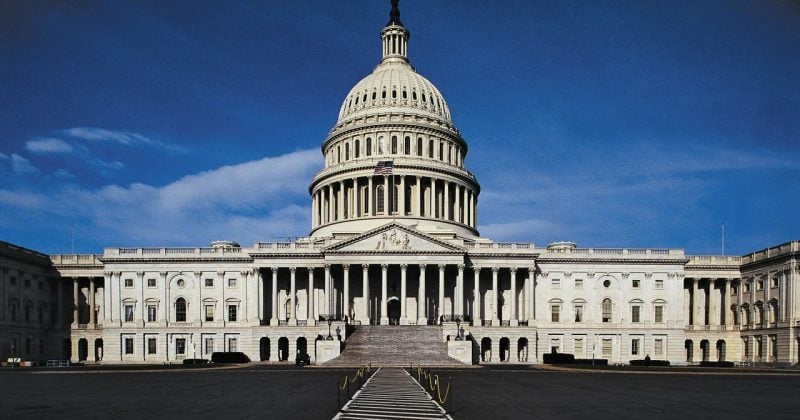
A handful of House Democrats are pushing to create a dedicated bipartisan congressional group focused entirely on artificial intelligence policy. The move, reported by Punchbowl News on July 20, signals that lawmakers see AI governance as too important to leave to ad hoc committees and one-off hearings.
What’s actually happening on Capitol Hill #
The proposed bipartisan group would build on groundwork already laid by the House Democratic Commission on AI and the Innovation Economy, which launched in December 2025. That commission is co-chaired by Reps. Ted Lieu of California, Josh Gottheimer of New Jersey, and Valerie Foushee of North Carolina. It’s been active through 2026, trying to shape how Democrats approach the AI conversation as potential shifts in House control loom after the midterms.
A bipartisan House AI Task Force established in 2024 produced a 273-page report containing 89 recommendations for how the government should approach AI governance.
The new push appears motivated by a desire to move beyond recommendations and into actual policy formation. Democrats want to formalize efforts in a space where, according to the reporting, their Republican counterparts haven’t made similar organizational strides.
In June 2026, Reps. Jay Obernolte, a Republican from California, and Lori Trahan, a Democrat from Massachusetts, released a bipartisan draft framework called the “Great American AI Act” aimed at establishing national AI standards. The Democratic commission pushed back on the draft, particularly over concerns about state preemption laws.
Why the crypto market should care #
Consider how the SEC’s approach to securities law, written decades before the internet existed, ended up becoming the primary regulatory framework applied to token sales. Regulatory frameworks designed for one technology have a long history of being retrofitted onto another.
For crypto investors, the key variable to watch is whether any eventual AI legislation includes language broad enough to capture blockchain-based AI applications. A rule targeting “automated decision-making systems” could theoretically apply to smart contracts. A data governance standard could affect how decentralized AI networks handle training data. The 89 recommendations from the 2024 task force report covered a wide range of AI applications across sectors. As those recommendations get translated into actual legislative proposals, each one represents a potential touchpoint with the crypto ecosystem.
The fact that Democrats and Republicans can’t even agree on whether federal AI standards should preempt state rules suggests that any comprehensive legislation is still months, if not years, away.
Disclosure: This article was edited by Editorial Team. For more information on how we create and review content, see our