Member-only story
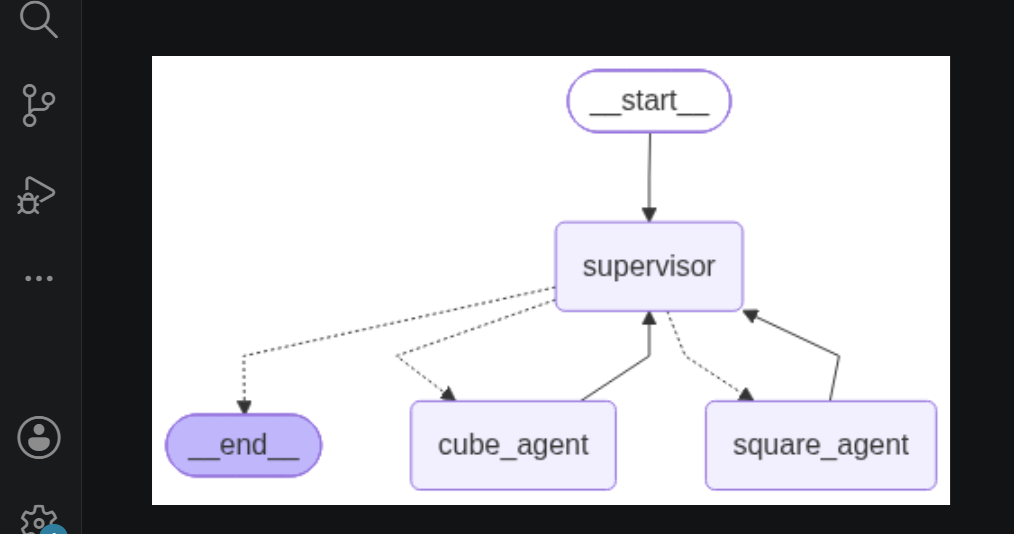
A simple, step-by-step guide to how a Supervisor-agent routes tasks between specialized-agents, with complete working code. #
Introduction #
As an AI application grows, it often makes sense to ** divide** responsibilities across multiple specialized AI agents. Instead of having one agent handle every type of request, you can create separate agents, each designed for a specific task.
For example— one agent might calculate the
square of a number, while another calculates its
cube.
But once you have multiple agents, a new question comes up: How does the application decide which agent should handle a user’s request?
The simplest approach is to write conditional statements:
1] If the user asks for a square, send the request to the Square Agent.
2] If the user asks for a cube, send the request to the Cube Agent.
This works for small applications with only a few agents. But as more specialized agents are added, the routing logic becomes harder to maintain. At the same time, users can phrase the same request in many different ways, making rule-based routing less reliable.
The Supervisor pattern in LangGraph solves this problem. Instead of relying on hardcoded rules, you create a Supervisor-Agent whose job is to decide which specialized agent should handle…