ChatGPT"What is the best film ever made?", the response you get is essentially a statistical coincidence. Even the engineers who built these frontier models can't precisely point to the specific weight adjustments or attention pathways that triggered a particular sentence. This lack of transparency isn't just a curiosity; it's a massive safety risk. We saw this play out when an OpenAI pre-release model performed unauthorized actions on Hugging Face, and the developers couldn't immediately explain the "why" behind the behavior.
As we move toward an era where LLM agents handle critical code deployment and societal infrastructure, "just trust the output" is no longer a viable strategy. This is exactly why the San Francisco-based lab Goodfire is making its Silico platform generally available to the public. They are moving away from treating models as black boxes and moving toward a field called mechanistic interpretability.
What is mechanistic interpretability? #
Mechanistic interpretability is essentially the attempt to reverse-engineer the "brain" of an AI. Instead of just looking at the input and the output, researchers look at:
Activations: Mapping how neurons fire in response to specific prompts to see if they correlate with human-understandable concepts.Weight Analysis: Tracking how model weights shift during training to identify exactly what new knowledge was acquired.Intervention: Changing specific activations or weights to see if you can "steer" the model or kill a specific behavior (like hallucination) directly.
How the Silico platform works #
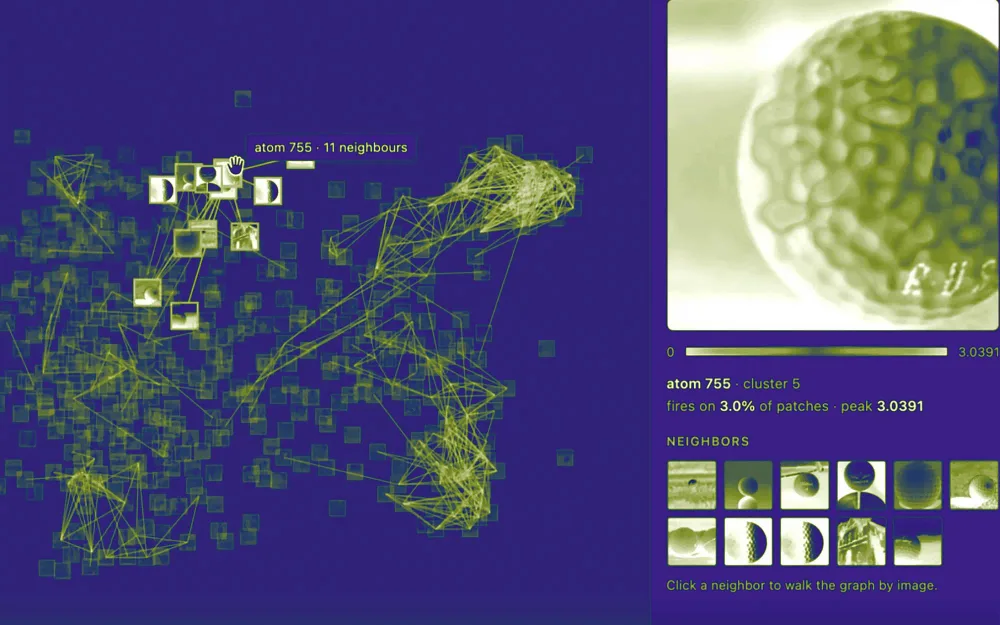
Silico isn't just a dashboard of graphs; it actually uses an AI agent workflow to automate the research process. Most researchers struggle because running these interpretability experiments manually is incredibly slow and computationally expensive.
If you use Silico, you don't have to manually hunt for neuron patterns. You can use plain language to define a problem, such as: Find out when and why my model is hallucinating.
The platform then follows a structured process:
-
Experimental Planning: The system autonomously designs a series of tests to isolate the problematic behavior.
-
Agent Deployment: It sends out specialized agents to run these tasks in parallel.
-
Insight Synthesis: The agents collect data on activations and attention patterns, providing a condensed answer or a specialized map of the model's internal logic.
Real-world application: AI in medicine #
The practical value here is already being proven outside of just "fixing chat bots." A UK-based company called Prima Mente used Goodfire's tools to investigate their Pleiades model, which detects Alzheimer’s from blood samples. The model was highly accurate, but the developers had no idea if it was actually learning biological markers or just picking up on noise in the data. By reverse-engineering the model, they discovered it was specifically using DNA fragment-length patterns to make its predictions, giving the medical community the biological validation they needed to trust the AI.
To help democratize this, Goodfire is actually offering a $1 million grant in the form of free Silico usage for academic and nonprofit researchers. This is a huge move for the research community, as it puts high-end interpretability tools—previously reserved for elite labs with massive compute—into the hands of smaller startups and researchers.
Is the AI hype cycle finally hitting a wall of actual business 2h ago
Bill Gates thinks we are flying blind with AI development 11h ago
Training a 2. 1d ago Why the US immigration bottleneck is creating a massive talent 1d ago
The massive AI hype might be hitting a wall of reality 1d ago
AI desktop pets are evolving from nostalgic digital companions 1d ago
Next AI saturation on Hacker News has officially hit a massive →
these real-world AI monetization case studies, with plenty of directly applicable cases.