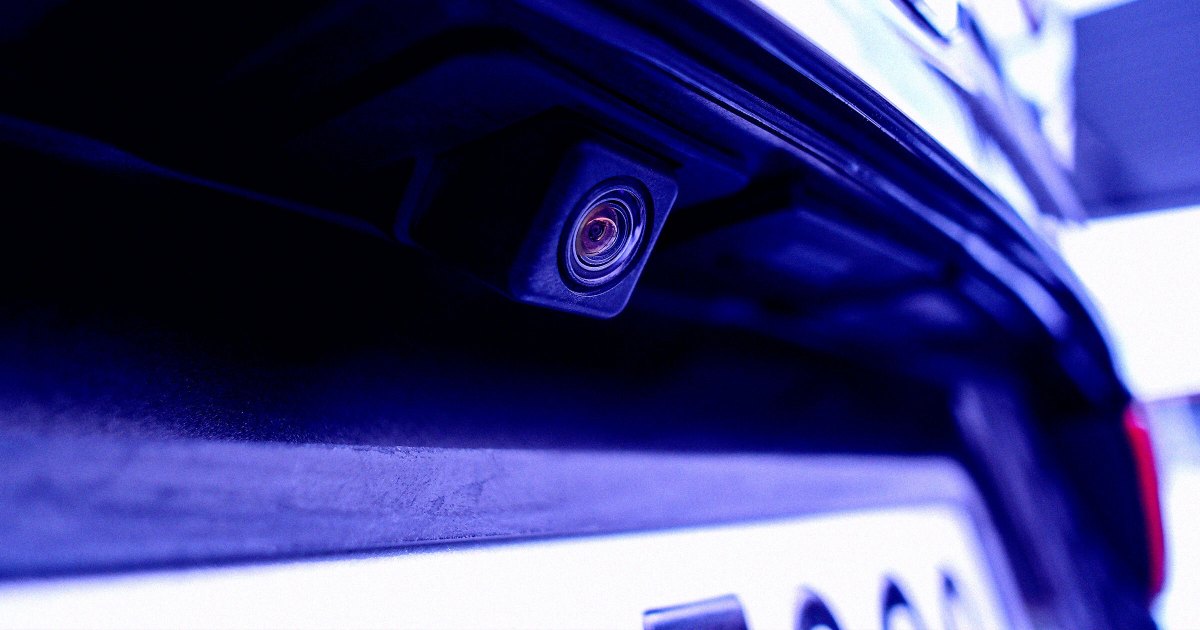
Flock had a devious plan to expand its surveillance network past its army of AI-powered license plate scanners.
As 404 Media reports, the controversial company drew up plans to use the dashcams installed in Uber and Lyft drivers’ cars to scan the license plates of every vehicle that drove past them — in effect turning hundreds of thousands of rideshare and delivery drivers into a network of what the reporting describes as “roaming surveillance vehicles.”
These plans were first revealed last August as part of an intended partnership between Flock and the AI-powered dashcam company Nexar. Now, a presentation document obtained by 404 Media shows that Flock was actively pitching this partnership to potential customers at the time. The presentation, which was intended to be shown to the Georgia Office of the Attorney General, was obtained by a Georgia resident through a public records request.
Flock told *404 *that the partnership never went through, but the presentation still shows the company’s plans to turn rideshare and delivery drivers into mobile surveillance apparatuses — and the sheer scale is astonishing.
“Hundreds of Commercial Business and HOA [home owners associations] in GA [Georgia] are part of the network,” the Flock presentation stated. “Plus Nexar partnership which includes 350k Uber/Lyft and other delivery service devices.”
Expanding to rideshare drivers would’ve added a new dimension to Flock’s already far-reaching surveillance network. Most of its cameras are mounted on stationary poles that survey a fixed area. In addition to providing more coverage, using cars could help Flock keep a lower profile; one of the main problems Flock is facing amid overwhelming public backlash is that protestors are vandalizing or blocking its surveillance pylons.
Another murky area of Flock’s plans was that it’s unclear if the Uber and Lyft drivers would’ve been aware they were participating in surveillance efforts, *404 *noted.
Flock didn’t discount the possibility of these plans being realized through another partnership in the future. If they do, it’ll only fuel the massive privacy and safety concerns already posed by its cameras. The footage it collects into a centralized network can be accessed by cops across the country, often with little accountability. At least 50 police officers have been accused of using the cameras to stalk women, according to a recent Washington Post tally.
Several people have also been swarmed by cops after Flock wrongly identified them as suspects. The dashcam partnership wasn’t the only plan that Flock had to deepen its surveillance. Last month, it officially cancelled a “human distress detection” pilot program, a network of always-on acoustic sensors that monitored public places for sounds of “screaming.”
More on surveillance: Public Offers Implausible Number of Alibis for Man Accused of Destroying Flock Cameras