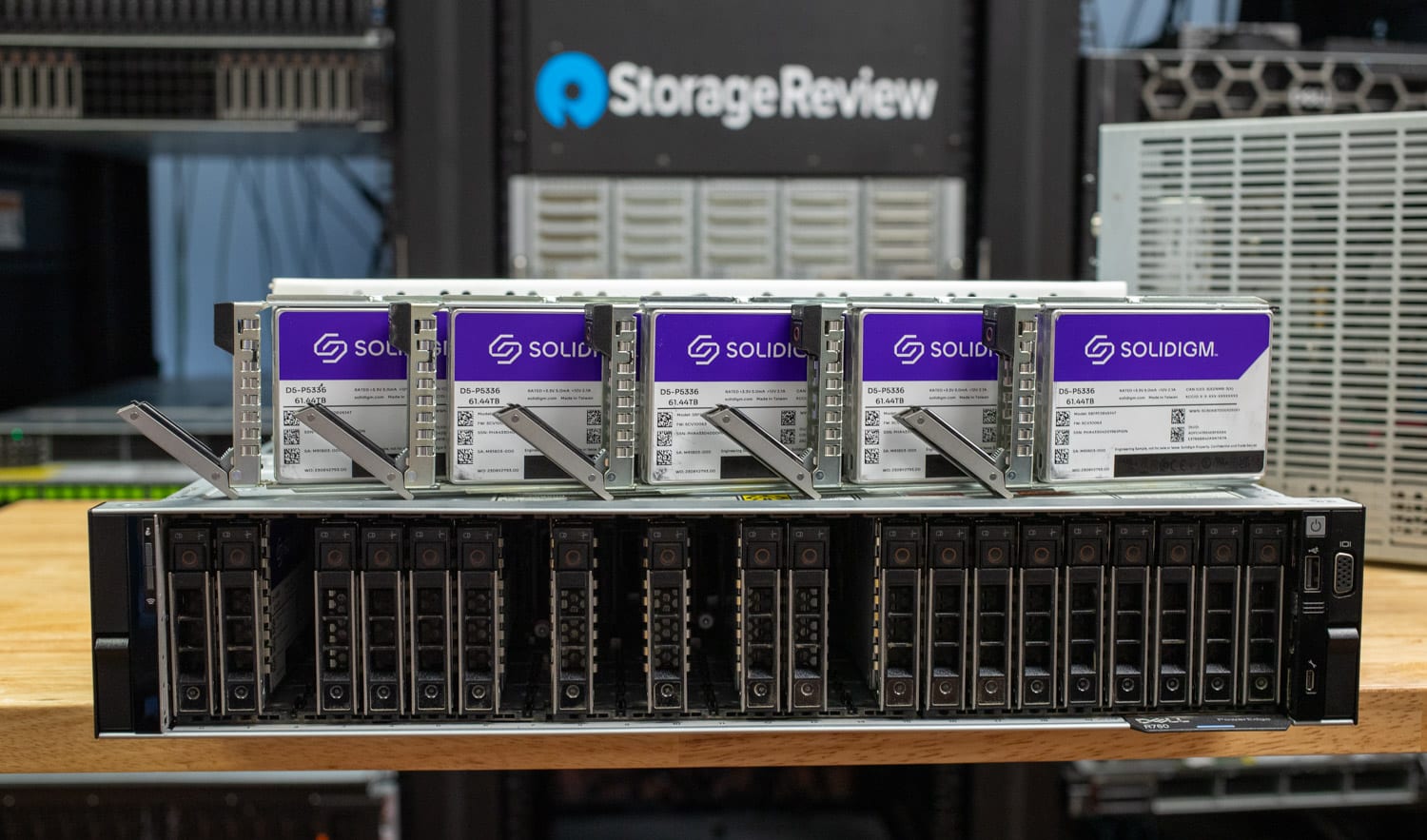
Enterprise SSD prices increased another 5 percent in July 2026, according to the latest VDURA Flash Volatility Index. While the monthly increase was lower than the extreme fluctuations seen over the past year, flash pricing remains approximately 6.5 times higher than it was in the third quarter of 2025.
The index, which VDURA launched in January and updated August 11, places the price of a 30TB TLC enterprise SSD at $22,600, compared with $3,460 in Q3 2025. A 30TB QLC SSD now costs $18,080, up from $2,768 during the same period.
The TLC-to-HDD Multiple Sits at 18.6x #
Hard drive pricing has also increased. VDURA lists a 30 TB HDD at $1,216, compared with $495 in Q3 2025. Despite the increase, the price difference between 30TB TLC SSDs and 30TB HDDs remains substantial. The current 18.6x multiple is lower than the 23.2x peak recorded in Q1 2026, but significantly higher than the 7.0x multiple measured a year earlier.
The pricing gap is particularly relevant to AI infrastructure. Training reads, checkpoint write bursts, and inference lookups require flash performance, while training datasets, checkpoint histories, and model archives can represent much larger capacity requirements. Placing all of that data on premium flash can significantly increase infrastructure costs.
“A 5% monthly increase on top of a 6.5x year-over-year jump is not relief. It is confirmation that elevated flash pricing is structural, and every AI cloud and AI factory business plan needs to account for it,” said Erik Salo, VDURA’s senior vice president of marketing and business operations.
25PB AI Factory Reference Deployment #
VDURA used its Storage Economics Optimizer Tool to model a 25 PB storage deployment that delivers 1,000 GB/s of sustained read performance. The reference system is sized for a cluster of approximately 2,000 GPUs, based on guidance from AMD and NVIDIA.
Quarter | 30TB TLC SSD | 30TB QLC SSD | TLC vs HDD | 30TB HDD | |---|---|---|---|---| | Q3 2025 | $3,460 | $2,768 | 7.0x | $495 | | Q4 2025 | $7,765 | $6,212 | 13.4x | $580 | | Q1 2026 | $17,500 | $14,000 | 23.2x | $755 | | Q2 2026 | $18,900 | $15,120 | 16.3x | $1,158 | | Q3 2026 | $22,600 | $18,080 | 18.6x | $1,216 |
At Q3 2026 pricing, an all-flash design using 30TB TLC SSDs carries an estimated three-year cost of $51.60 million. A design combining storage-class memory with QLC flash totals $48.42 million over the same period.
VDURA’s mixed-fleet architecture uses 5.78 PB of flash and 22.68 PB of HDD capacity within a single namespace. The configuration delivers 1,040 GB/s of sustained performance at an estimated three-year cost of $12.86 million.
The resulting difference is approximately $38.74 million compared with the TLC all-flash design. The comparison illustrates how separating performance and capacity requirements can reduce the amount of data stored on NVMe media without limiting the performance available to hot workloads.
For AI cloud operators, storage cost directly affects the economics of GPU utilization and token delivery. Training data, checkpoint operations, and inference lookups can remain on flash, while less performance-sensitive data is placed on hard drives. This approach limits exposure to elevated flash pricing while retaining NVMe performance where it matters most. VDURA said the current pricing environment challenges the assumptions behind all-flash AI storage architectures. The company characterized the combination of a 5 percent monthly increase and a 6.5x year-over-year increase as evidence that flash pricing has become a structural consideration for AI cloud and AI factory deployments rather than a temporary market fluctuation.
The VDURA Flash Volatility Index and Storage Economics Optimizer Tool provide pricing data and modeling capabilities for comparing storage media mixes, capacity requirements, GPU counts, and performance targets. VDURA said it plans to update the index as market conditions change.