DeepSeek dropped an MIT-licensed agent runtime on August 13. Within four days, the GitHub repo crossed 135,000 stars and 8,800 forks — one of the fastest adoption curves the platform has recorded for a developer tool. The “free Claude Code killer” framing followed immediately. It is partially wrong. The architecture is legitimately interesting, but if you are evaluating DeepSeek V4-Pro alongside it, there is a pricing change that took effect August 16 that deserves your attention before you sign a budget.
The Harness Is the Moat, Not the Model #
Here is the underreported story: the harness layer — not the model — is where competitive advantage in AI coding is consolidating. Elon Musk said the quiet part aloud: “Grok 4.6 will work best with the Grok Build harness. The experience will be significantly worse without it.” That is not a product note. It is a strategic admission.
Research confirms the stakes. Using identical model weights, researchers measured SWE-bench Verified scores ranging from 62.3% to 70.2% depending entirely on the harness architecture — nearly 8 percentage points of performance variance from scaffolding alone, not from the model. Claude Opus 4.5 showed a similar spread across harnesses on SWE-bench Pro with no model change. The harness shapes the agent’s reasoning, tool invocation patterns, and error recovery. Models matter; the runtime matters more than most people realize.
DeepSeek’s decision to open-source Harness under MIT is a deliberate bet that the moat should belong to no one. Whether that is strategically self-serving — removing a barrier for V4-Pro adoption — or genuinely principled is a reasonable debate. The effect is the same: developers can now inspect, fork, and run every layer of an agentic runtime with no license restrictions.
Everything Is a Plugin — and That Is Both the Point and the Risk #
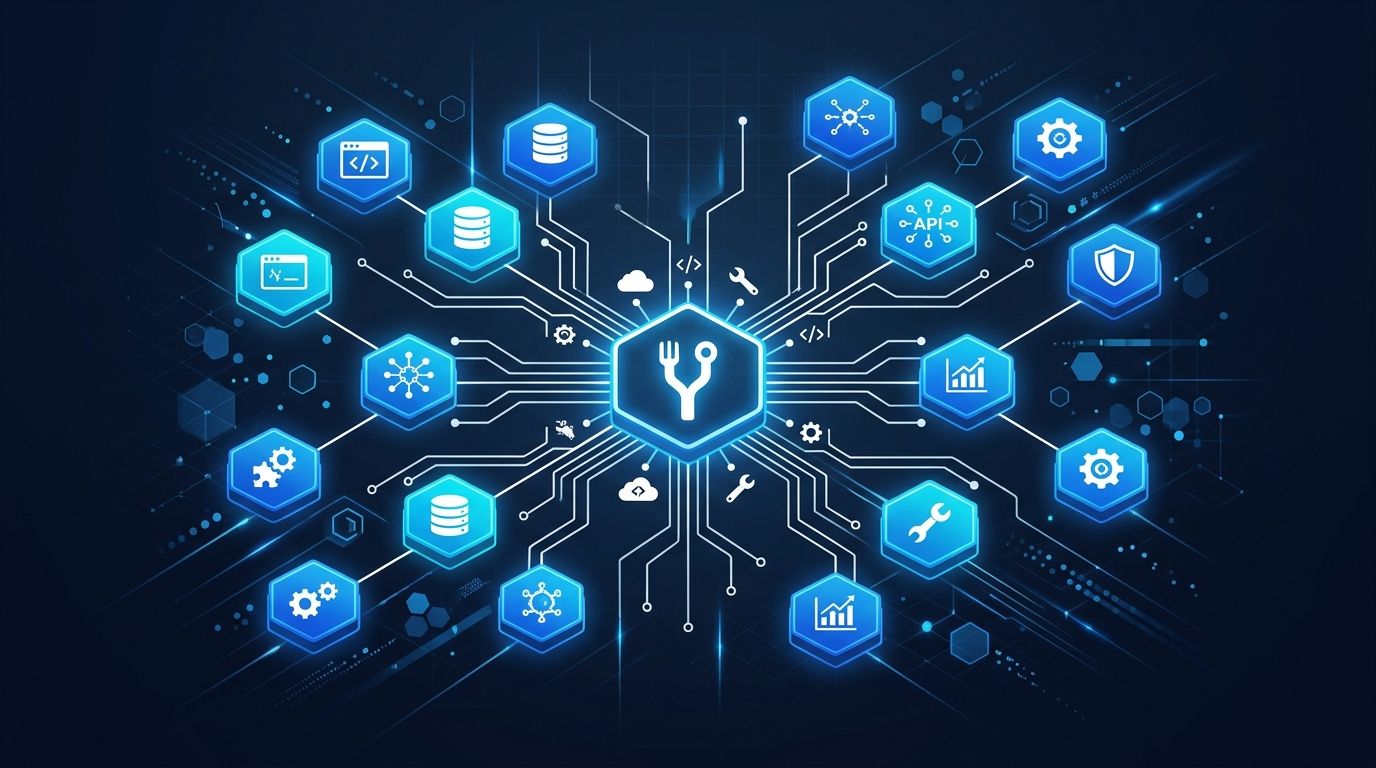
DeepSeek Harness is built on Cordis, a dependency-injection plugin kernel. Eight layers are independently swappable: model adapters, tool registry, session state, agent control loop, execution environment (filesystem, shell, sandbox), composition layer, UI, and the framework itself. Hot-reload means you can add or remove plugins at runtime with automatic effect reversal — no restart, no state loss.
The session state design stands out. Every agent action is written to an append-only event log that functions as the single source of truth. You can resume a session at any checkpoint, fork it at any boundary, or replay it in full for debugging. Closed-source competitors log and encrypt; you get a dashboard but not the data. Harness gives you the raw log. If reproducible debugging matters in your workflow, this is a genuine differentiator.
The risk is the one developers raised immediately on Hacker News (734 points, 309 comments): plugin-dependent ecosystems have a history of flourishing at launch and fragmenting within a year. Eclipse, early VS Code extensions, WordPress plugins — the pattern repeats. Community plugins tagged dsh-plugin
on GitHub numbered 40+ within three days of launch. Whether that ecosystem maintains quality at scale depends on community investment DeepSeek cannot control.
V4-Pro Pricing: Read the Fine Print #
DeepSeek restructured V4-Pro pricing on August 16 with “peak/off-peak” tiers framed as a discount structure. The numbers warrant a second look.
| Token Type | Pre-Aug 16 | Off-Peak | Peak |
|---|---|---|---|
| Input (cache miss) | $0.435/M | $0.66/M | $1.32/M |
| Output | $0.87/M | $1.98/M | $3.96/M |
Off-peak output is $1.98 per million tokens — up from $0.87, a 2.28x increase. Peak is $3.96, a 4.55x increase. “Off-peak” hours run 01:00–04:00 and 06:00–10:00 UTC. That is 3 AM to 6 AM and 8 AM to 12 PM in Europe; the middle of the night for the US West Coast. V4-Pro remains significantly cheaper than Claude Opus 4.7 ($25/M output) and GPT-5.5 ($30/M output), but the framing of this as a price cut is misleading. Budget accordingly.
Getting Started: Four Modes, One Warning #
The quickest path to a running instance requires only Node 22.19+ and pnpm:
npx @deepseek-ai/dsh web
That launches a local web UI at 127.0.0.1:3080. No API key required if you point it at a local Ollama instance. Four operational modes are available: Standard (full agent), Code (TypeScript SDK wrapper for programmatic control), Minimal (bash + text editor — DeepSeek’s own published benchmarking configuration), and Creator (runtime inspection for building custom modes).
The README is direct: “THERE WILL BE COMPATIBILITY-BREAKING CHANGES.” If you need production stability, wait for a tagged 1.0 release. If you are benchmarking agent runtimes or evaluating infrastructure options, the Minimal mode is stable enough — and it is exactly how DeepSeek evaluates its own models. The GitHub repository includes full documentation for each mode.
The Bottom Line #
135,000 stars in four days reflects genuine developer appetite for a credible, MIT-licensed alternative to closed agent runtimes. The plugin system, session replay, and model-agnostic design are well-considered choices. The V4-Pro pricing restructure is a genuine increase dressed as a discount. The software is pre-1.0 with acknowledged breaking changes ahead.
The bigger question is strategic: if the harness layer is the actual competitive moat — and the benchmark data and AI dev tool rankings support that framing — then DeepSeek open-sourcing this piece of the stack is a move worth taking seriously, independent of whether V4-Pro is your preferred model. The tool you are evaluating is not just a Claude Code alternative. It is a claim that the runtime infrastructure for AI coding agents should be a commons. That argument has merit.