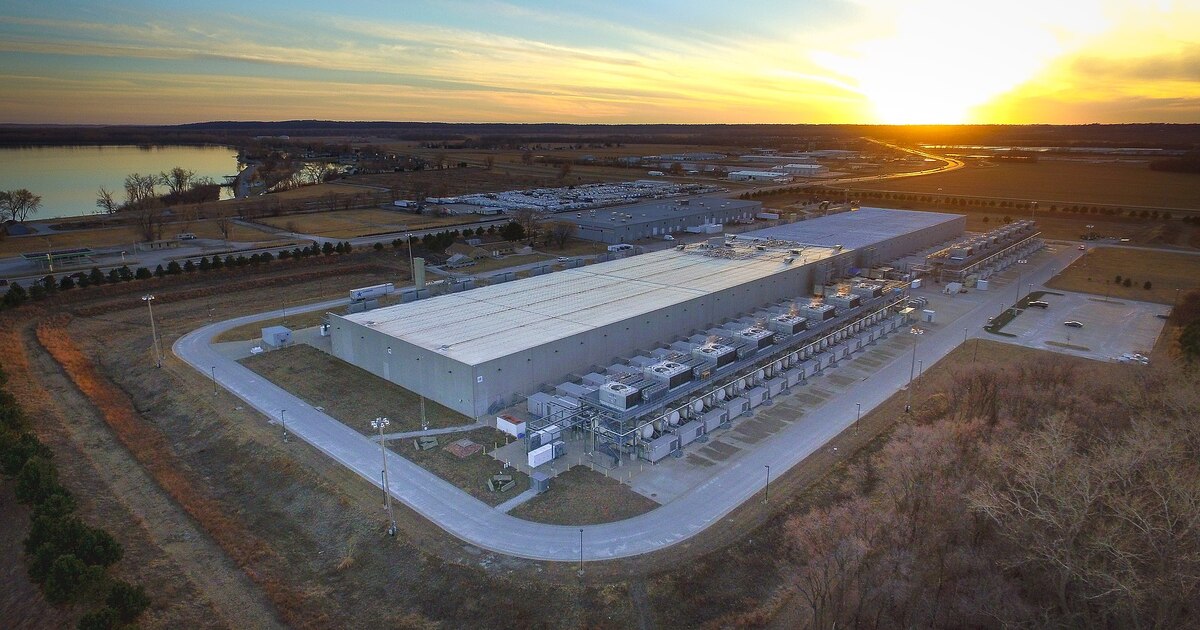
The fight over data centers has tipped into hysteria, and working families are the ones who’ll pay for it. Here’s what’s actually true, whose paychecks are on the line, and who’s quietly funding the panic
TL;DR
The water math is wrong. The bill fix already exists. And some of the loudest “grassroots” opposition traces back to Shanghai. Here’s the real story behind the panic underlying AI data centers.
In April, someone fired thirteen rounds into the home of an Indianapolis councilmember. The apparent reason: he had publicly backed a data center project in his district. Whoever did it left a note. It said “No Data Centers.” A few months later, the small Iowa town of Salix had to postpone a city council meeting after its mayor said the council had received death threats and “terroristic” threats over a proposed data center moratorium.
The Indianapolis shooting, first reported by Fortune, was the most violent expression of a backlash now spreading through town halls across the country. From Indiana to Iowa to California, the plan to build the data centers that run artificial intelligence has become a lightning rod, drawing packed council meetings, ballot fights, and a level of fury usually reserved for prisons and landfills.
Some of that anger is genuine. Families have real questions about their water, their power bills, and their jobs. But the heat around data centers has climbed far past anything the facts justify. And when a debate runs this hot, it is worth asking who benefits from the fire. Because it isn’t the working families being told to be afraid.
“Data centers are draining our drinking water” #
You’ve seen the viral claim that a single AI query “drinks” a bottle of water. It made headlines. It’s also badly out of date, by the researcher’s own account.
The number traces back to a 2023 UC Riverside study from researcher Shaolei Ren, developed with the Washington Post, that put a 100-word ChatGPT-4 response at roughly 519 milliliters of water, close to a bottle. Ren has since revised that figure down dramatically: his group’s current estimate for a GPT-4-class query is closer to 15 milliliters, with only about 5 milliliters used on-site at the data center itself. The gap between the viral number and today’s estimate is roughly 30-to-1, driven by outdated assumptions about how much energy a typical query actually uses, not by new water-saving technology alone. Modern facilities are also increasingly moving to closed-loop cooling that recirculates the same water, and some new builds use air cooling that consumes almost none.
None of that means water use is a complete non-issue. But the real risk is a badly sited, water-hungry plant dropped into a drought-stressed county. The answer is siting and cooling standards that protect local water, not a blanket ban on the infrastructure the whole state is about to run on.
“They’ll spike your electric bill” #
While some households have seen higher bills, and Consumer Reports has documented sharp monthly spikes in areas absorbing heavy new demand, this is not an intractable problem. This is a question of who pays, and working families should not be the answer. States are already rewriting the rules so the companies foot the bill. Oregon’s 2025 POWER Act now requires large data centers to pay their own way: regulators approved a nearly 30 percent rate increase on large data-center customers in 2026 while cutting residential rates. And under the White House’s Ratepayer Protection Pledge, major AI companies and hyperscalers have voluntarily committed to funding the grid infrastructure their facilities require rather than passing those costs to households. That’s a conversation worth having. But the solution is not freezing everything and handing the jobs to the next state over.
“They don’t create jobs” #
Building a datacenter requires hundreds of skilled union construction positions per project, the kind of paychecks that put a family in a house and a kid through school. And the property taxes fund that school, the roads, the fire department, for decades. Make companies pay full freight, hire local trades, and fund their own power. That’s how a working town gets leverage. A ban throws that leverage in the trash, and the jobs with it.
The Foreign-Funded Network That Benefits #
So who wins if working families get scared out of the very projects that would put their neighbors to work?
Follow the money and it tells a more insidious story. The New York Times documented in 2023 how a network financed by Shanghai-based American expatriate Neville Roy Singham has poured money into U.S. advocacy groups that push messaging aligned with the Chinese government’s interests. More recently, Bitcoin Policy Institute published two reports extensively documenting the foreign-funded network propagating myths about data centers.
There is no interest Beijing holds more nakedly than slowing America’s AI buildout, the one race that decides which country’s workers own the next century. A network with documented ties to Chinese state media has real incentive to help stir up American opposition to American workers building. Your neighbor with sincere local worries isn’t a foreign agent, and that worry deserves the honest answers above. But when the panic runs hot enough to put bullets through a councilman’s window, it’s fair to ask who profits if you stay afraid, and who’s funding the campaigns doing the stirring.
The Choice Before Us #
This is about working families versus the people, foreign and domestic, who profit from keeping them anxious, divided, and stagnant.
Every generation, California gets captured by those protecting what they already have, and every generation someone has to reclaim it for the people trying to build what comes next, the electricians and pipefitters and their kids. States that lead transitions win. States that let fear win become the rust belt.
We can answer the real concerns, water, bills, a fair local deal, with policy that leaves families better off. Or we can let a panic, some of it stoked from overseas, talk us out of our own future while everyone else races toward theirs.
The facts are on the side of the people who build. The only question is whether we let them be heard over the noise.
## Comments (0)

[Sign in](https://garryslist.org/session/new) to join the conversation.