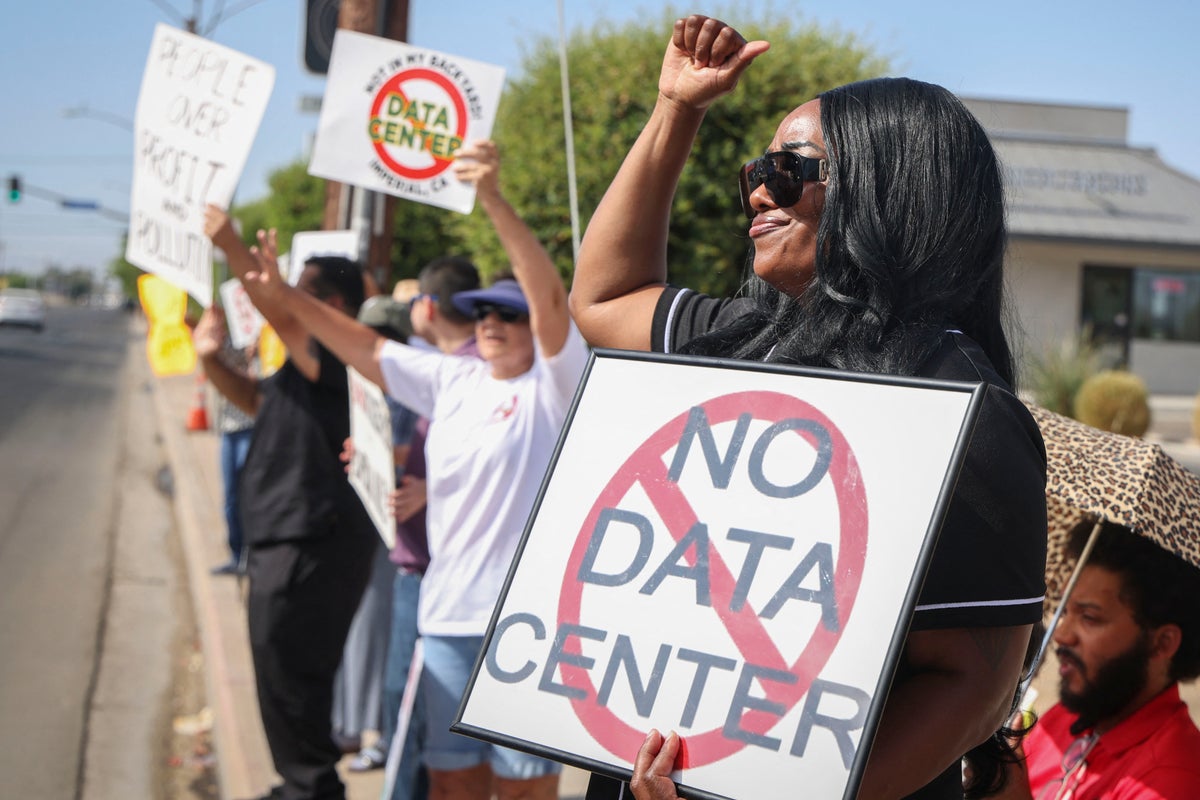
Critics of the data center in St. Louis, Missouri, worry about its water usage, the impact on the city’s air quality and utility costs
- Bookmark
The developer of a proposed $3.1 billion data center in St. Louis, Missouri, has sued a board that handles city zoning after the five-member panel required the company to supply renewable energy on-site.
David Lambiaso, a partner at data center developer TerraWatt, claimed in a lawsuit filed Wednesday that the St. Louis Board of Adjustment imposed illegal conditions when it upheld a permit for the 120-megawatt facility in July, according to the St. Louis Post-Dispatch, which reported on the filing.
The lawsuit argues that requiring his company to supply a minimum of 2.4 megawatts of renewable energy at the data center exceeds the board’s authority.
The rapid development of data centers across the country to power the AI boom has often led to friction between cities and developers, with locals citing environmental and quality of life concerns.
Some St. Louis residents have complained that the proposed data center in the Midtown neighborhood would use too much water, worsen air quality and raise utility costs, the Post-Dispatch reported.
Lambiaso also claimed the renewable energy requirement is “practically impossible” given the size of the 11-acre site.
The Independent has reached out to TerraWatt and the St. Louis City Counselor’s Office for comment.
TerraWatt did agree to use renewable energy for at least 50 percent of the data center’s energy load within five years of the facility’s opening in a community benefits agreement.
That amounts to about 60 megawatts — far more than the 2.4 megawatts mandated by the board. But there are other ways to generate that energy, rather than producing it on site, such as buying power from energy providers.
Local environmentalists have argued the community benefits agreement does not actually represent residents’ wishes.
Elyse Schaeffer with the Missouri Coalition for the Environment told local outlet KSDK, “I'm reluctant to call this a community benefits agreement at all because at base level a community benefits agreement should involve conversations with feedback from and input by community members. And that's not the process that we saw happen with this.”
“‘Community Benefit Agreement’ — which community does it benefit? It should be called a Developers' Benefit Agreement,” Kerry McCullen with the Eco-Socialist Green Party of Eastern Missouri told the outlet. “The community did not and does not consent to this. It is being forced upon us. It's disgusting that we have no say in the matter.”
The St. Louis Board of Adjustment has also required aldermen to approve the community benefits agreement, which Lambiaso argued in the lawsuit exceeds the board and aldermen’s authority.
Join our commenting forum #
Join thought-provoking conversations, follow other Independent readers and see their replies
Comments