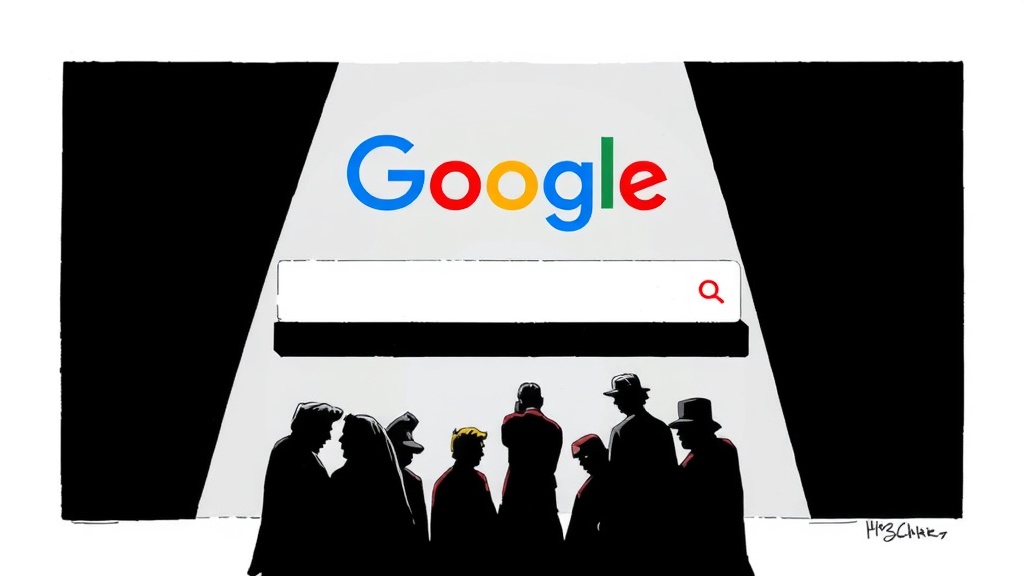
Republican Senator Eric Schmitt is teaming up with a Democratic colleague to break Google's monopoly on search — a direct hit at the infrastructure that lets Big Tech control what Americans can see and say online. The stakes are nothing less than whether citizens can access information without a Silicon Valley gatekeeper deciding what counts as truth.
Google didn't stumble into monopoly power. It built it by acting as the internet's front door, routing users out to the open web — publishers, merchants, universities, the whole decentralized ecosystem. That bargain made Google one of the richest companies on earth. Now Google is tearing it up. According to the New York Times, the company has replaced its traditional link-based results with "AI Mode," which serves up conversational responses generated by its Gemini chatbot instead of sending users to outside sources. Google even redesigned its iconic search box for the first time in 25 years to push AI "agents" and visual queries. The open web that made Google indispensable is being starved of traffic while Google keeps users on-platform, hoarding both the information and the ad dollars.
Larry Page, Google's co-founder, wrote to shareholders in 2004 that "a well-functioning society should have abundant, free and unbiased access to high-quality information." That promise is dead. Google's search engine now curates, summarizes, and filters through an AI lens trained by the same company that spent years deplatforming voices it deemed unacceptable. The pipeline from search monopoly to censorship regime is direct: control what people can find, and you control what they can think.
Enter Schmitt. The St. Louis Post-Dispatch reports that Missouri's junior senator is joining forces with a Democratic senator — the outlet did not name the colleague — to loosen Google's grip on search. Schmitt, who sued the Biden administration over its censorship-by-proxy operation with social media companies while serving as Missouri's attorney general, has credibility on this issue. The question is whether this bipartisan effort is a genuine antitrust action or Capitol Hill theater designed to look tough while leaving the censorship architecture intact.
Bipartisan deals in Washington deserve automatic skepticism. When both parties agree, that is usually where the public gets sold out. The tech lobby spends billions to shape antitrust legislation in its favor, and the revolving door between Capitol Hill, K Street, and Silicon Valley ensures that "reform" often means a regulatory regime that entrenches incumbents rather than dismantling them. Any bill that emerges from this partnership must be judged on whether it actually opens the market to competitors or simply adds a compliance layer that only Google can afford.
Google's shift to AI search makes the antitrust question urgent. If the open web collapses because Google hoards traffic inside its own walled garden, independent publishers — including dissenting voices — lose their last on-ramp to audiences. The censorship problem was never just about content moderation; it's about who owns the roads. Right now, one company does.
Schmitt's cross-aisle gambit signals that even the establishment recognizes the monopoly is politically unsustainable. Whether they intend to actually break it — or just hold hearings and cash checks — is the open question.