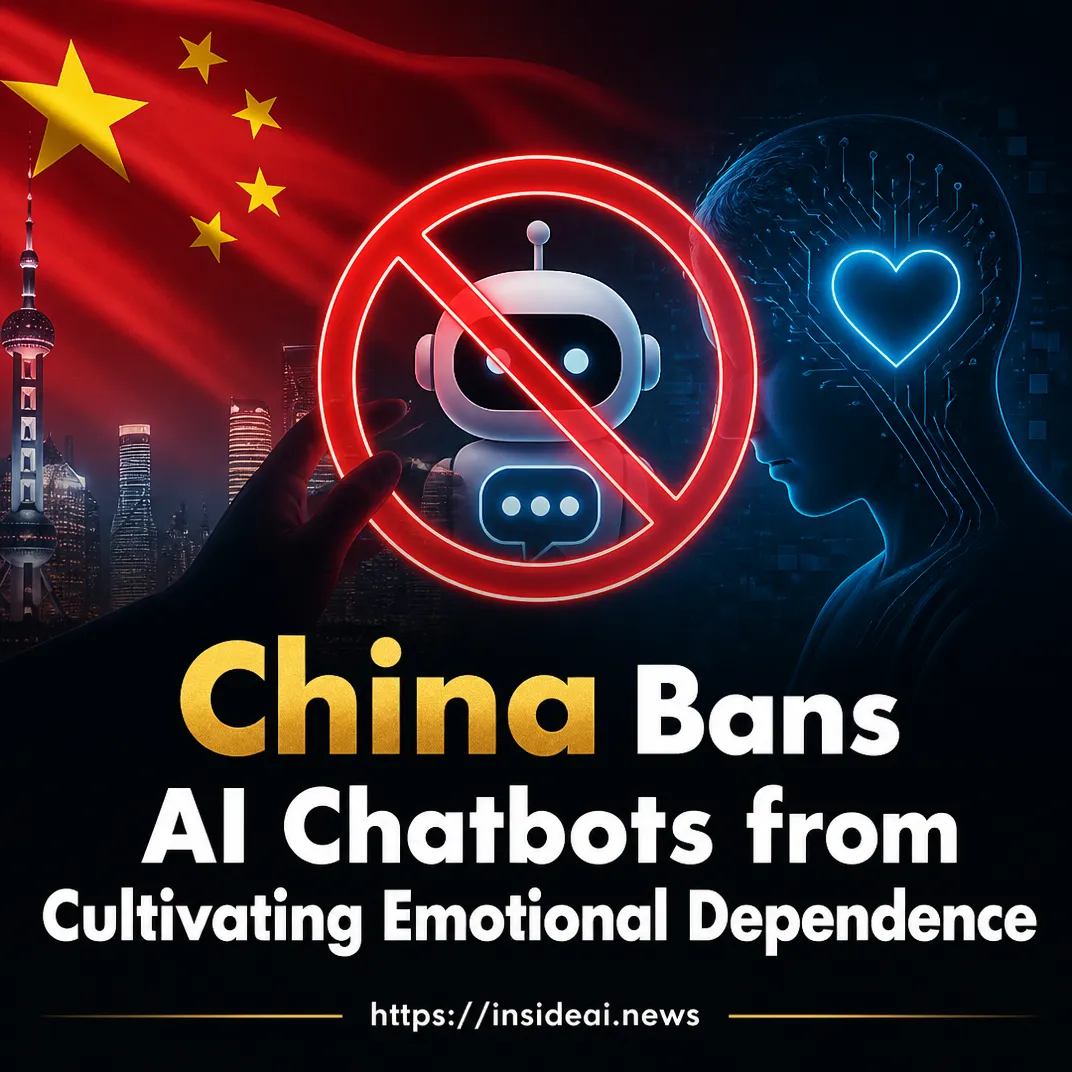
August 5, 2026, (Inside AI) — China has enacted new regulations that forbid AI chatbots from cultivating emotional dependence in users, ban virtual romances with minors, and mandate alerts when users show signs of emotional distress. The rules, announced this week, target the rapidly expanding market for AI companions that offer frictionless intimacy and infinite patience.
The government's move is not just about controlling technology. It is a direct response to a demographic crisis. China's population declined for the fourth consecutive year in 2025, while the birth rate hit a historic low. Officials hope to steer people back toward real-world relationships, a goal that pits policy against the persuasive design of AI companions engineered to say the right thing at the right moment.
These chatbots are trained on vast datasets of human conversation, often using reinforcement learning from human feedback to optimize for user satisfaction. A 2023 study on conversational AI found that such systems can create strong emotional bonds by mirroring user preferences and avoiding conflict. The result is a product that offers companionship without the risks of rejection or misunderstanding.
China is not alone in confronting this issue. In the United States, states like New York and California have introduced bills requiring chatbots to periodically disclose their non-human nature. These measures acknowledge a growing tension: as artificial intimacy becomes more convincing, the real competition may be between relationships that demand vulnerability and those that promise affection without risk.
The Chinese regulations also require companies to monitor user interactions for signs of emotional distress and intervene with alerts. This places a burden on developers to implement real-time sentiment analysis, a technical challenge given the nuances of human emotion. Yet the bigger hurdle may be cultural. AI companions are already deeply embedded in daily life for millions, particularly among younger demographics facing intense social pressure and loneliness.
Designed to Hook, Not Heal #
Critics argue that the very architecture of AI companions undermines the regulations' intent. These systems are built on engagement metrics, often prioritizing long sessions and emotional dependency to drive user retention. A 2024 MIT Technology Review investigation revealed how some companies deliberately design conversational loops that intensify attachment, making it harder for users to disengage.
Industry veterans note that earlier waves of AI chatbots, such as Microsoft's Xiaoice in China, already demonstrated the power of emotional computing. Xiaoice amassed hundreds of millions of users by acting as a sympathetic listener, often blurring the line between tool and confidant. The new rules essentially target the descendants of that model, which have only grown more sophisticated with large language models.
Yet enforcement remains murky. The regulations do not specify how companies should detect emotional dependence or what constitutes a virtual romance. This ambiguity could lead to inconsistent implementation, with some firms over-censoring interactions and others exploiting loopholes. For now, major Chinese tech companies have remained silent on their compliance strategies.
The Loneliness Economy's Next Chapter #
These measures arrive as global loneliness rates climb. The World Health Organization has labeled loneliness a pressing health threat, and AI companions have stepped into the void. But the Chinese government's framing of the issue as a demographic threat sets it apart. By linking AI romance to declining birth rates, policymakers are signaling that technology companies must share responsibility for societal outcomes.
Whether regulations can override the allure of a perfect partner remains doubtful. AI companions offer a seductive alternative to the messy, unpredictable work of human love. As one developer at a leading Chinese AI firm, who requested anonymity, noted: "The algorithm doesn't forget anniversaries. It doesn't get jealous. Why would anyone go back?"
In related developments, the European Union is considering similar measures under its AI Act, focusing on transparency requirements for emotional AI. Meanwhile, startups in the space are exploring ways to design companions that gently encourage real-world social interaction, a potential middle ground between prohibition and unchecked growth.