China accused the United States of pursuing “AI hegemonism” on Monday and vowed to defend its technology companies against threatened investigations and sanctions, deepening tensions in the growing U.S.-China battle for AI leadership.
China’s Commerce Ministry accused Washington of politicizing technology and trade by alleging, without sufficient factual or legal grounds, that Chinese developers had distilled American frontier models and stolen intellectual property, warning that Beijing would take “all necessary measures” against any U.S. action that materially harmed Chinese interests.
Beijing argued that some Chinese models were released close to their U.S. rivals and had already moved ahead in areas including front-end coding, challenging claims that their progress depended primarily on copying American systems.
The ministry also claimed that U.S. developers had used Chinese models during research and training. It added that nearly 200 American startups had urged Washington not to block access to Chinese open-source technology, warning that restrictions could weaken U.S. competitiveness.
Kimi K3 claims bring distillation dispute into focus
The Chinese warning followed accusations made on July 22 by White House science and technology adviser Michael Kratsios against Beijing-based Moonshot AI, the developer of the recently launched Kimi K3 model.
Kratsios said the U.S. government had information indicating that Moonshot used Anthropic’s Claude Fable 5 while developing K3. He alleged that the company created an internal system capable of conducting distillation at scale while rotating between access routes to make the operation harder to detect.
The official also accused Moonshot of obtaining servers equipped with Nvidia’s GB300 processors and accessing similar computing systems in Thailand, potentially for model training.
Moonshot was already on Anthropic’s radar
Anthropic said in February that Moonshot generated more than 3.4 million exchanges with Claude through hundreds of fraudulent accounts operating across several access channels.
According to Anthropic, the activity targeted reasoning, coding, data analysis, tool use, computer vision and computer-operating agents before attempting to extract and reconstruct Claude’s internal reasoning traces, with account metadata matching public profiles linked to senior Moonshot personnel.
Moonshot has rejected claims that Kimi K3’s gains came from distillation, saying its advances resulted from original changes to the model’s underlying architecture.
Trump says Washington intends to hold its lead
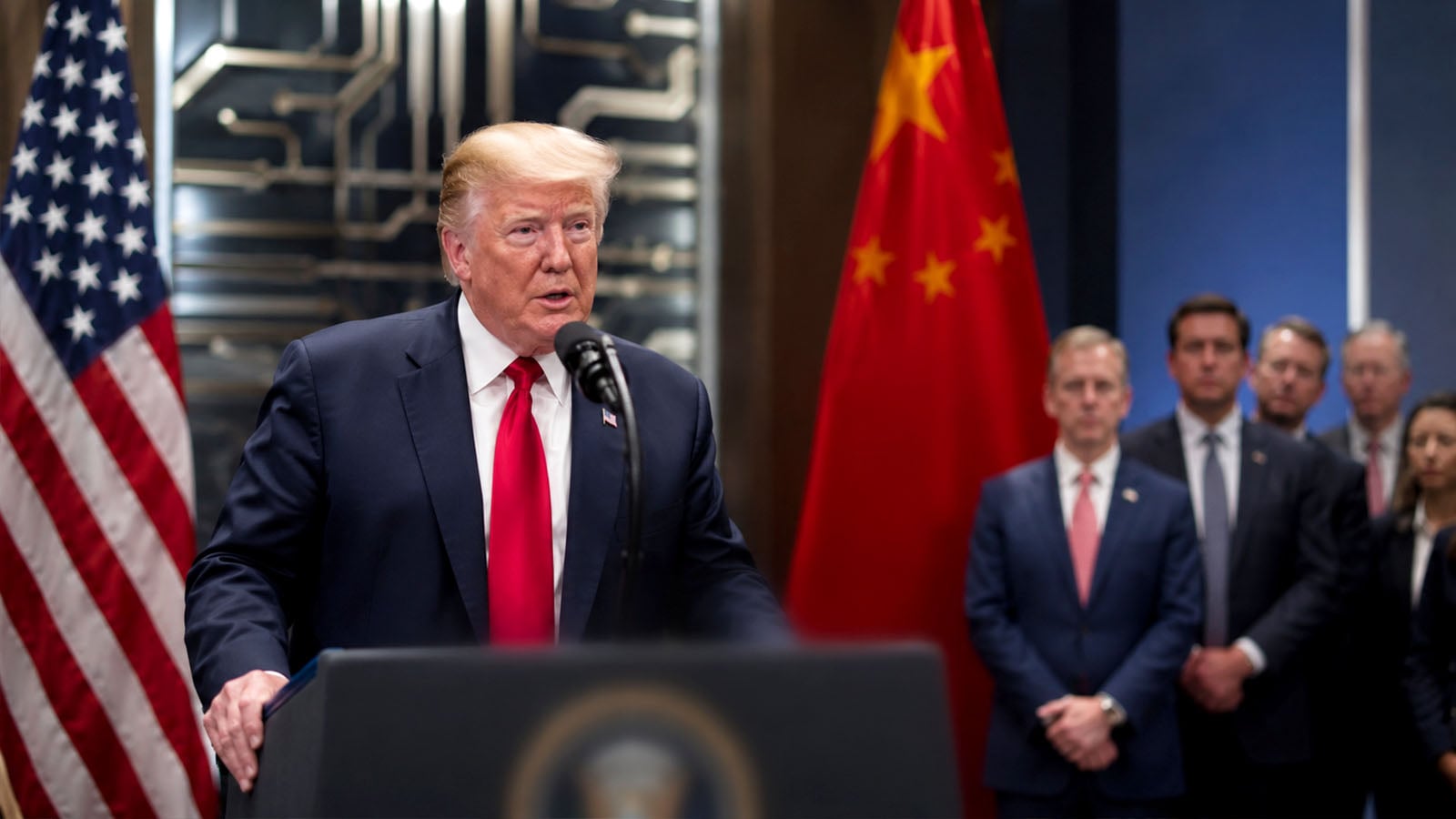
Asked on Monday whether Chinese AI companies were stealing American intellectual property, U.S. President Donald Trump said both countries were closely watching one another, while insisting Washington remained ahead.
“They’re looking at us and we’re looking at them. We are leading China substantially in AI, and we’re gonna keep it that way,” Trump said.
Sanctions could divide the global AI market
Washington could escalate the dispute by placing Moonshot or other Chinese developers on the Commerce Department’s Entity List, cutting their access to U.S. chips, software, servers and cloud infrastructure, while Beijing could respond by restricting American companies’ access to Chinese AI models, data, research partnerships or critical supply chains.
Such a move would raise costs on both sides, disrupt global developers that rely on tools from both markets and accelerate the division of the AI industry into separate U.S.- and China-led ecosystems.