Synopsis: A lot of what passes for enterprise AI right now is expensive theater — pilots that look impressive in a demo, spend real money on frontier model tokens, and never produce a measurable business outcome. The gap between running an AI experiment and running AI as infrastructure is where most organizations are still stuck, and the reasons rarely have much to do with the model itself.
A lot of what passes for enterprise AI right now is expensive theater — pilots that look impressive in a demo, spend real money on frontier model tokens, and never produce a measurable business outcome. The gap between running an AI experiment and running AI as infrastructure is where most organizations are still stuck, and the reasons rarely have much to do with the model itself. It is the layer around the model — cost, permissions, context, workflow design — that decides whether AI turns into useful capability or a line item nobody can defend.
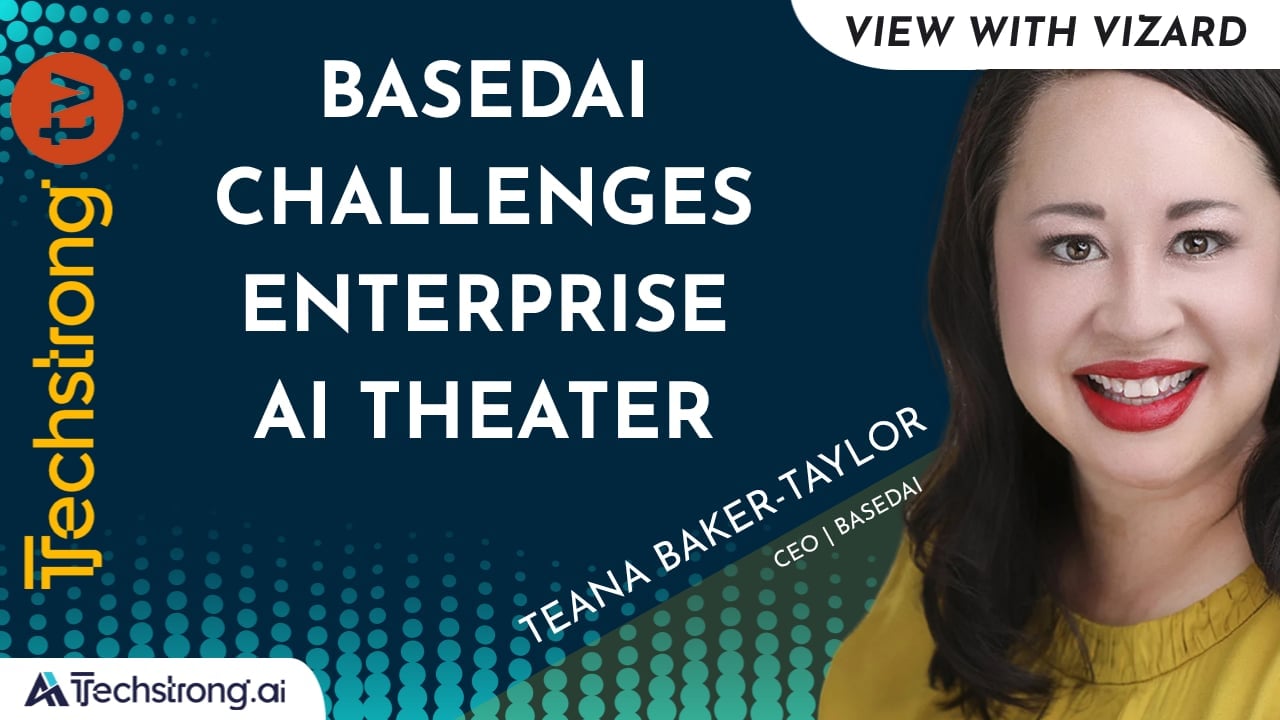
Mike Vizard talks with Teana Baker-Taylor, CEO of BasedAI, about why so many enterprise programs are burning budget without moving the needle. Baker-Taylor is direct about what she calls token shock — the moment leaders realize that frontier model economics do not scale the way early proofs of concept suggested. Data privacy pressure, context engineering, agent permissions and workflow architecture all compound the problem, and the teams that treat those as afterthoughts are the ones ending up with impressive slideware and disappointing invoices.
They get into the practical side of moving past theater. Open source models change the cost picture in ways that make previously unrealistic use cases viable. Human-in-the-loop governance keeps agents from making decisions they should not make on their own. Model flexibility matters more than model choice, because different problems want different sizes, latencies and control profiles. Baker-Taylor’s argument is that the winning pattern is matching the right model and the right agent workflow to the right business problem, not defaulting to the biggest model on the assumption that capability alone will carry the project.
The forward-looking piece is about AI workers and agentic payments — agents that do not just recommend actions but actually execute them, transact on behalf of a business and operate inside a permissioned envelope. Baker-Taylor’s read is that this is where enterprise AI stops being theater and starts being infrastructure, and the organizations that get the architecture right now will define what agentic work actually looks like inside real companies over the next few years.