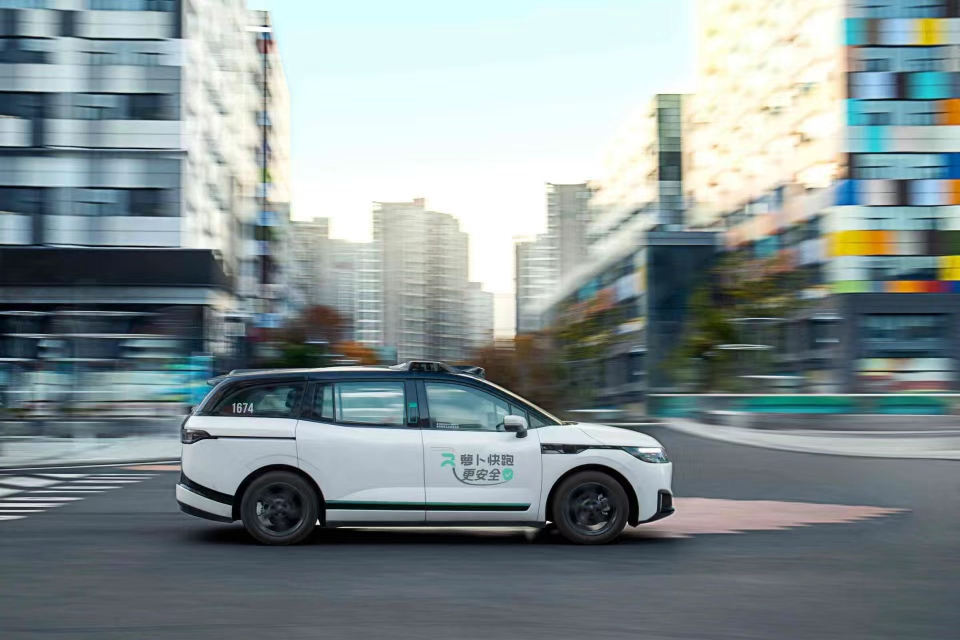
SHENZHEN, China — Nov. 3: Baidu’s Apollo unit unveiled Apollo World, an agent-driven multimodal world model for physical AI, at its AI Day event in Shenzhen.
- The model is already being used to test and validate Apollo Go as the driverless ride-hailing service expands into more markets, according to the company.
Why it matters: Apollo defines a world model by two requirements: causality and interactivity — the future follows the past, and the world responds to the vehicle’s actions.
- “A world model is not a painter that generates videos, but an examiner of autonomous-driving safety,” said Liang Wang, chief architect of Baidu’s Intelligent Driving Group.
What happened: Apollo World creates a closed-loop virtual environment where AI-driven cars and pedestrians react to the vehicle, while simulated camera and lidar data feed back into the AI driver.
-
It can test complete trips, not just isolated maneuvers.
- “Apollo World focuses more on closed-loop simulation of complete tasks,” said Ze Yang, Baidu IDG distinguished architect and world-model lead.
-
The system aims to cut costly road testing.
- Each model iteration requires, on average, more than 700,000 kilometers of road testing. Apollo World was trained on more than 1 billion high-value frames.
-
The closed loop uses both camera and lidar data.
- In response to a TechNode question, Wang said the model fuses the two, while Yang said combining them gives the system more information than vision alone.
-
In response to a
-
Safety is a key goal. Wang said virtual testing helps catch problems before less-predictable end-to-end models are deployed at scale.
The big picture: Robotaxi competition is increasingly playing out across markets, with companies racing to adapt driverless systems to different cities, regulations and driving environments.
- Apollo Go built its base in China, where its mainland operations are now 100% fully driverless.
- It has logged more than 23 million rides and 240 million fully driverless kilometers across its operations.
- Overseas, it has launched fully driverless commercial rides in Dubai, with testing or expansion underway in London, Switzerland, Hong Kong, Abu Dhabi and South Korea.
- The push comes as Waymo, WeRide and Pony.ai also expand abroad, intensifying competition to establish robotaxi services in new markets.