Between American-secured diffusion and Chinese developmental multilateralism, middle powers have space to make their presence felt
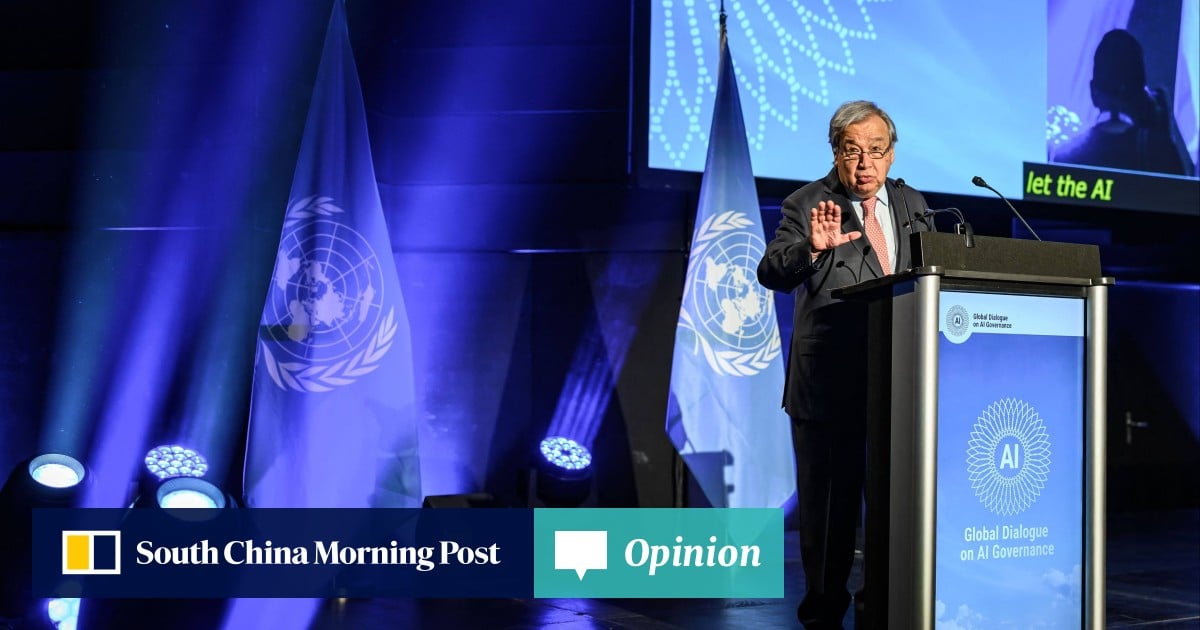
The global AI race is becoming a contest over the international order. In June, the US convened the second summit under the 24-economy Pax Silica around secure supply chains, AI infrastructure and trusted technology partnerships. In July, all 193 UN member states met in Geneva for the inaugural Global Dialogue on AI Governance.
signed the agreementestablishing the World Artificial Intelligence Cooperation Organization (WAICO) in Shanghai. Together, these developments reveal an emerging structure: American-secured diffusion, Chinese developmental multilateralism and a still-fragmented functional track led by middle powers and international institutions.
The American pathway is built around control of the technological frontier. US companies dominate advanced chip design, cloud platforms, proprietary models and much of the software used to train and deploy AI. Washington is organising these assets through Pax Silica, full-stack export packages, public finance, semiconductor partnerships and cybersecurity networks. Access is widened among trusted partners while the most consequential capabilities remain subject to restrictions.
This system offers partners high-performance technology, mature firms and deep capital markets. It also creates dependence on American licences, cloud services, model updates and policy continuity. American influence therefore rests as much on the conditions of access as on the technologies themselves.
[open-weight models](https://www.scmp.com/tech/article/3362738/alibabas-ai-model-qwen38-max-made-widely-accessible-ahead-open-weights-release?module=inline&pgtype=article), telecommunications and

[data-centre infrastructure](https://www.scmp.com/economy/china-economy/article/3361988/chinas-localised-data-centre-push-drives-ai-ambitions-amid-overbuilding-concerns?module=inline&pgtype=article),

[industrial deployment](https://www.scmp.com/economy/china-economy/article/3356629/china-fast-tracks-humanoid-robots-and-embodied-ai-industry-under-nationwide-programme?module=inline&pgtype=article),
trainingand government-led cooperation. WAICO gives this strategy a permanent institutional platform. Its founding agreement presents the organisation as a vehicle for international cooperation, global governance and the safe, fair and inclusive development of AI. Beijing has linked it closely to capacity-building and the Global South’s concerns.
China’s offer appeals to governments seeking affordable models, local deployment and fewer alliance-based entry conditions. Yet maintenance, equipment compatibility, data practices, technical standards and supplier relationships may leave partner states dependent on Chinese systems even when models are locally operated. WAICO’s influence will depend on whether it develops a stable budget, functioning secretariat and credible projects beyond diplomatic declarations.