Archgen Labs launched an autonomous agent for chip physical-design triage during a November 6–9, 2026 public launch window, according to company materials on archgen.tech and CryptoBriefing's November 9 report. The agent—marketed as Newton in third-party directories—reads timing, congestion, DRC, and signoff logs, proposes floorplan or flow fixes, reruns, and keeps design memory across iterations.
That is the workflow a senior PD engineer does at 2 a.m., not a one-shot RTL codegen demo.
TL;DR #
| Piece | Role |
|---|---|
| Newton agent | Autonomous PD triage and rerun loop |
| Placement engine | GPU macro placement; HRT/Partcl challenge winner June 2026 |
| LayerTherm | Fast thermal simulation (vendor claim ~5000×) |
| 3D focus | Multi-die timing, power, TSV planning |
| Partner | GlobalFoundries 3D tapeout target April 2027 per coverage |
| Stage | YC F2026; demo terminal on site |
The problem Archgen describes #
Archgen's April 2026 essay argues placement research stops at placement, while real chips fail in CTS, routing, timing repair, and power integrity. A human moves an SRAM macro 50 microns, widens a strap, reruns, reads IR drop, and repeats.
That is reasoning over cascading physics, not a single proxy loss. Archgen says it trained on thousands of full-flow runs across real designs to capture outcomes public datasets lack.
The November launch packages that philosophy into a product: one terminal where operators ask why block_7 fails timing and the agent queues reruns after patching floorplan.tcl.
What the agent covers #
Per Archgen's site demo and launch summaries:
- Synthesis through signoff physical-design flow coverage
- Root-cause mapping from symptoms to placement, routing, or script settings
- Persistent design memory so fixes on block A inform block B
- 3D stacks with cross-die timing and thermal coupling called out explicitly
CryptoBriefing adds GlobalFoundries collaboration toward a 3D chip tapeout in April 2027. Treat tapeout dates as targets, not shipped silicon.
Tools beside the agent #
Semiconductor wafer with one highlighted die on a sparse grid
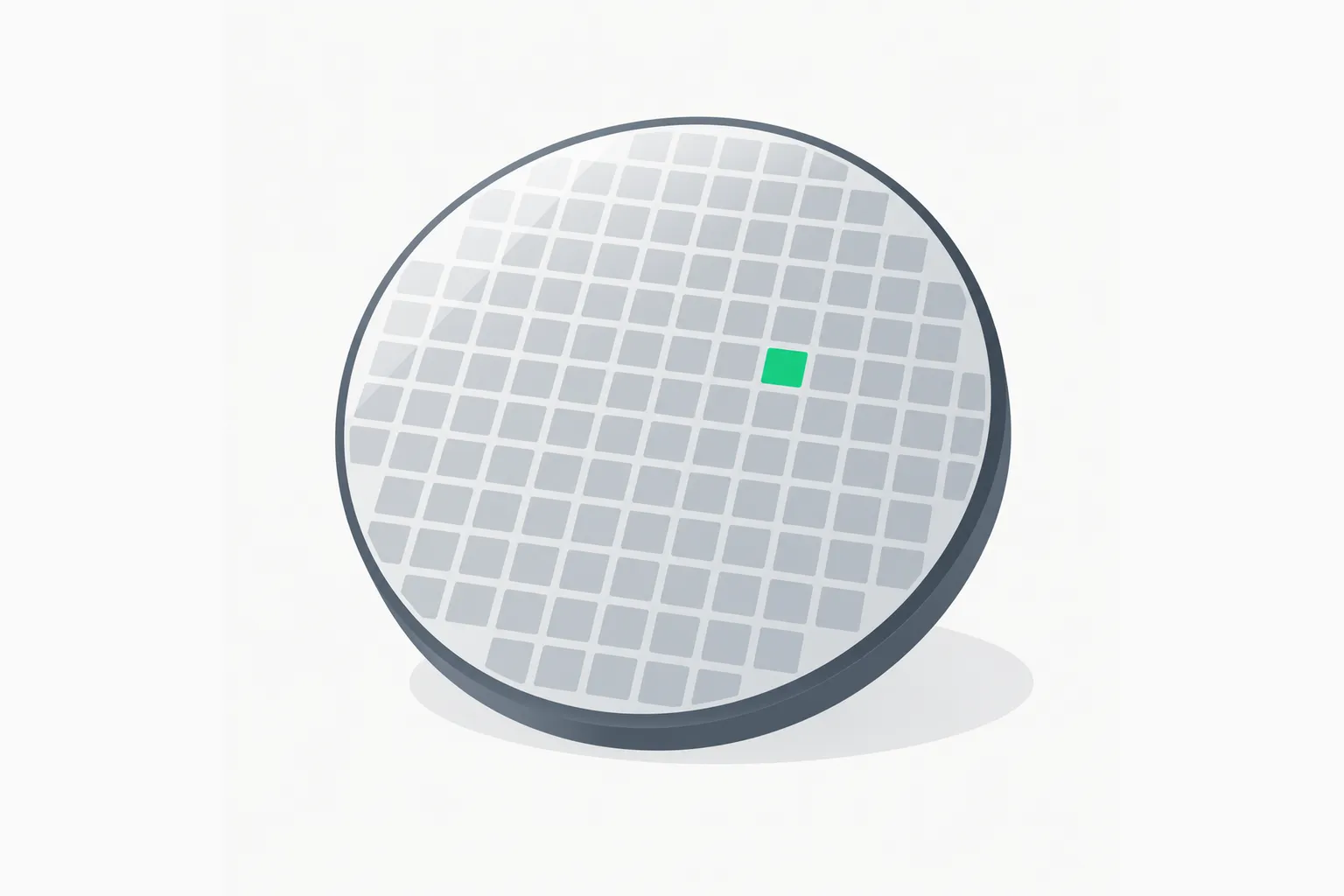
GPU placement engine. Archgen claims first place in the Hudson River Trading and Partcl macro-placement challenge in June 2026. Macro placement decides where large SRAMs and compute tiles sit—decisions that ripple into congestion weeks later.
LayerTherm. Archgen advertises thermal simulation ~5,000× faster than conventional EDA thermal benchmarks in its materials. Heat matters more as logic dies stack under memory.
Together, placement plus thermal plus triage agent sketch a closed loop Archgen wants to own, similar to how Claude Fable 5.2 PCB results pair models with domain verification in electronics.
How this compares to AI chip benchmarks #
explainx.ai covered Build-A-Chip-Bench, where the best agents scored roughly 16.6% on end-to-end chip tasks. Archgen is not selling that leaderboard score. It sells ops automation on flows teams already run in Synopsys/Cadence-class environments.
The distinction matters for buyers:
| Approach | Promise | Risk |
|---|---|---|
| End-to-end agent benchmarks | Green-field RTL to GDS | Low pass rates today |
| Archgen-style triage | Faster closure on existing PDK flows | Vendor lock-in, unproven at tapeout |
| Frontier model electronics papers | Research spike | Not a PD operations product |
NVIDIA ChipAgents and Claude Fable 5.1 remain the reference for autonomous codegen limits. Archgen is betting memoryful iteration beats one-shot codegen.
3D stacking as the wedge #
Stacked chip layers representing multi-die 3D packaging
Archgen's marketing centers chiplets: logic, memory, and I/O on separate dies with TSVs and cross-die timing. Traditional flat-chip tools force humans to close one die at a time, Archgen argues.
If accurate, the wedge is timely: hyperscalers and foundries push 3D packaging while AI data-center power fights raise thermal stakes.
What builders should watch #
- Evidence bundles: ask foranonymized run logs showing before/afterWNS/TNS ,DRC counts , andruntime , not slide screenshots alone.
- PDK coverage: which nodes and tool versions are supported day one.
- Human-in-the-loop gates: who approves script edits that touchclock trees orpower grids .
- Data residency: design databases aretrade secrets ; agent hosts needZDR or on-prem options.
For software teams enabling hardware, pair this launch with OpenAI physical engineering and BenchCAD narratives—models getting better at geometry while startups attack operations.
YC F2026 and market timing #
Archgen enters a crowded AI-for-EDA narrative alongside frontier labs' materials and math stunts. Its pitch is narrower: reduce triage hours on backends that still take 18 months in Archgen's own essay.
YC batch placement signals investor appetite for vertical agents with proprietary rollout data, echoing enterprise Quick agents on AWS but at foundry sensitivity.
Risks and unknowns #
- No public API in third-party listings when we filed.
- Tapeout April 2027 is forward-looking.
- 5000× thermal andchallenge wins arevendor claims until peers reproduce.
- Agent script edits can destroy weeks of work if guardrails fail—treat autonomy assupervised initially.
Terminal UX: what the demo shows #
Archgen's marketing site renders chat-style PD sessions: a floorplan lead asks why block_7 fails timing, the agent answers with SRAM placement hypothesis, queues reruns, and triages DRC spam into three real violations. That UX is closer to Slack ops bots than to Copilot autocompletion.
For software engineers supporting hardware teams, the integration surface is likely log ingestion + script git repos + batch queue, not a VS Code extension on day one. Plan read-only mirrors of run logs before granting write access to floorplan.tcl.
Timing closure vocabulary for ML readers #
WNS/TNS (worst and total negative slack) measure how late signals arrive versus clock targets. CTS (clock tree synthesis) inserts buffers that can worsen congestion. DRC (design rule check) catches manufacturing violations.
Archgen's agent lives after RTL exists. It does not replace synthesis engineers; it reduces iteration count when a macro move fixes hundreds of paths.
Thermal and power coupling #
LayerTherm addresses a bottleneck EDA users know: thermal loops are slow, so teams under-rotate heat early and pay in signoff. A 5000× claim, if even directionally true, changes how often you can run thermal inside an agent loop.
Pair thermal awareness with data-center power politics: chips that run hotter need cooling margin in the rack, not just on-die fixes.
Competitive landscape: Synopsys, Cadence, and AI startups #
Incumbent EDA vendors ship ML-assisted tools inside established flows. Archgen's bet is a new agent shell trained on full-run outcomes the incumbents may not label at scale.
Watch whether Big EDA responds with agent APIs that expose the same log hooks Archgen scrapes. If hooks stay closed, startups win on scraping pain; if hooks open, differentiation shifts to memory quality.
Security and IP #
PD databases contain netlists worth stealing. An autonomous agent with shell access is a high-value target. Run it on air-gapped analysis clusters, MCP-style read-only phases, and human approval gates before script writes—patterns enterprise AI teams already use for code.
When not to buy yet #
Skip early sales calls if you lack:
- Stable PDK and tool versions the agent supports.
- Log export automation today (if humans still email tarballs, fix that first).
- Regression tests on timing/DRC before agent edits.
Archgen is compelling when triage hours exceed license cost, not when you are still on manual first silicon.
GlobalFoundries April 2027 tapeout #
CryptoBriefing's April 2027 tapeout target with GlobalFoundries is a credibility milestone if it holds. Until masks ship, treat 3D marketing slides as roadmap, not shipped capability.
Hiring and org design implications #
If Archgen's agent absorbs night-shift triage, PD teams may reallocate seniors to stack architecture and 3D partitioning instead of log archaeology. That mirrors software teams that moved from manual QA to agentic test triage—headcount shifts, it rarely disappears. Train junior PD engineers to review agent diffs on TCL and Python flow scripts the same way juniors review Copilot PRs after Goldman-style restrictions became fashionable.
Evaluation questions for a pilot #
Before paying for an Archgen pilot, ask the vendor to run on a redacted internal block and return:
- Hours saved on triage versus your baseline week.
- Number of agent-proposed reruns versus human-initiated reruns.
- Net WNS/TNS delta after agent edits, with rollback logs if a change regressed.
- List of scripts touched so you can audit permissions.
If they cannot export those metrics, treat demos as marketing until a paid proof completes.
Relation to Claude Fable electronics work #
Anthropic's same-day Fable 5.2 electronics results chase RTL and layout wins in research settings. Archgen chases operations closure in commercial PDK flows. The stacks complement each other: models propose structures; PD agents fight timing once structures exist. Neither replaces sign-off engineers who sign waivers before tapeout. Keep human approval on any script edit that touches clock roots or power straps until your pilot proves rollback works. Log every agent-proposed TCL diff in version control. Tie each diff to the timing or DRC report hash that triggered it. That audit trail is how you defend agent edits to your foundry partner. Without it, agents look like unlogged magic.
Related reading #
Sources: Archgen Labs · Archgen essay on 18-month cycles · CryptoBriefing November 9, 2026