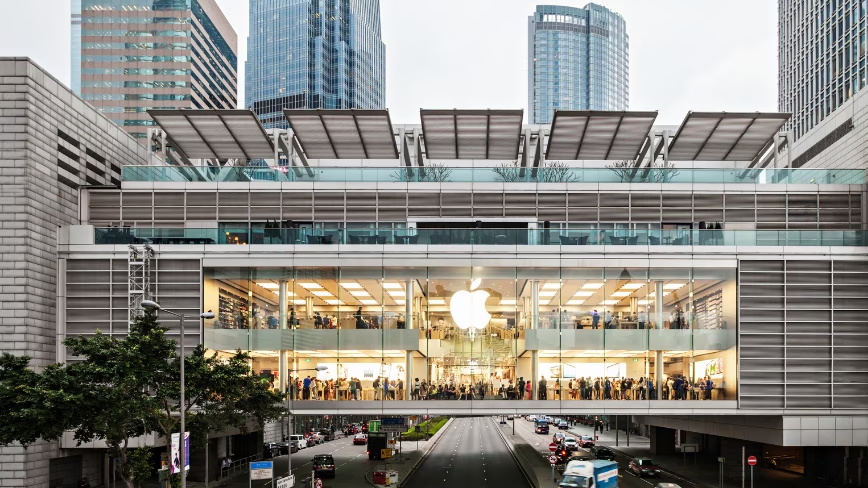
Apple has become the second company in history worth $5tn. It got there by being the one big-tech giant that refused to bet its balance sheet on AI.
The iPhone maker briefly touched a $5.04tn market value on Tuesday. Shares hit a session high of $342.89 before easing to close at $340.08, just under the mark, CNBC reported. Only Nvidia has been there before, when it crossed $5tn last October.
Apple passed Nvidia a day earlier to reclaim the title of world’s most valuable company. The chipmaker had held that spot since June 2025.
Rewarded for sitting it out #
The remarkable part is why.
For two years, investors punished Apple for missing the AI boom. Its Siri overhaul slipped, and its in-house models stalled. That same restraint is now the reason it is winning. Alphabet, Amazon, Meta and Microsoft pour hundreds of billions into data centres.

Apple leans on [Google’s technology](https://thenextweb.com/news/apple-investors-are-running-out-of-patience-with-its-ai-promises) for its AI features and keeps its own spending low. Analysts expect it to spend about $11bn this year, against the $100bn-plus each hyperscaler is laying out.
Apple stock is up around 25% in 2026, the best in the Magnificent Seven. Tesla, Microsoft and Meta are all down for the year. As Business Insider noted, the rally owes little to anything Apple did. It reflects a rotation out of the crowded AI trade and into a consumer name that is not burning cash.
The capex bonfire next door #
The trigger was the bill coming due elsewhere. Google spooked the market last week by lifting its capital-spending guidance to as much as $205bn. It also reported its first-ever negative free cash flow, burning $5.9bn in a single quarter, the Guardian reported.
Investors are increasingly nervous about the circular financing that props up the AI build-out. The same companies often help fund one another’s compute.
That nervousness has turned into a rout. The Nasdaq 100 has fallen more than 10% from its June high, the technical definition of a correction. Chip stocks have been hit hardest. The main semiconductor ETF is down 14% in a month, and a popular memory fund has lost 29%.
In Asia, SK Hynix and Samsung each dropped more than 10%. The fall followed a report that China had begun mass-producing its own chipmaking tools, and weeks of jitters over cheaper Chinese AI models. Money leaving those trades has to go somewhere, and much of it has gone to Apple.
The catch #
The problem is that the thing keeping Apple cheap to run is also what keeps it behind. Its redesigned Siri is still in beta, and not due to launch properly until the autumn alongside new iPhones. Its partnership with OpenAI has all but collapsed, and Apple sued the company this month alleging trade-secret theft.
Renting intelligence from Google is efficient today. It also leaves Apple dependent on a direct rival for the technology reshaping its industry.
There are signs the restraint may not last. In its last report, Apple quietly dropped a long-standing goal of holding equal cash and debt. The change could free up money to spend. Whether that spending comes may fall to someone else.
Thursday’s earnings call is Tim Cook’s last as chief executive, before John Ternus takes over on 1 September. Analysts expect revenue up about 16% on the year. Cook leaves at the very top. He hands his successor a $5tn company.
The harder question is how long it can keep winning by not playing.
Get the TNW newsletter #
Get the most important tech news in your inbox each week.