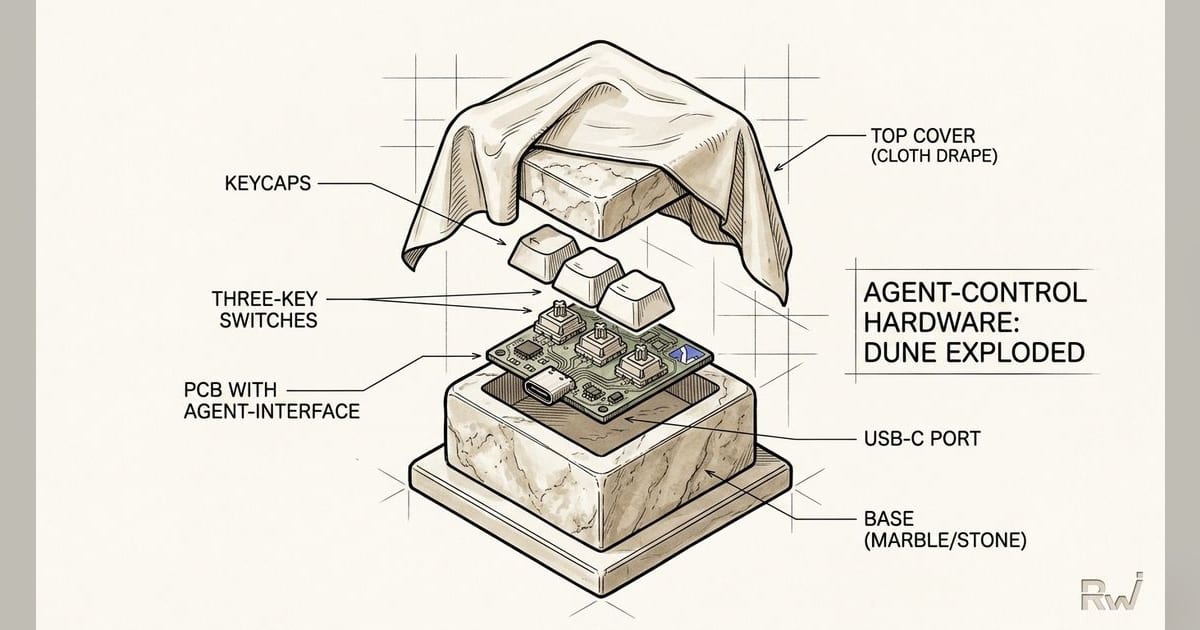
Apoorv Shankar has raised $5.5 million for Aina, the AI hardware company he started after leaving Ultrahuman, in a bet that the next useful AI device will trigger work rather than merely record it.
The Bengaluru- and San Francisco-based company, previously known as Project Mirage, announced the round on July 16 in a TechCrunch report. Redstart Labs, the Info Edge-backed investor, and 360 ONE led the financing, with participation from MIXI Global Investments, Antler, and Blume Founders Fund. Angel investors include Kunal Shah, Razorpay co-founders Harshil Mathur and Shashank Kumar, and Scribd founder Tikhon Bernstam, according to TechCrunch. Aina did not disclose the round type or valuation.
Shankar is a better fit for this fight than most founders chasing AI hardware. His public IISc Design and Manufacturing profile describes him as an instrumentation engineer and product designer from the M.Des 2017 class, with interests spanning consumer products, new-technology application design, branding, marketing, and startups. That path has been unusually consistent: small physical controls, minimal screens, and devices built around intent.
Before Aina, Shankar founded LazyCo, which built the Aina Ring, a smart ring pitched as a way to control phones and connected devices. IISc wrote in 2019 that the ring launched via Kickstarter. A Gust profile for LazyCo described the company as a Bengaluru startup founded in May 2017 and framed Aina Ring around faster phone interaction. Ultrahuman acquired LazyCo on April 12, 2022, and Shankar and co-founder Yogansh Namdeo joined to lead hardware product development, Moneycontrol reported.
That backstory matters because Aina is not Shankar's first attempt at making a physical shortcut layer for computers. It is his second company named around Aina, and the new version has moved from phone-era gestures to AI-era execution. Aina Computers Inc.'s sparse public site says it is "Building an interface that knows what you want." The old Project Mirage site is more concrete: it shows Dune, a three-key context-aware keypad for macOS that plugs into a MacBook over USB-C.
Dune is the first test, not the whole company
Dune is deliberately modest hardware. The device is a small CNC-machined anodized aluminum keypad, 40mm x 10mm x 10mm, weighing 50g, with no battery. It is USB-C powered and macOS-only, according to Project Mirage's product page. Its software changes the three keys based on the active app.
In meetings, Dune can map buttons to mic, camera, and window controls. It can sync with a calendar, surface a meeting link before a call, join with one key, or send a running-late email to attendees. In developer workflows, Aina says Dune can adapt to GitHub, VS Code, and Claude, with keys assigned to repeated actions. Users can also configure custom macros, open URLs, run scripts, browse a planned marketplace, and use Claude to set up shortcuts through conversation.
TechCrunch tested Dune earlier this month and reported that it sold at a $119 introductory price before a $149 retail price. The same review raised the practical criticism Aina will have to fix as it moves from early adopters to daily use: the keys were easy to press accidentally. That is a hardware problem, not a messaging problem, and it is the kind Shankar should be expected to take seriously after years of building rings and wearables.
The $5.5 million round appears aimed at finding the form factor beyond Dune. TechCrunch reported that Aina built two other concepts before choosing the keypad as its first shipped product: Radiance, a tabletop video-call remote with meeting controls, and Shift, a single-tap button for triggering repeated AI-agent tasks from a phone. Aina chose Dune first after early users preferred it, then folded pieces of the other ideas into the keypad.
Aina is also preparing to test another undisclosed device with select users in the coming weeks, according to TechCrunch. Shankar told TechCrunch, "I left Ultrahuman last year because I was just super curious about the space of AI interfaces." The round gives him room to answer a narrow question with broad consequences: whether a dedicated control surface can become a habit as AI agents move from demos into daily work.
The sharper bet is action over capture
Aina is entering a market crowded by devices that promise memory, transcription, and context capture. Sandbar has an AI note-taking ring. Plaud sells an AI pin and meeting hardware. Pocket has credit-card-sized note pucks. Bee and Friend have taken the wearable route. Meta and Even Realities are pushing smart glasses. The common thread is that many of these products start by listening, seeing, or logging.
Shankar's pitch is different enough to be worth watching. Aina is building around command surfaces: buttons that join a meeting, mute a mic, run a script, invoke an agent, or connect software actions across apps. That makes the competitive set broader than AI pendants and pins. Dune also has to compete with keyboards, Elgato-style macro pads, OS shortcuts, software launchers, automation tools, and agent features that Apple, Microsoft, OpenAI, Anthropic, and Google can bake directly into operating systems and productivity suites.
That is the hard part of Aina's bet. A button is valuable only when it removes enough friction to justify another device on the desk. Dune's best use cases are not novelty tasks; they are repetitive interruptions that knowledge workers already tolerate because the alternative is fiddling with menus, meeting windows, and app-specific shortcuts. If Aina can make those actions reliable, it can turn hardware into a distribution point for workflows. If it cannot, Dune risks becoming a nicer macro pad in a market full of cheaper substitutes.
The timing is favorable. RuntimeWire reported in May that Visa backed Replit to explore agentic payments inside the IDE, one sign that agent control is moving into places where users already work. We also reported on Kin Health, which puts AI documentation into patients' pockets, a reminder of how much early AI hardware and software has centered on recording and summarizing. Aina is trying to sit one step later in the chain, where context becomes a command.
For investors, the financing is a founder bet with hardware risk attached. Shankar has already taken a consumer interface from prototype to crowdfunding, sold a hardware startup to Ultrahuman, and worked inside a company known for commercializing a smart ring. Aina's unresolved questions are the ones that matter: no disclosed revenue, no unit sales, no gross-margin profile, no valuation, and no evidence yet that Dune can become a platform rather than a clever peripheral. The round buys Aina time to learn in public. Shankar's advantage is that he has been circling the same problem since LazyCo: how to make computers respond to intent with less ceremony. The AI cycle gives that old interface problem a new urgency. The next few months will show whether Aina can turn three keys on a MacBook into something larger than a shortcut.