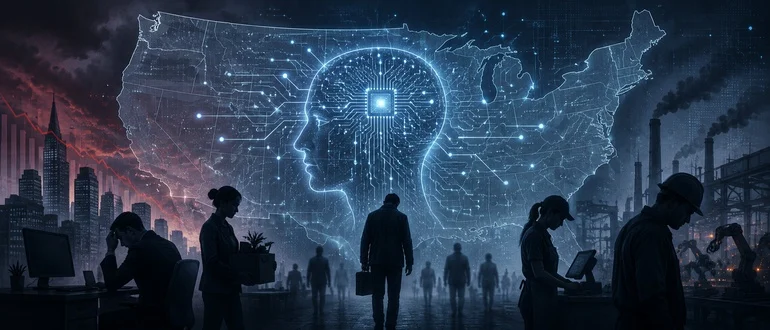
In a rare display of cross-generational consensus, Americans across all age brackets are uniting around a shared sentiment: Growing skepticism and alarm over artificial intelligence (AI).
A new Pew Research Center survey reveals that public distrust of AI has hit a record high, driven largely by a sharp surge in anxiety among younger adults.
According to the study, 52% of U.S. adults now report feeling “more concerned than excited” about the integration of AI into daily life. That figure marks a substantial leap from the 38% recorded in late 2022, shortly after OpenAI’s ChatGPT’s public release, and up from 37% in 2021.
For the first time, a clear majority of adults under age 30 (55%) state they are more concerned than excited about the technology, placing their anxiety on par with older demographics. While earlier waves of skepticism were primarily concentrated among middle-aged and older citizens, young adults — once viewed as early adopters — have increasingly turned against the automated tools. Only 9% of all American adults report feeling predominantly excited about AI’s expansion. Central to the public’s mounting unease is the perceived threat to the labor market.
A staggering 71% of U.S. adults believe AI will lead to widespread net job losses over the next two decades, up from 64% in 2024. Among adults under 30, that fear is particularly acute: 73% now expect AI to diminish job opportunities, compared to 61% two years ago. Just 5% of respondents nationwide anticipate the technology will create more jobs.
Beyond economic concerns, younger Americans express deep skepticism regarding AI’s broader cultural impact. Pew’s research highlights growing fears that AI will undermine human connection, erode genuine creativity, and displace artistic expression. Though usage of generative chatbots remains highest among youth, respondents were just as likely to report that these tools hinder their personal creativity as help it.
The findings underscore a deepening disconnect between Silicon Valley leaders and the public.
Boosters and executives have struggled to counter the souring mood. Anthropic CEO Dario Amodei acknowledged the friction, suggesting tech leaders have failed to deliver on their grandest promises. He noted that winning back public trust will require tangible, transformative achievements such as curing cancer rather than incremental software updates.
The Pew study surveyed 3,488 U.S. adults via its American Trends Panel, offering a statistically representative snapshot of nationwide attitudes as policymakers weigh future tech regulation.