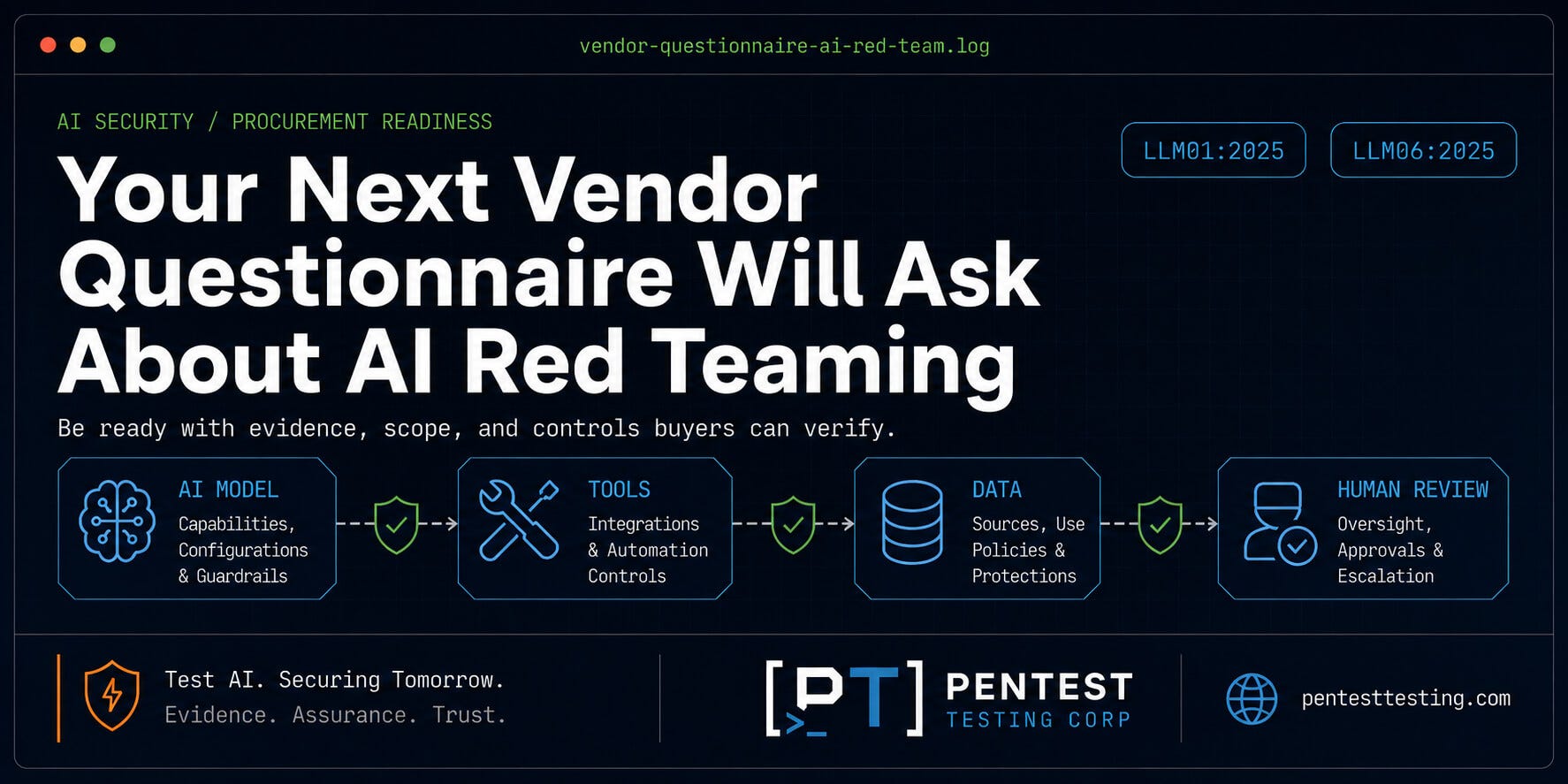
Saying "yes" to an AI red teaming question on a vendor security questionnaire is the easy part; proving you actually did it is where most companies trip up. Buyers aren't looking for a binary answer anymore—they want to see the actual test vectors, which guardrails held up under pressure, and verifiable evidence that the LLM won't hallucinate sensitive data or leak system prompts.
Moving toward a structured, step-by-step deployment process for security testing is the only way to stop these questionnaires from becoming a bottleneck in the sales cycle. Stop treating red teaming as a one-time event and start treating it as a continuous AI workflow requirement.
If you're building an AI workflow or deploying LLM agents for clients, you need a real-world audit trail. A "complete guide" to passing these reviews isn't about having a perfect model (which doesn't exist), but about documenting the failure points. To move beyond the checkbox, focus on these three areas for your evidence folder:
Attack Surface Mapping: Document exactly which inputs are user-facing and where the prompt engineering layer sits.Test Case Libraries: Keep a log of the specific "adversarial" personas or edge cases you threw at the model to try and break it.Mitigation Logs: Show the iteration process. "We found the model could be tricked into X, so we implemented Y system prompt constraint, and here is the result of the re-test."
Moving toward a structured, step-by-step deployment process for security testing is the only way to stop these questionnaires from becoming a bottleneck in the sales cycle. Stop treating red teaming as a one-time event and start treating it as a continuous AI workflow requirement.
Next Universal Jailbreak: Pliny the Liberator's Latest Claim →
All Replies (4) #
R
The overhead for this is insane. Spent three months on "evidence" and the client barely glanced at it.
0
R
We started attaching redacted summary reports to our bids; usually clears up the doubts immediately.
0