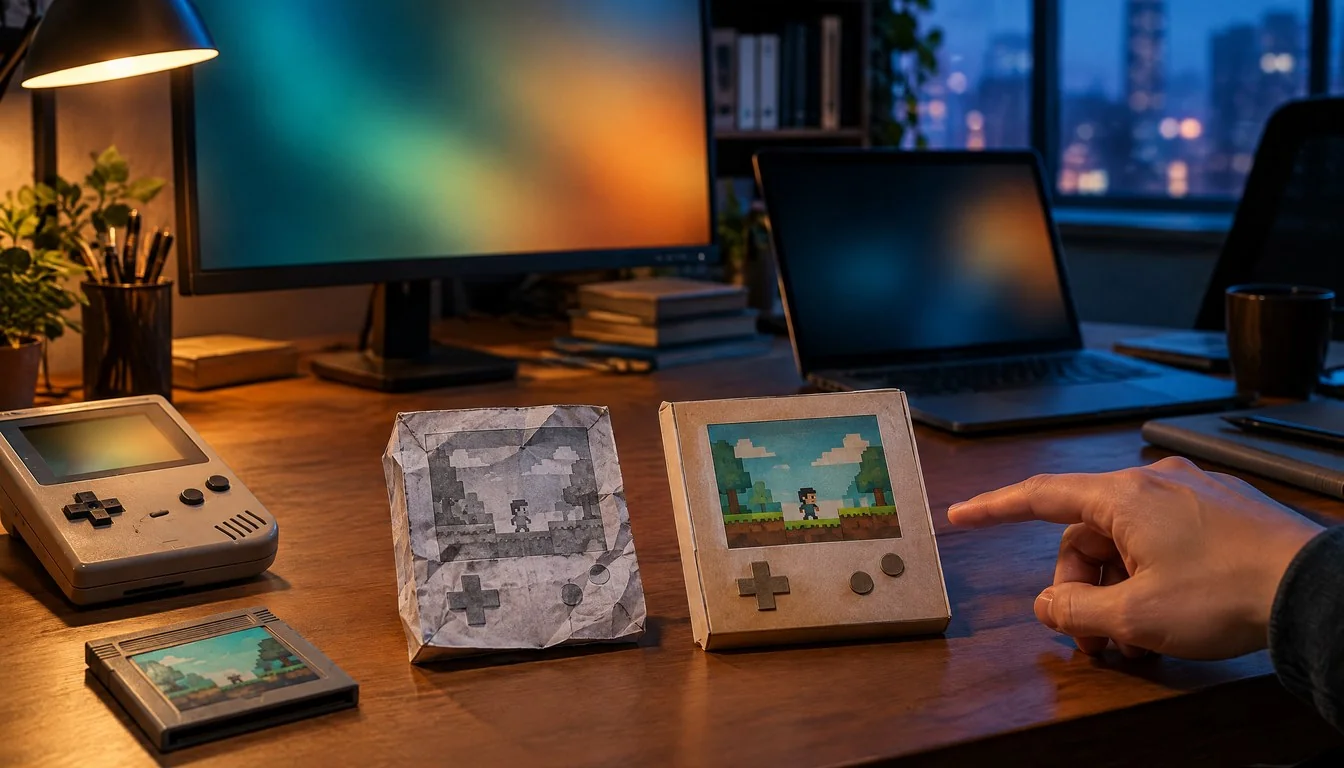
Anthropic has told Claude Code to stop rebuilding other people’s games, and Ars Technica’s headline on the story says the new Claude game cloning rule won’t stop the wider AI copying boom. An Anthropic spokesperson confirmed the update to Game Developer on October 30. The change is small on paper: two sentences added to the prompt Claude Code uses on Opus 5.5.
We followed this story from its first sighting, when users spotted an internal label that our report on the tengu_heron_brook flag unpacked. Anthropic’s Addy Osmani later explained the logic behind the two-sentence rule. This piece asks a different question. Even if the rule works exactly as written, how much of the AI game-cloning problem does it touch?
The short answer from the reporting is not much, and not yet. A prompt instruction shapes one model inside one product. Developers, platforms and players who worry about AI-made copies of their favorite games still face an open field of other tools. Below we lay out what is confirmed, what is not, who is affected, and what to watch next across the gaming industry.
Don't miss new tech stories on Google
Add Shattered once in the Google app and our stories show up in your news suggestions.
What Anthropic Changed in Claude Code #
The company behind Claude edited the system-level instructions that steer Claude Code when it runs on Opus 5.5. It did not announce a new model, a new policy page or a new product tier. The edit is two sentences long, and it points the model away from a specific kind of request: rebuilding a named, existing game.
Osmani, a member of technical staff at Anthropic, framed the reason in terms of the company’s existing rules. Using Claude to infringe intellectual property is already against the usage policy, he said, so the prompt now nudges the model to act accordingly. In other words, Anthropic describes this as enforcement of an old rule through a new mechanism, not as a new rule.
Several outlets picked up the confirmation within days. IGN reported the change under a headline saying Anthropic blocks AI game clones in a Claude Opus update. GameSpot framed it as a new rule telling Claude Code to stop copying other people’s games. Polygon’s headline said Anthropic is officially stepping in to stop Claude from cloning games.
Those headlines read as firm. The underlying facts are narrower, which matters for anyone judging how far the change reaches.
The Two Sentences, Word for Word #
Reports on the update record the added instructions as a pair. The first tells Claude what it should do: “Do build original games, games in a genre, and games from the user’s own designs and assets.” The second tells it what to avoid: “Don’t build a recreation of a specific existing game, even if it is renamed or called original.”
The second sentence carries most of the weight. Its closing clause, “even if it is renamed or called original,” anticipates the obvious workaround. A user who asks for a pixel-perfect rebuild of a famous platformer under a new title has not asked for an original game, and the instruction tells the model to see through the relabel.
The first sentence does protective work. It lists three categories that Anthropic wants to stay available: original games, games within an established genre, and games built from the user’s own designs and assets. That list matters because genre conventions are the shared language of game design. A deck-builder, a farming sim or a side-scrolling shooter is not owned by any one studio, and the prompt says so.
Why the wording is a judgment call
The line between a genre game and a recreation of a specific game is blurry in practice. A request for a tower defense game with the same maps, enemies and upgrade tree as a named commercial title sits across that line, while a request for a frost-themed tower defense game does not. Models must infer intent from the wording of a request, and prompts are not classifiers with hard edges.
That fuzziness explains both halves of the story. It explains why the rule can catch obvious cases, and why users report refusals on work that looks legitimate to them, a point we return to below.
What Anthropic Says It Intended #
Osmani’s statements, as quoted by Tom’s Hardware, give the clearest view of Anthropic’s intent. On the reason for the edit, he said: “We added two sentences to Claude Code’s prompt on Opus 5.5 to steer it away from recreating someone else’s specific game because using Claude to infringe IP is against our usage policy.”
On what should keep working, Osmani said: “Original games, genre games, and games built from your own designs and assets are meant to keep working.” The phrase “meant to” is doing quiet work. It admits a gap between design intent and real behavior, and later reporting shows that gap in action.
He also signaled that the text is not final. In his words: “We’ll continue to iterate to ensure we’re striking the right balance.” And he invited affected users to speak up, saying: “In the meantime, if Claude turns down something that’s yours, send it my way.”
Read together, the four statements describe a deliberately cautious rollout. Anthropic picked a narrow lever, said what it hoped to protect, and left the door open for correction. That is a sensible engineering posture. It is also an admission that the company does not claim to have solved the cloning problem.
Confirmed vs Unconfirmed: The Facts at a Glance #
Headlines compress. The table below separates what the sourcing supports from what remains open, using only details that outlets and Anthropic’s own spokesperson have put on the record.
| Claim | Status | Source basis |
|---|---|---|
| Anthropic added two sentences to Claude Code’s prompt on Opus 5.5 | Confirmed | Osmani statement, Anthropic spokesperson to Game Developer |
| Spokesperson confirmation came on October 30 | Confirmed | Game Developer |
| Purpose is to steer away from recreating a specific existing game | Confirmed | Osmani, citing the usage policy on IP infringement |
| Original, genre and own-asset games should keep working | Intended | Osmani, as quoted by Tom’s Hardware |
| The rule blocks every game-cloning request | Unconfirmed | No outlet or Anthropic statement supports this |
| The rule applies to every Claude model or interface | Unconfirmed | Reports tie it to Claude Code on Opus 5.5 |
| The rule stops the broader AI game-copying activity | Unconfirmed | Ars Technica’s headline argues the opposite |
| Any count of copied games or dollar loss | Unconfirmed | No verified figure in the reporting reviewed |
The bottom three rows are the important ones for readers who saw “Anthropic blocks game clones” and assumed the matter closed. Nothing in the confirmed record says that. The scope is one product, one model, and one pair of instructions.
How Outlets Covered the Claude Game Cloning Rule #
Coverage split into three camps. Some outlets reported the rule as a decisive move. Others stressed the caveats. A third group focused on collateral damage to legitimate developers. The table maps the main framings, based on each outlet’s published headline.
| Outlet | Headline framing | Angle |
|---|---|---|
| Ars Technica | New rules against game cloning won’t stop the AI copying boom | Limits of the fix |
| IGN | Anthropic blocks AI game clones in Claude Opus update | Decisive action |
| GameSpot | Claude Code gets a new rule: stop copying other people’s games | Plain-language summary |
| Polygon | Anthropic is officially stepping in to stop Claude from cloning games | Official stance |
| Eurogamer | Anthropic “seemingly” restricts Claude’s cloning abilities amid ongoing controversy | Hedged, tied to wider debate |
| heise online | Anthropic tightens rules on game clones | Policy tightening |
| Tom’s Hardware | Blocking extends to reverse-engineering and troubleshooting, users claim | User-reported side effects |
| Tech Times | Fix for cloning now affects legitimate developers | False positives |
| Game Developer | Anthropic appears to have ordered Claude to stop remaking games | First confirmation, Oct. 30 |
The spread tells its own story. Within days of the first sighting, the narrative moved from “Anthropic did something” to “Anthropic did something, and here is what it did not fix.” That is a fast arc, and it reflects how closely the games press watches AI tooling right now.
Why a Prompt Rule Is a Narrow Fix #
A prompt instruction is the lightest tool in a vendor’s kit. It costs little to ship, it can change overnight, and it needs no retraining. Those same traits make it a weak barrier. It shapes how one model behaves inside one product, and it depends on the model reading a request the way the vendor hoped.
It covers one product on one model
Reports tie the change to Claude Code running on Opus 5.5. Whether the same text governs other Claude models or other Claude interfaces is unconfirmed. Anyone who moves a request to a different surface may see different behavior, and the coverage we reviewed does not claim otherwise.
It does not touch other tools
The wider market has plenty of coding assistants, hosted models and locally run systems. Reporting on the update notes that those options remain available and that a determined person can adapt a workflow by hand. A rule inside Claude Code cannot reach any of them. Ars Technica’s headline captures that logic directly.
It depends on how people phrase requests
Because the second sentence targets “a specific existing game,” a user can try to break a request into parts. They might ask for a movement system, then an enemy pattern, then a level layout, without naming the source. Whether the model catches the pattern across a long session is an open question that Anthropic has not addressed publicly.
None of this makes the rule pointless. A speed bump still slows the casual cloner, and it gives Anthropic a documented position if a rights holder ever complains. It just falls short of a wall.
False Positives: When Legitimate Work Gets Refused #
The sharpest criticism so far comes from developers who say the rule catches the wrong people. Tom’s Hardware reported that users claim non-malicious, generic reverse-engineering tasks are also being blocked. Tech Times ran a similar angle, saying the fix now affects legitimate developers.
Anthropic has not confirmed those user reports as a scope of the rule. Osmani’s public invitation to send over wrongly refused requests suggests the company expects some misfires. We covered an earlier wave of complaints in our guide to false positives under the game-clone rule, including how affected developers can rephrase requests.
The mechanics are easy to picture. Game modding, preservation work, accessibility patches and compatibility layers all involve examining how an existing game works. A model trained to be wary of “recreating a specific game” can overshoot into that territory. Even a single loaded word in a request could tip a cautious system toward refusal.
For Anthropic this creates a familiar trade-off. Tighten the rule and more legitimate work gets caught. Loosen it and cloning slips through. The “striking the right balance” language in Osmani’s statement points straight at that tension.
The Bigger AI Game-Cloning Boom #
The Claude change did not arrive in a vacuum. Eurogamer’s headline ties it to a continuing controversy around AI-created copies of video games, and GamesRadar’s headline places it amid Steam’s own battle with AI clones. Those framings show that storefronts and developers have been dealing with the problem for some time.
We should be clear about the limits of the data. No verified count of AI-made clones exists in the reporting we reviewed, and Anthropic has not published one. Any specific number floating around social media should be treated as unconfirmed. What the coverage does support is a pattern: more people can now produce game-shaped software quickly, and some of them point that ability at existing titles.
Our earlier reporting adds context on the supply side. We noted that itch.io’s new game pages doubled to more than 6,000 a day, with AI tooling part of the discussion. A separate piece covered an Xbox manager’s claim about building a game in three hours with AI help. Neither story is about cloning, but both show how far the cost of making a playable game has fallen.
When production gets cheap, imitation gets cheap too. That is the structural point behind the “copying boom” label. A single vendor’s guardrail changes one input, while the underlying economics keep pushing in the same direction.
Request Types and Likely Outcomes #
The table below turns the reported rule into a practical lookup. It reflects Anthropic’s stated intent and the user reports so far, and it is not a guarantee of how any single request will resolve.
| Request type | Intended outcome | Basis |
|---|---|---|
| Fully original game concept | Should work | First added sentence |
| Game in an established genre (farming sim, deck-builder) | Should work | Osmani: genre games meant to keep working |
| Game built from the user’s own designs and assets | Should work | Osmani: own designs and assets meant to keep working |
| Rebuild of a named commercial game | Should be refused | Second added sentence |
| Same rebuild, renamed or described as original | Should be refused | Second sentence, “renamed or called original” clause |
| Generic reverse-engineering or troubleshooting | Not specified, some users report refusals | Tom’s Hardware user reports, unconfirmed by Anthropic |
The final row is where the policy is least settled. Anthropic has described what it wants to protect and what it wants to stop. It has not described how the model should treat the large gray area between them.
Historical Context: Clones Existed Long Before AI #
Game cloning is as old as the industry. Arcade hits drew imitators within months, home computer ports of popular titles appeared under lightly changed names, and mobile storefronts later filled with look-alikes of any breakout success. The law has long treated mechanics and genre as free to borrow, while art, code, music and distinctive expression get protection.
That legal backdrop helps explain Anthropic’s wording. The company did not ban “games like” something, which would clash with how the industry has always worked. It targeted recreation of a specific game, the territory where copyright and trademark disputes have historically landed.
What AI changes is speed and skill. A human cloner once needed programming and art ability, plus days or weeks of effort. A coding assistant lowers that barrier sharply. The legal question stays the same, but the number of people able to act on it grows.
Industry voices have raised related worries about how games get made and funded. One example from our archive is Dyack’s argument that big publishers are abusing early access, a reminder that trust between developers and players is already under strain. AI clones add one more pressure on that trust.
Market Impact for Developers and Platforms #
Nobody has published a verified dollar figure for revenue lost to AI clones, so we will not offer one. The effects can still be sketched in qualitative terms, and each stakeholder group sees a different slice.
Independent studios
Small teams are the most exposed. A successful indie title has a distinctive look and a loop that players can describe in a sentence. If a clone appears within days at a lower price, discovery suffers. Anthropic’s rule removes one cheap route to that outcome, though it leaves others open.
Storefronts and moderators
Platforms bear the review burden. Each submission that looks too much like an existing game needs a human or automated check. Vendor-side guardrails reduce the inflow only if the vendors cooperate, and the rule here covers one vendor’s product. Moderation teams should not expect relief.
Large publishers and rights holders
Big publishers have legal departments and takedown processes. For them, the Claude change is mostly a signal. It shows that at least one AI vendor will put IP language into its tooling when the games press and rights holders apply pressure. Expect them to cite it when they ask other vendors for similar steps.
AI vendors
For Anthropic, the commercial calculation is about trust on both sides. Developers who build with Claude Code want it to be useful. Rights holders want it to respect their work. A rule that satisfies one group and irritates the other costs something either way, which is why the company says it will keep iterating.
Competitive Comparison: What Other Tools Do and Don’t Say #
A fair comparison runs into a data problem. The coverage we reviewed describes Anthropic’s change in detail but does not document equivalent instructions in rival coding assistants. We therefore cannot say whether other vendors have adopted, or plan to adopt, similar rules. Anything stronger would be speculation.
What we can say is structural. Reports on the update note that other models, other tools and locally run systems remain available. That means the competitive effect of Anthropic’s rule depends on what everyone else does. If rivals stay silent, users who want clones can simply switch. If rivals follow, the practical barrier rises across the market.
There is also a positioning angle. A vendor that publicly takes an IP-protective stance can market itself to studios and publishers as the safer choice. A vendor that stays permissive can market itself to developers who dislike refusals. Anthropic’s statement that it will continue to iterate suggests it wants a place between those poles.
Open questions remain about local and open-weight models. Those run on a user’s own hardware, and no vendor prompt governs what a person does with them. For game cloning specifically, that is the clearest example of why a hosted-product rule cannot close the gap on its own.
What Rights Holders and Regulators Could Do Next #
If vendor prompts are a partial answer, the stronger tools sit elsewhere. Rights holders can file takedown notices with storefronts. Platforms can tighten submission rules. Lawmakers can clarify how copyright treats AI-generated output that closely tracks a protected work. On the technical side, the industry is already experimenting with signals. A related development we covered is a shared AI opt-out token backed by four large AI companies. That mechanism targets training data rather than cloning outputs, so it addresses a different problem. It does show that vendors will coordinate when the pressure is high enough.
For game clones, a comparable step might be a shared reference list of protected titles, or a standard way for studios to flag their games to AI vendors. No such scheme is confirmed. We raise the idea only to show what a broader fix would look like next to a two-sentence prompt edit.
Five Predictions for the Next Six Months #
These are our analysis, not reported facts. Each rests on the pattern of coverage so far and on the language Anthropic used.
- The wording will change. Osmani said Anthropic will keep iterating. Expect at least one revision that carves out reverse-engineering, modding or troubleshooting to cut false positives.
- Other vendors will face direct questions. Rights holders and reporters now have a precedent to cite. Rival tool makers will likely be asked whether they have similar rules, and some will answer publicly.
- Workarounds will circulate. Some users will try rephrasing requests to get around the second sentence. Guides to doing so will probably appear, and the vendor may respond with updated prompts.
- Storefront policy will matter more than vendor policy. Moderation rules at the point of sale reach every tool at once. Expect platforms to lean on them as AI-made submissions keep arriving.
- The first formal test case will come from a rights holder. A studio that spots a close copy will probably raise it with the platform or the tool vendor. How that goes will tell us more than any prompt rule.
What Developers and Players Should Do Now #
If you build games with Claude Code, state your intent plainly in requests. Say that the project is original, genre-based or built on your own assets, and describe the design in your own terms. That matches the categories Anthropic says it wants to keep working.

If a request gets refused and the work is yours, report it. Osmani asked for exactly that, and feedback is the quickest way the wording gets better. Keep a record of the prompt and the refusal so the report is specific.

If you are a studio worried about clones, do not count on vendor rules. Register your marks, keep your asset sources documented, and watch the storefronts where your game sells. A clear paper trail speeds up any takedown request.

If you are a player, treat a suspiciously familiar new release with some care. Check the studio’s history and reviews before buying. The Claude change will not filter the shelves for you.
The Takeaway on the Claude Game Cloning Rule #
Anthropic made a modest, reasonable change. It added two sentences that steer Claude Code on Opus 5.5 away from recreating specific games, grounded the move in its existing usage policy, and promised to keep tuning. Those facts are confirmed.
What is not confirmed is any claim that the rule ends game cloning, covers every Claude surface, or slows the broader trend. Ars Technica’s headline says it plainly, and the other reporting backs the caution. One model in one product cannot police an ecosystem.
The takeaway: treat the update as a first step and a signal, not a solution. The real tests will come from false-positive fixes, rival vendor responses and platform enforcement over the coming months.
Frequently Asked Questions #
What exactly did Anthropic change in Claude Code?
Anthropic added two sentences to Claude Code’s prompt on Opus 5.5. One encourages original games, genre games and games from the user’s own designs and assets. The other tells the model not to build a recreation of a specific existing game, even if it is renamed or called original.
When did Anthropic confirm the update?
An Anthropic spokesperson confirmed the update to Game Developer on October 30. Addy Osmani, a member of technical staff at Anthropic, later explained the reasoning publicly.
Does the Claude game cloning rule block every clone?
No source confirms that. The rule is a prompt instruction in one product on one model, and it relies on the model reading a request correctly. Ars Technica’s headline says the new rules won’t stop the wider AI copying boom.
Can I still build games with Claude Code?
Yes. Anthropic says original games, genre games and games built from your own designs and assets are meant to keep working. The restriction targets recreating a specific existing game.
Why are some developers reporting refusals?
Tom’s Hardware and Tech Times reported that users say legitimate tasks, including generic reverse-engineering and troubleshooting, are being blocked. Anthropic has not confirmed that scope. Osmani invited users to send him requests that Claude wrongly turned down.
Does the rule apply to other AI models and tools?
Reports tie the change to Claude Code on Opus 5.5. Whether it applies to every Claude model or interface is unconfirmed, and the coverage we reviewed does not document equivalent rules at other vendors.
How many AI-made game clones exist?
No verified count appears in the reporting we reviewed, and Anthropic has not published one. Treat any specific figure about copied games or lost revenue as unconfirmed unless a named source backs it.