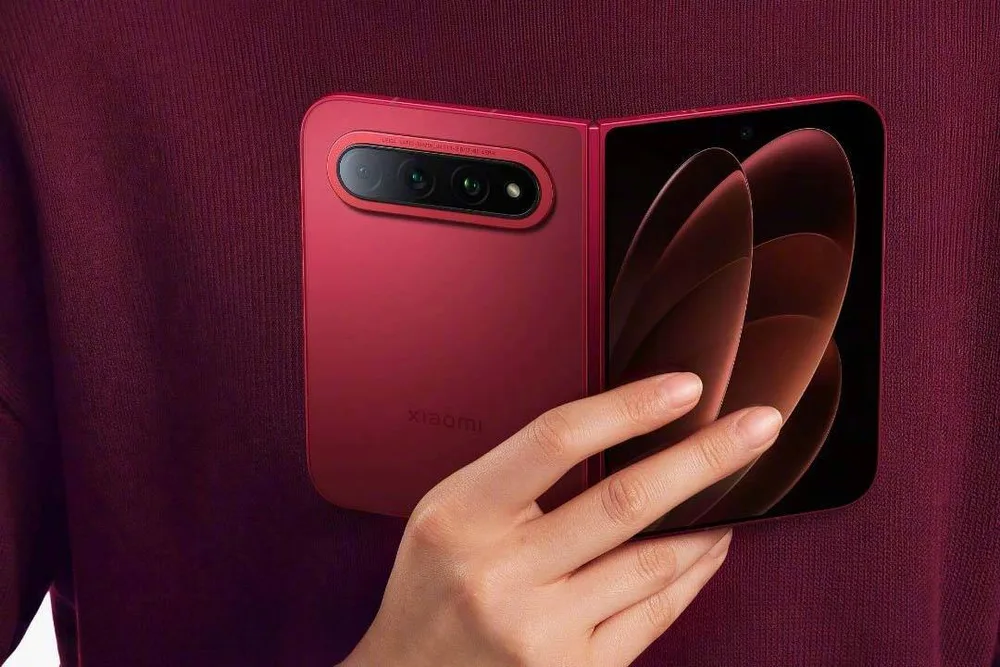
Xiaomi isn't just bringing phones to this fight. We are expecting the launch of three new automotive models: the Pengcheng N70 Pro, N70 Max, and N90 Max. On the hardware side, the Xiaomi 18 Fold and Xiaomi Pad 9 Pro Max are slated to debut, both powered by Xiaomi's proprietary Xuanjie O3 AI flagship processor. It is a massive bet on vertical integration.
Google's Gemini 3.8 Flash is prioritizing speed and security #
Google is making a serious play for the developer market with the release of Gemini 3.8 Flash and a specialized version called Gemini 3.8 Flash Cyber. The standard Flash model is optimized for software engineering and multi-step reasoning, maintaining a price point similar to its predecessor: $0.75 per million input tokens and $3.75 per million output tokens. In HLE-Verified testing, it scored 54.9%, showing a knack for increasing reasoning steps when tasks get complex.
The Cyber variant is where things get interesting for DevOps and security teams. It is designed specifically for vulnerability discovery and automated patching. Google claims the model achieved a success rate of over 70% in internal vulnerability tests across 20 different programming languages. Currently, access is restricted to trusted government agencies and critical infrastructure operators via the Fairwind Program.
World Labs introduces Atlas: A unified world model #
Fei-Fei Li’s World Labs has unveiled Atlas, a world model built from the ground up to handle text, images, video, camera poses, and 3D depth maps within a single unified context. By combining autoregressive, diffusion, and Transformer architectures, Atlas aims to bridge the gap between generation and simulation.
The technical capabilities are impressive:
Video Generation: Can generate up to 1 minute of 1440p video based on 1 to 6 reference images and manual camera paths.3D Reconstruction: Can output point clouds or 3D Gaussian Splatting from a few images.Robotics Training: Can transform real-world scenes into simulated environments for navigation and manipulation training.
AI workflow updates and hardware shifts #
Several other major players are shifting their AI and ecosystem strategies:
Doubao (ByteDance): Their work platform now supports multi-agent parallelism, where a master agent decomposes tasks and distributes them to specialized sub-agents. The Mac version now includes a "control computer" feature that uses visual understanding to execute local GUI operations without needing specific APIs or CLIs.Meta: Released Muse Spark 1.3, which has successfully reduced both tool calling frequency and token usage.Apple Ecosystem: Developers can now remove Intel Mac support from universal Mac App Store apps. This is a clear signal that the Intel transition is ending; macOS 27 is expected to be the final version to support Rosetta.Qualcomm: Is introducing a "Qualcomm version of DLSS," integrating an AI core into the next-generation Snapdragon GPUs.
On the regulatory front, California has passed the SB 574 bill, which prohibits lawyers from "delegating" legal practice to generative AI. Lawyers will remain professionally liable for all AI-generated outputs and must verify the accuracy of any legal citations provided by these tools.
Google is rolling out the Fairwind Program to give governments 2h ago
Google's Astra project is moving much faster than the initial 1d ago
Why you should probably revoke Gemini's access to your Gmail 1d ago
Built an app for photos your phone's gallery can't handle 1d ago
Big tech is pivoting to healthcare to fix its public image 1d ago
Google is trying to turn Hollywood's biggest AI critics into its 2d ago
Next Jabil is proving that you can't just bolt AI onto a mess and →