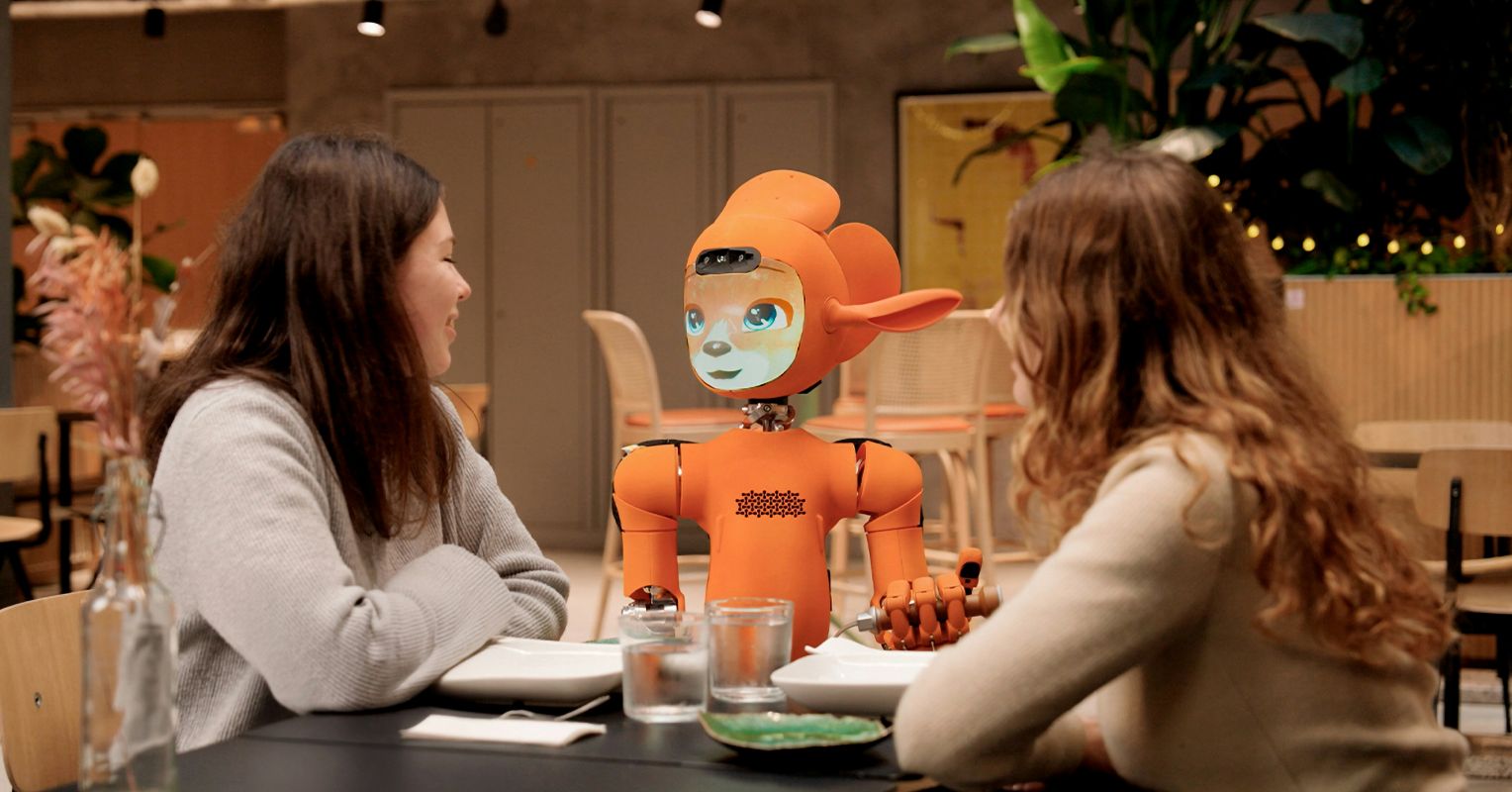
New research complicates what we thought about AI, trust, and speaking up. #
Posted August 19, 2026 [ Reviewed by Monica Vilhauer Ph.D.
](https://www.psychologytoday.com/us/docs/editorial-process)
Key points
- People are more willing to speak up to AI leaders than human ones.
- AI feels fairer to many employees, which unlocks psychological safety.
- The effect holds for cognitive tasks but disappears for emotional ones.
[This post is in response to
](https://www.psychologytoday.com/us/blog/naturally-selected/202512/why-ai-will-never-be-your-leader) Why AI Will Never Be Your Leader
A post published here last December made a compelling case that AI will never truly lead. The argument was essentially that leadership is deeply nonverbal. Posture, eye contact, warmth, the trembling voice, genuine shame—all of these communicate things an algorithm can’t experience. And without that, it cannot lead.
It's a reasonable argument. And then a study came out last month that made it more complicated.
What New Data Found #
Researchers at Zhejiang University conducted three separate experiments testing how willing employees were to speak up, raise concerns, and offer honest feedback to algorithmic leaders versus human ones (Wang et al., 2026). The study, published in Scientific Reports, produced consistent findings across all three experiments.
People were significantly more willing to voice honest opinions to an algorithmic leader than to a human one.
The researchers traced the effect to perceptions of fairness. Employees saw algorithmic leaders as fairer, which was associated with greater psychological safety, the sense that they could speak up without paying a social cost. That, in turn, was associated with more honest communication.
The effect was specific. For cognitive tasks such as decision-making, performance evaluation, and resource allocation, the algorithmic leader elicited more honest input than the human one. For emotional tasks, the effect disappeared entirely. Nobody found it easier to be emotionally vulnerable with a machine.
The Uncomfortable Question #
The study doesn’t settle the question of whether AI can lead. But it does expose something uncomfortable about human leadership.
If people are more honest with an algorithm than with their own boss, the interesting question may have less to do with algorithms than with human leadership. What happens in a workplace when employees associate honesty with social risk? People are speaking up to algorithms because they are afraid of what happens when they speak up to people. A manager remembers the moment you pushed back. They may unconsciously favour people who agree with them. They may even carry that impression into your next performance review. An algorithm doesn’t have those same social relationships with its employees.
What matters here may not be that the leader is an algorithm. It may be that employees don’t perceive the same social risks when they speak to it.
What AI Reveals About Human Leadership #
The December post argued that AI lacks the moral fabric of leadership. That's worth thinking about. An algorithm can identify an optimal decision. It can’t experience the weight of making it.
But the study raises a different question for human managers: What does it mean if employees are more comfortable being honest with an algorithm than with you? It may be a sign that your team has learned to associate honesty with risk.
The finding doesn’t suggest that human leaders should be replaced by machines. Instead, it gives managers an uncomfortable question to consider: What are we doing, consciously or otherwise, that makes people hesitate before they speak?
Whatever the answer is, it probably has more to do with human leadership than with better algorithms.
AI may lack the emotional qualities we associate with leadership. Yet for some employees, it appears to create enough psychological safety for them to say what they really think.
The irony is not lost.
Artificial IntelligenceEssential Reads The question of why we trust AI differently doesn’t stop at the workplace. It is part of a broader question about how we decide what—and whom—to take seriously online.
References
Wang, S., Sun, X., Ni, S., Wu, M., & Hu, K. (2026). Employees show greater willingness to voice toward algorithmic than human leaders in cognitive tasks through fairness perception and psychological safety. Scientific Reports. https://doi.org/10.1038/s41598-026-61031-6